Categories
EndoRE PAD remote endarterectromy

Should the SFA be revascularized during an inflow procedure?

Sketches - 12

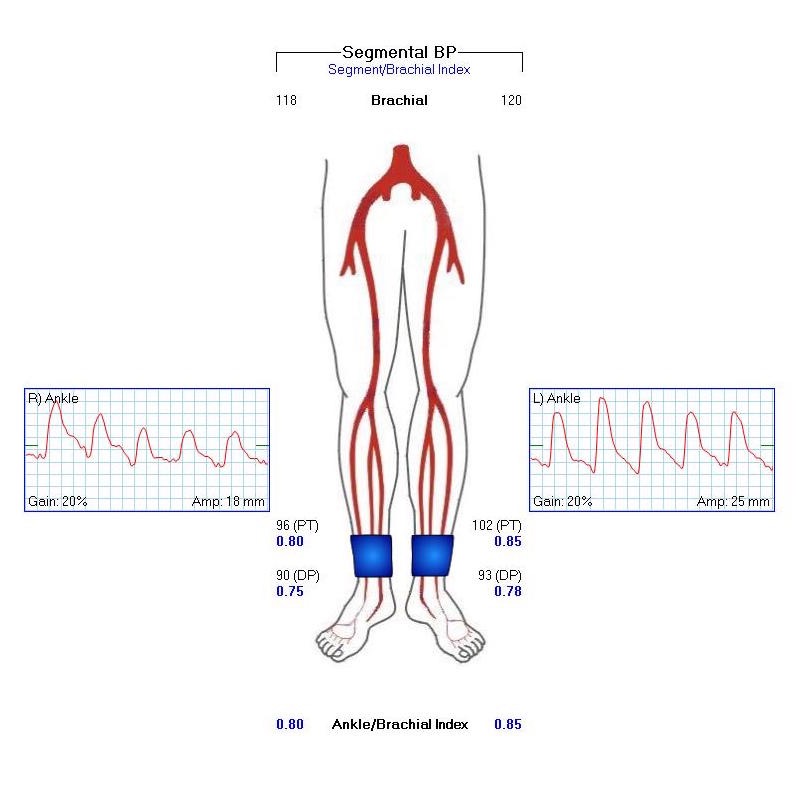
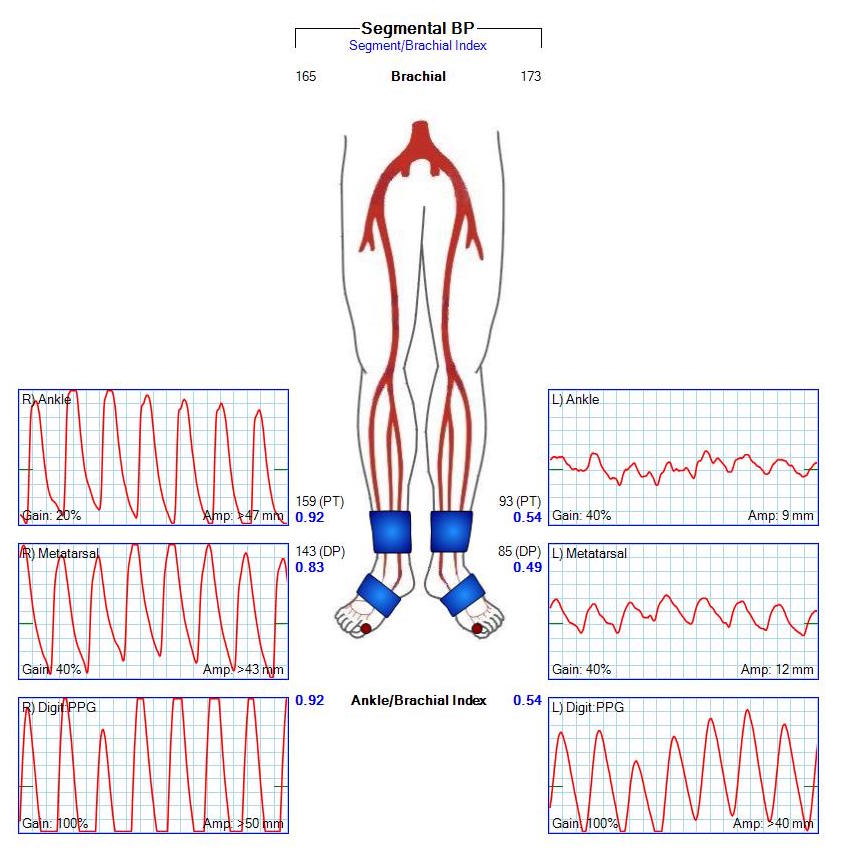
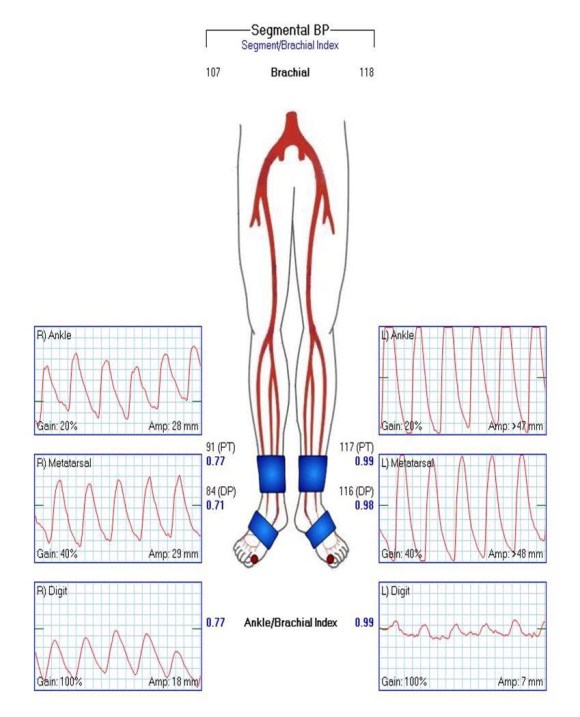
The patient is a 70 year old man who arrived with complaints of worsening claudication, worse on the left leg. He smokes over a pack a day. On exam, he only had femoral pulses, nothing was palpable below. PVR showed multilevel disease with an ABI of 0.42 on the left leg.

PVR preop

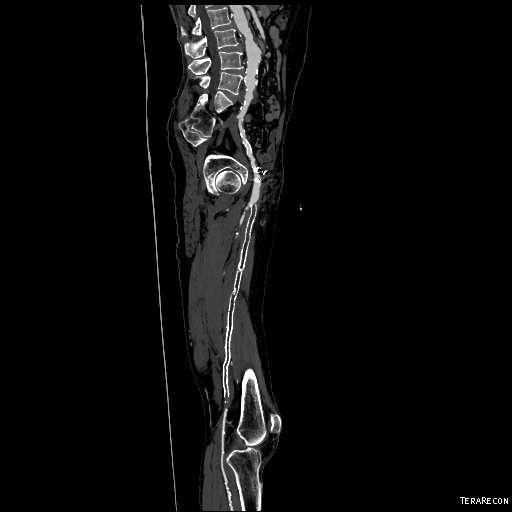
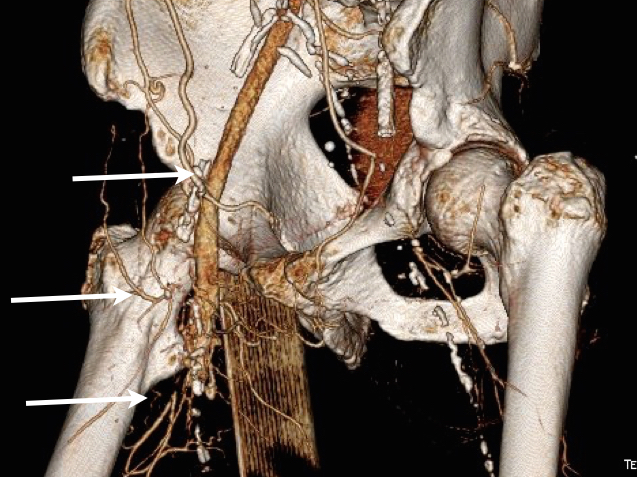
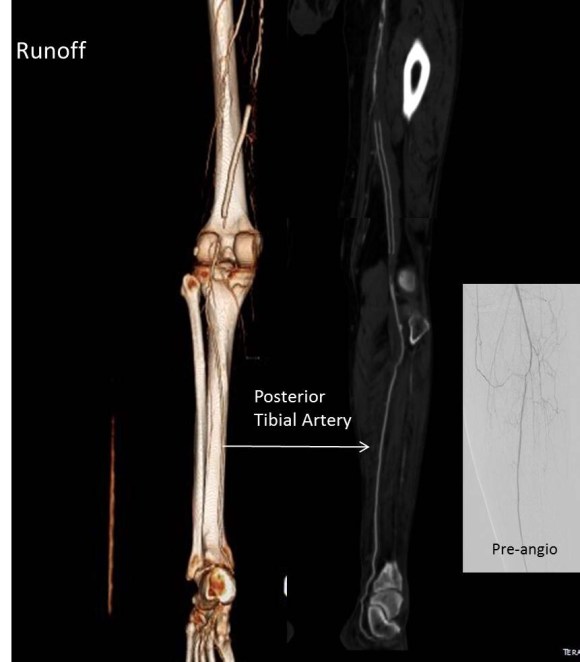
CTA was done showing that both his SFA and PFA were occluded, along with occlusion of his AT in the mid leg, and tibioperoneal trunk.

cta TIBIAL_1

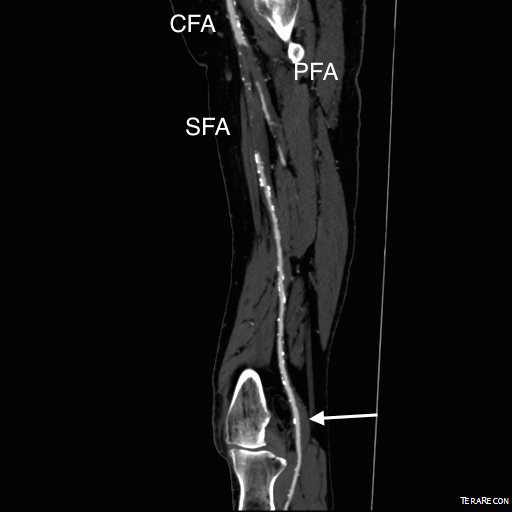
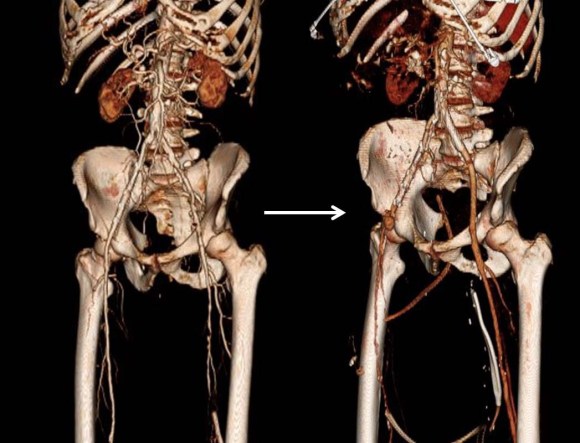
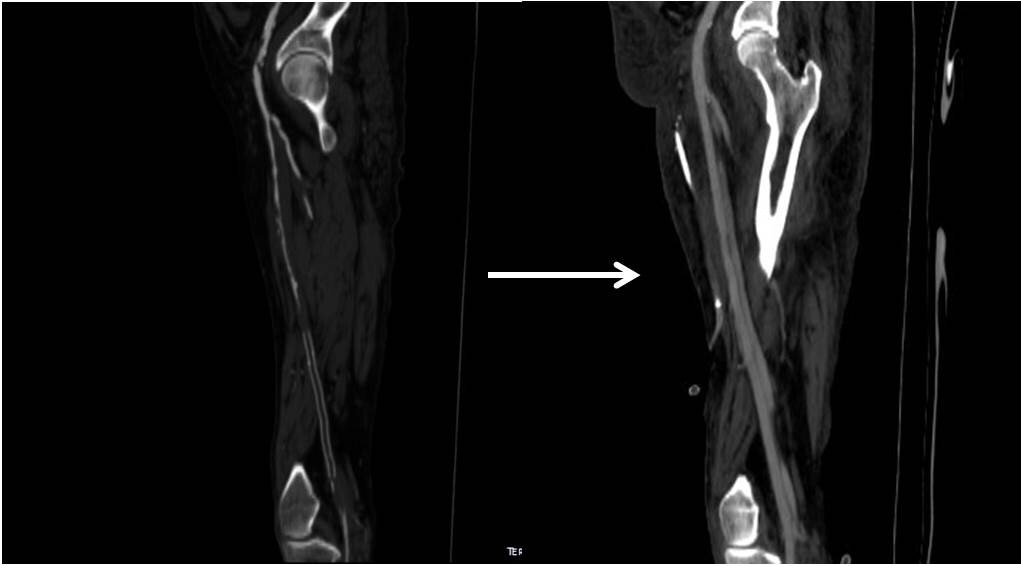
There is a reconstitution point on the PFA, and there is also SFA constitution. Looking at this, it was apparent to me that it would be possible to endarterectomize the whole of the iliofemoral and femoropopliteal system from a single groin incision, but the question being, would a profundaplasty be sufficient.

Arrow points to calcium free terminus for SFA EndoRE

The textbook answer is profundaplasty, but given my experience with endarterectomy, it has become apparent that removing all the plaque, including CFA and iliofemoral plaque reduces the chance that clamp injury and stenosis occur, and that placed in the common iliac system have better patency than those placed in the external iliac, particularly crossing the inguinal ligament into a patch.

The other observation is that with this exposure, SFA remote endarterectomy is very simple to do, but becomes more difficult in a redo situation. The only problem with going ahead with it is that the runoff is poor -all three tibial vessels occlude, but a very robust posterior tibial artery reconstitutes proximally from well developed collaterals.

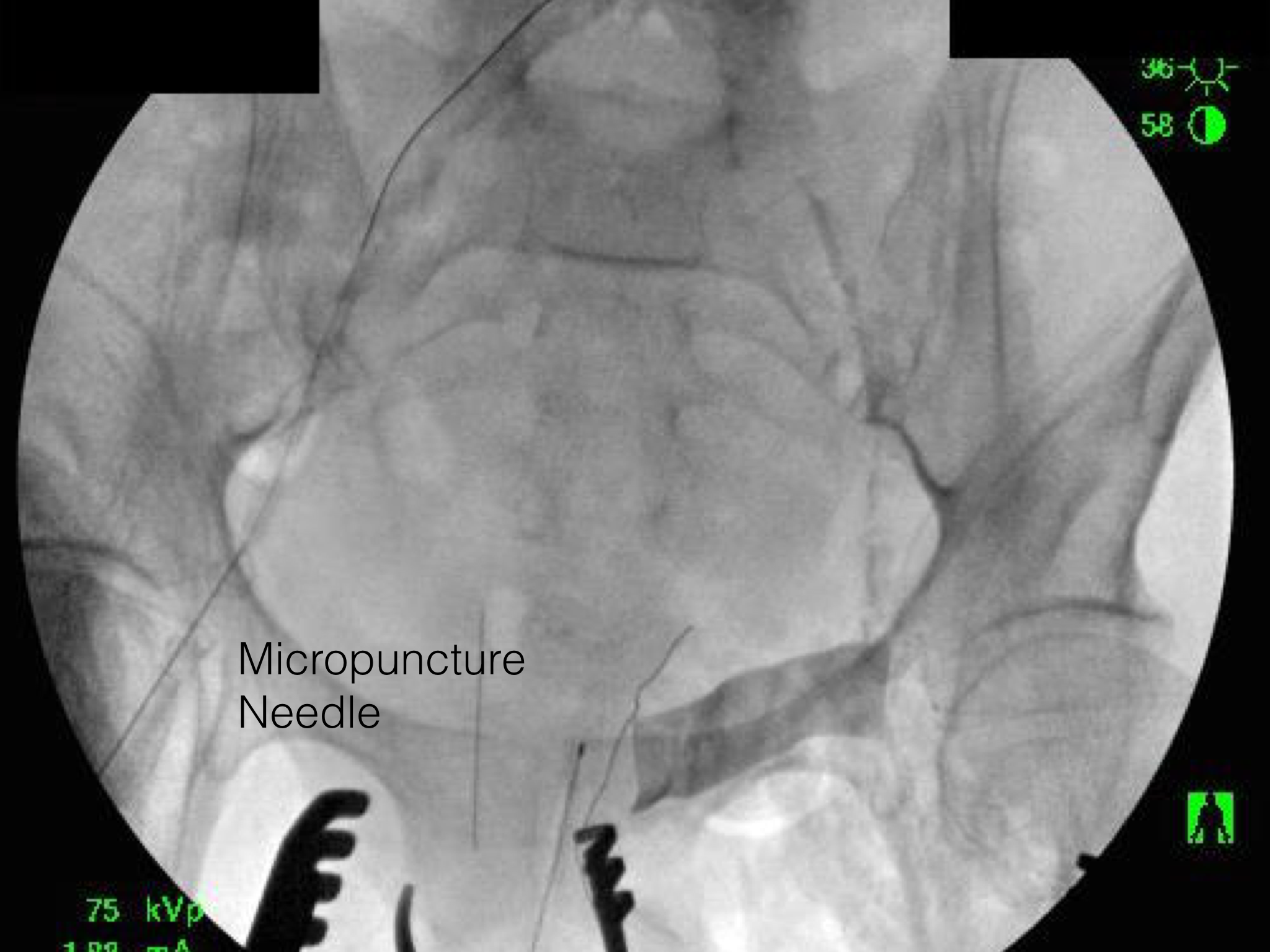
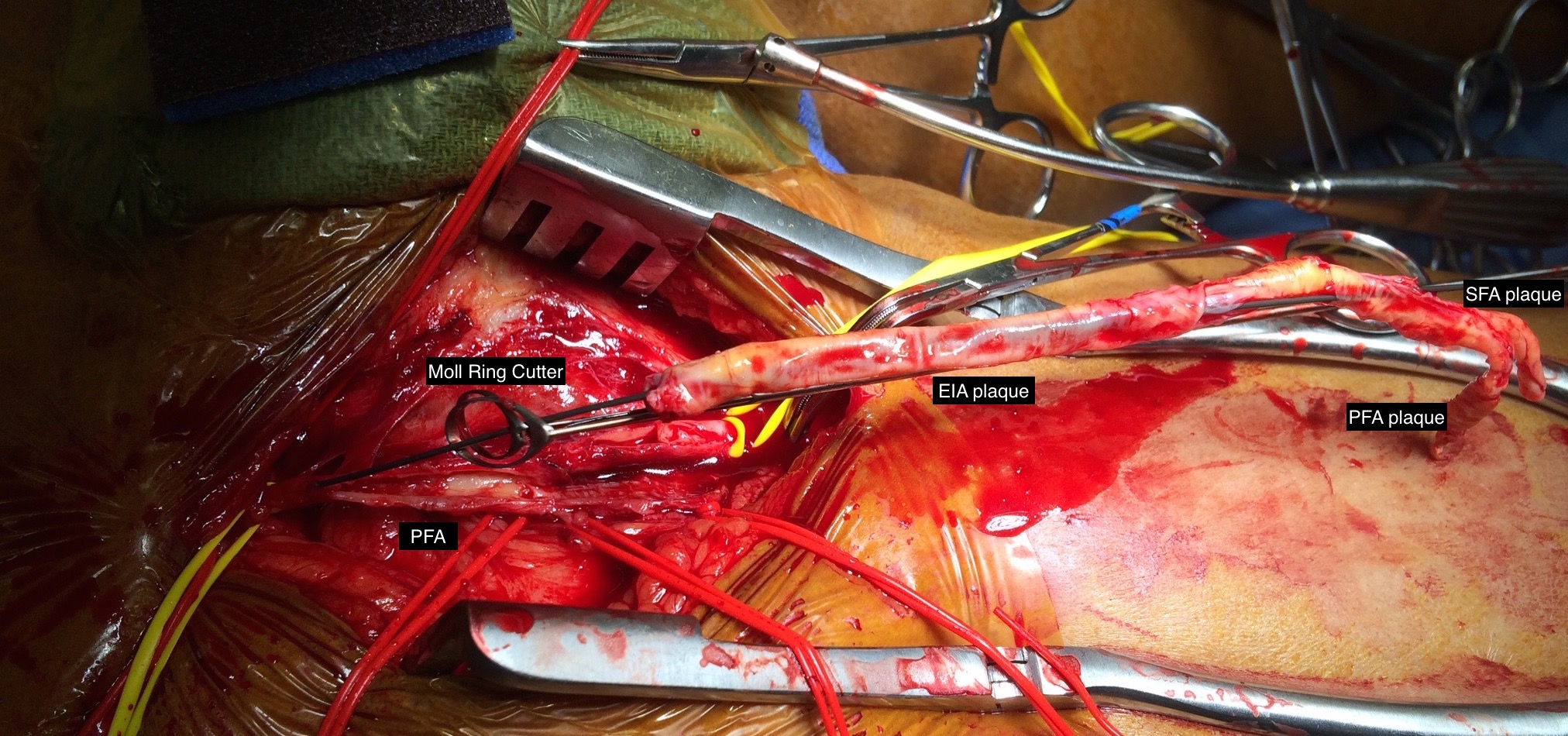
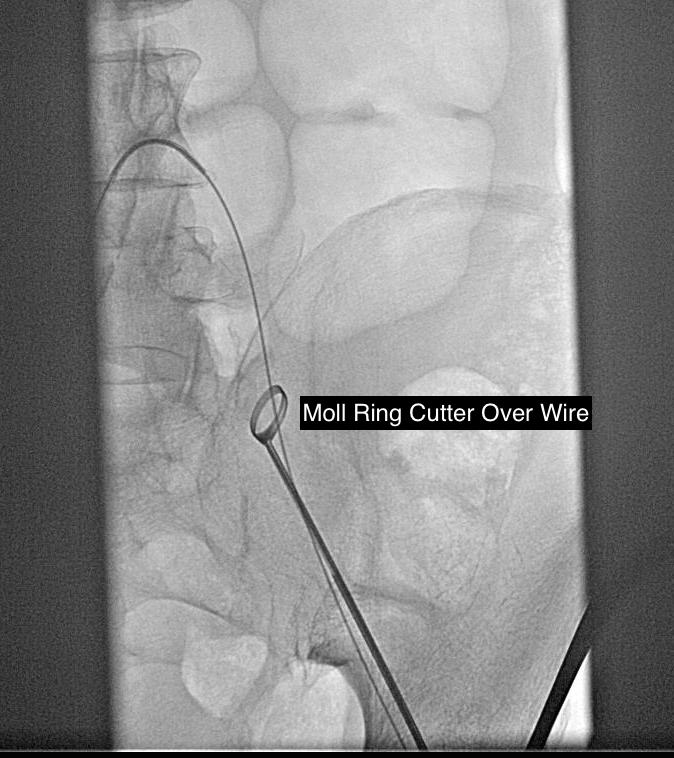
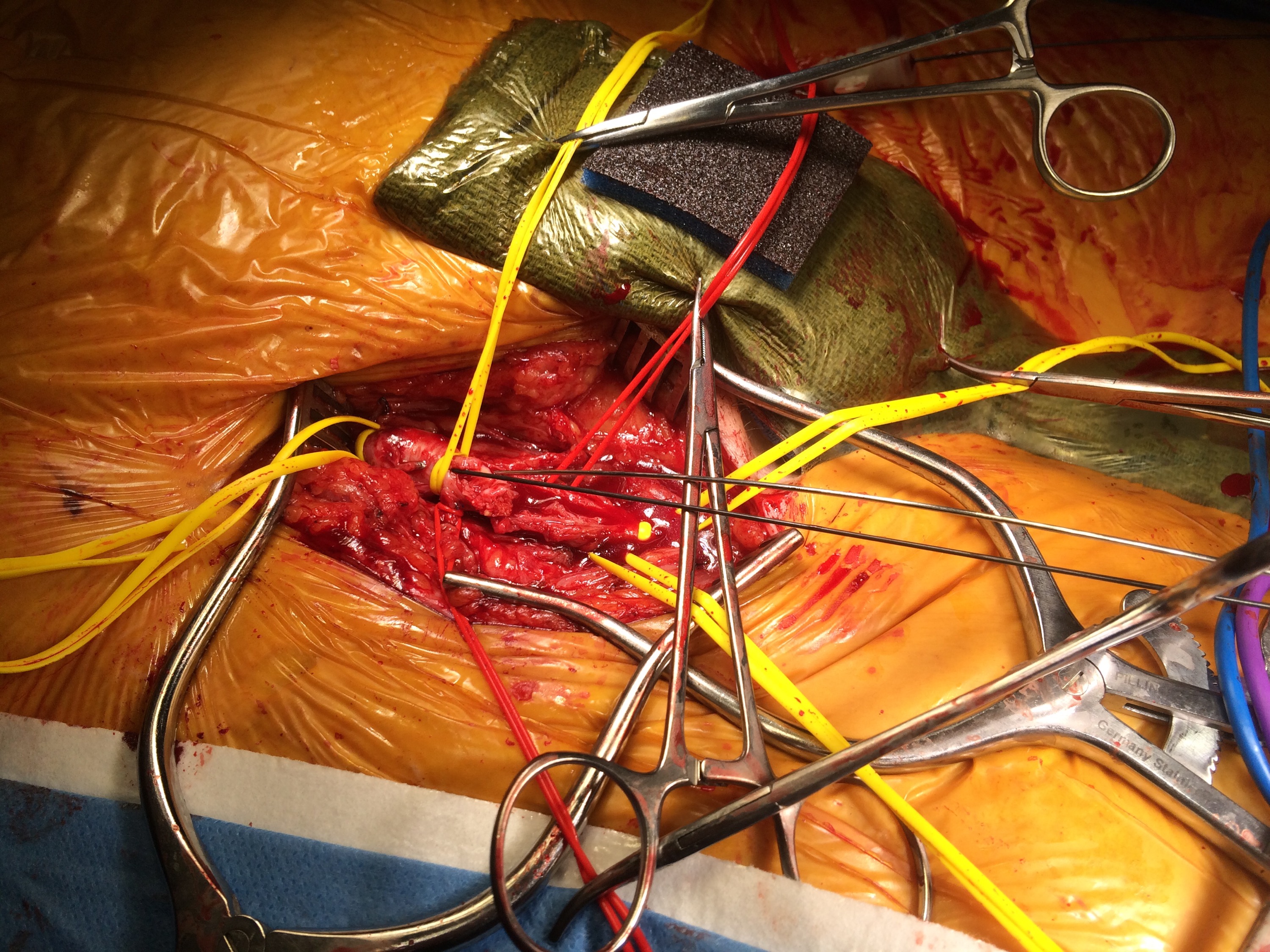
The CFA, PFA, and SFA were exposed as shown in my sketch at the beginning of the post. Wire access up and over from the right side allowed for secure control of the aortoiliac segment. The endarterectomy was started from the PFA reconstitution point and the CFA plaque was mobilized. The SFA plaque was transected in a proximal arteriotomy and the plaque was mobilized with a ring to its origin. The CFA plaque then was mobilized with the ring dissector over a wire (for security in case of rupture), up to the EIA origin and cut.

Image-5

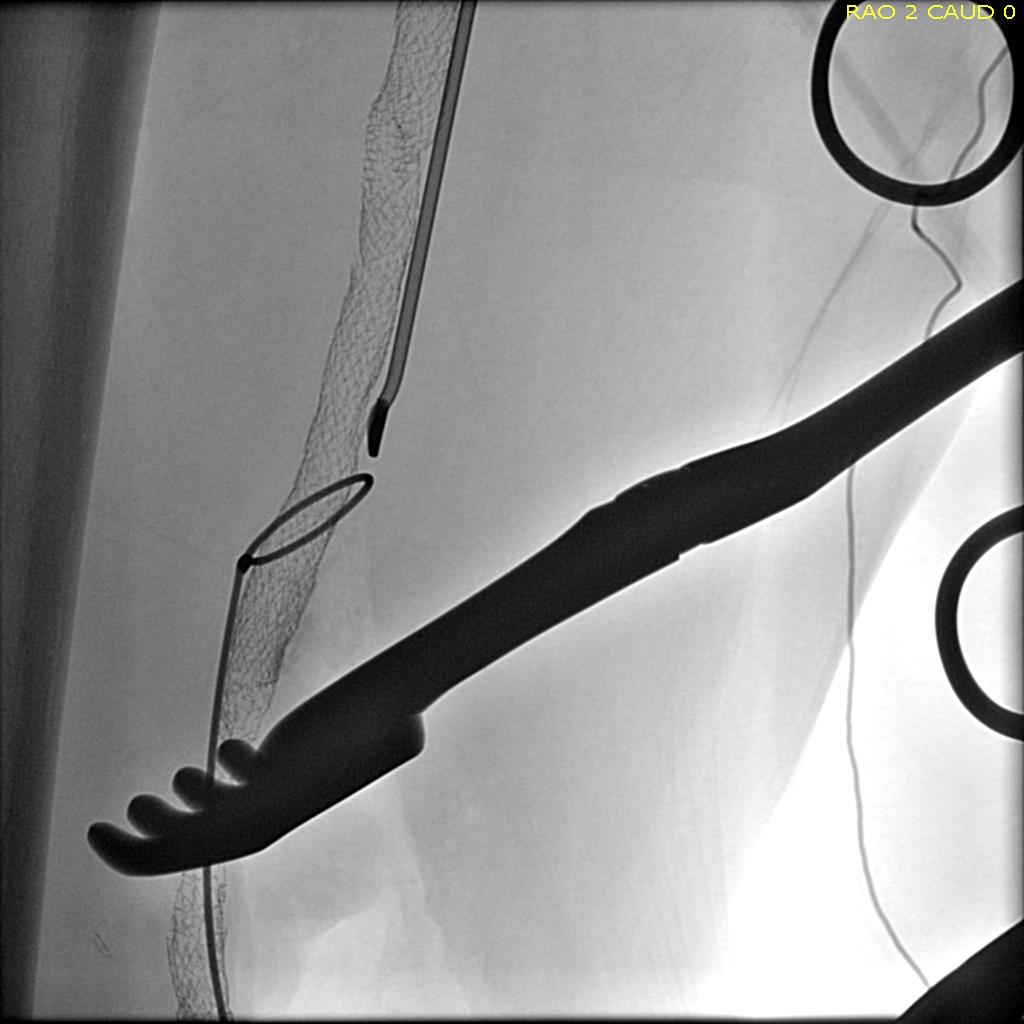
The distal SFA plaque was endarterectomized to the planned end point above the knee joint.

Image-4

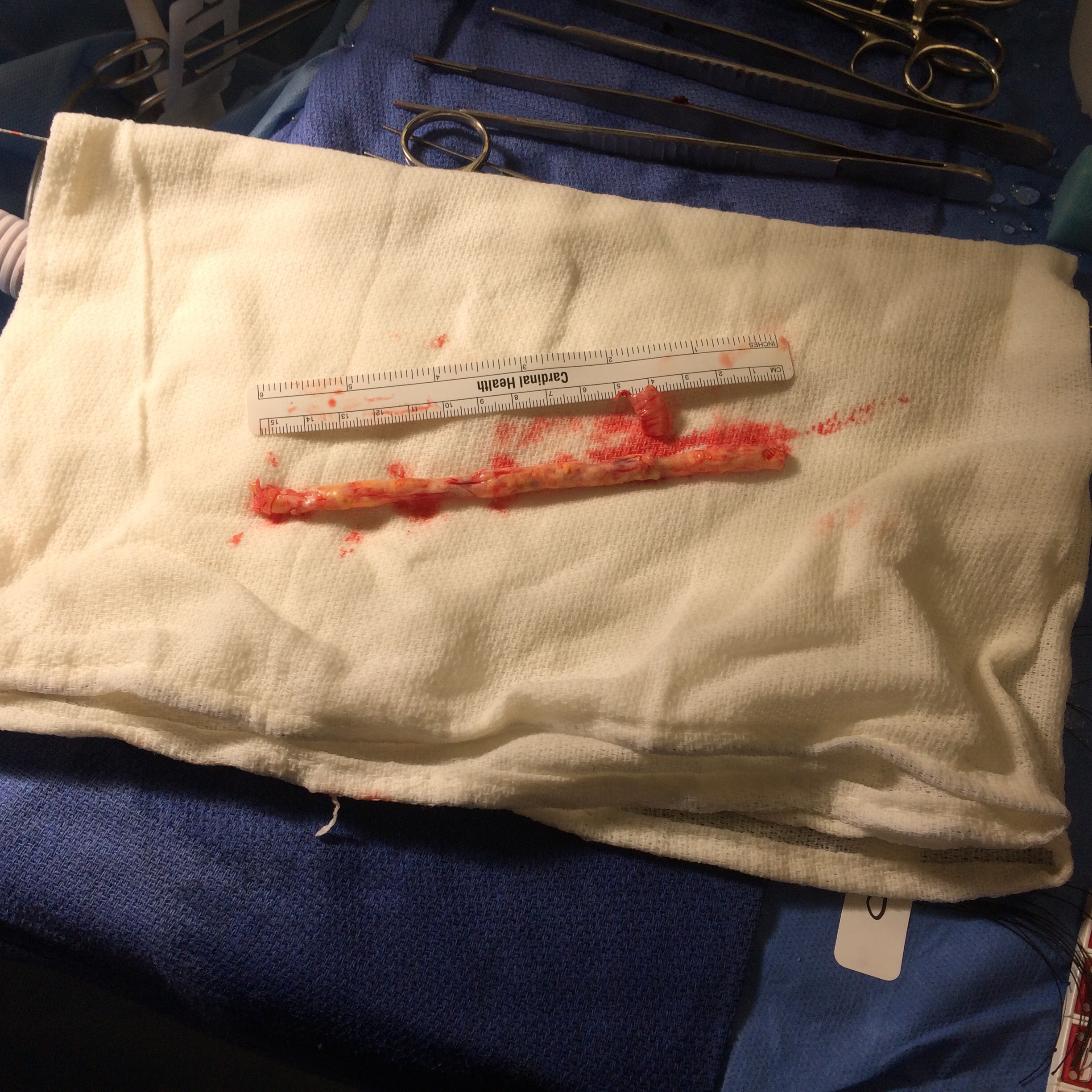
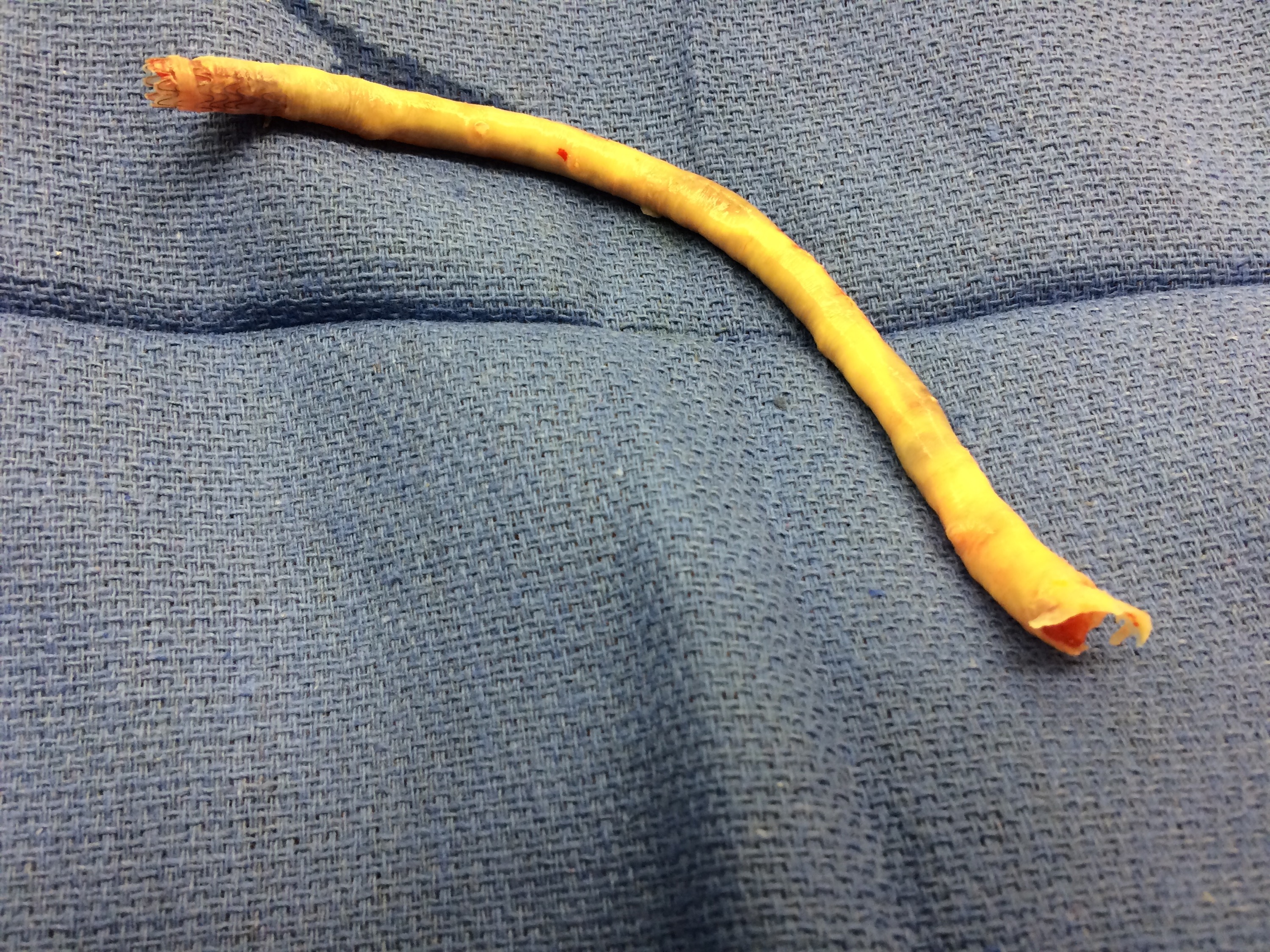
The specimen is shown below.

specimen

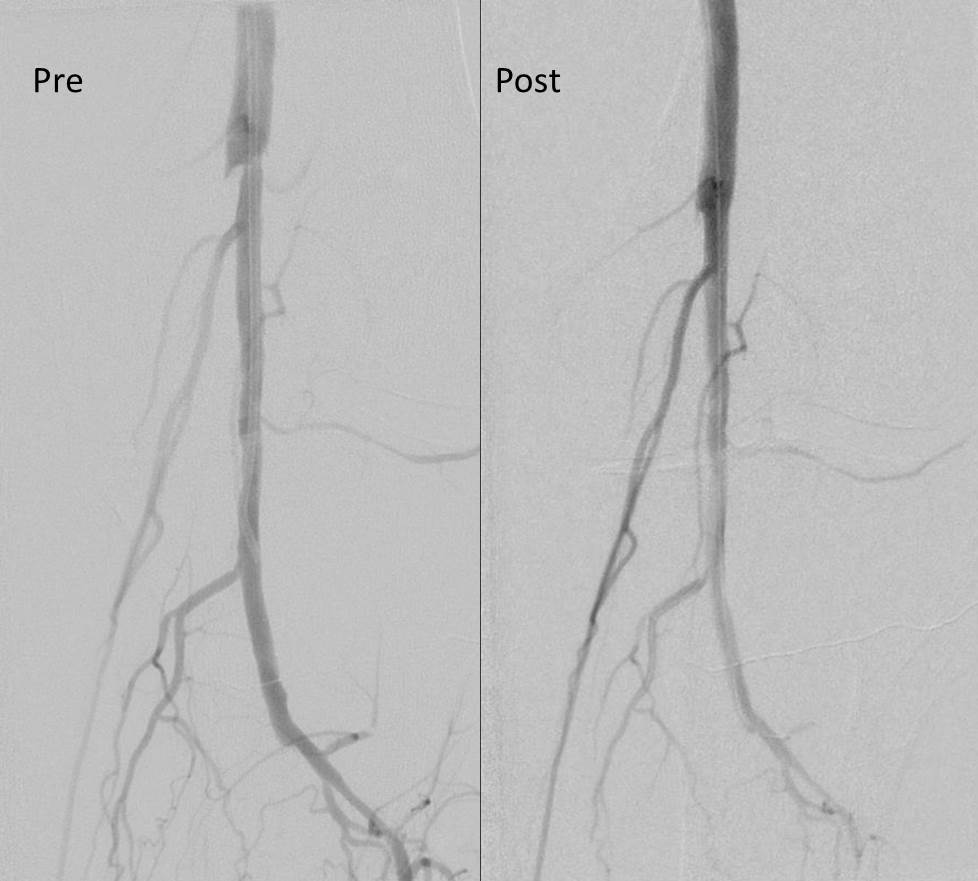
The arteriotomies were repaired with patches. The common iliac artery was stented to improve the flow. The SFA end point was managed with a stent, placed proximal to the first large geniculate collateral.

prepost sfa endpoint

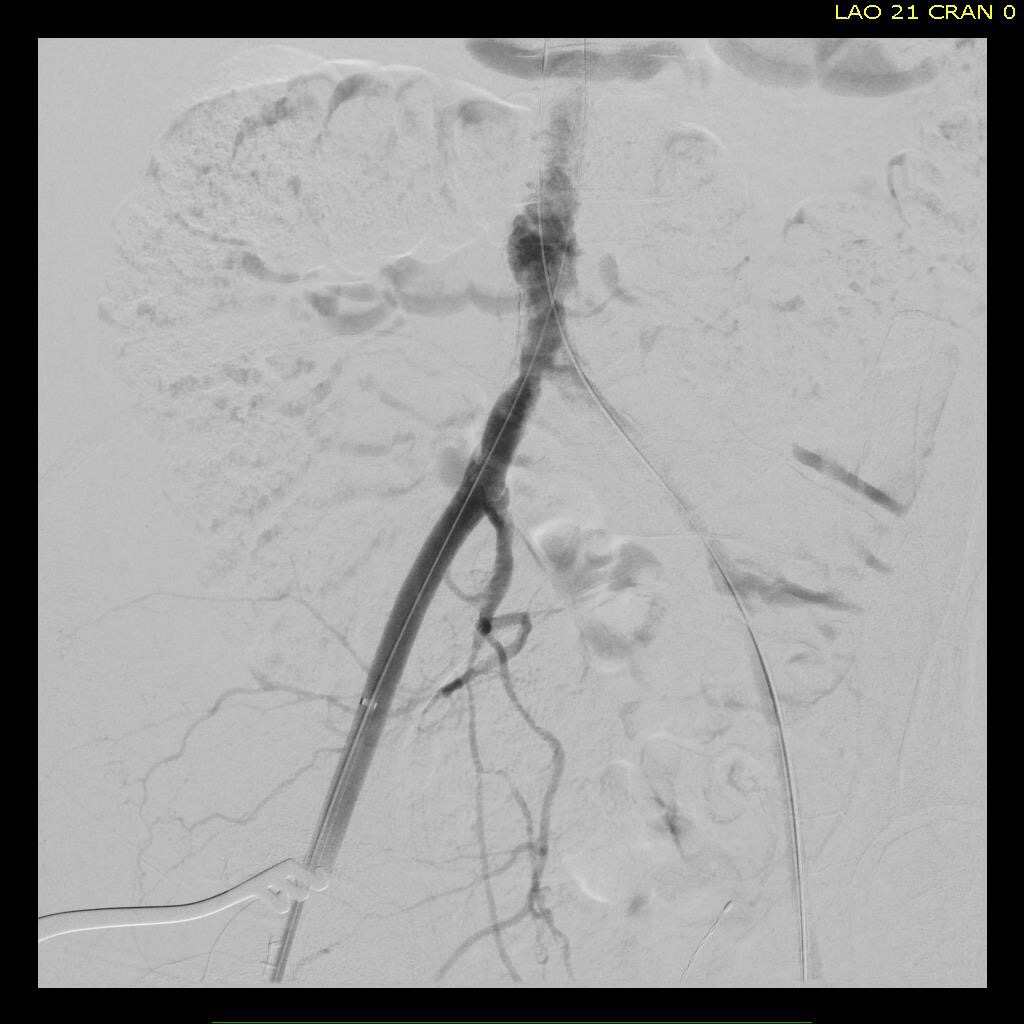
Completion angiograms show widely patent EIA, CFA, PFA, and SFA

Completion

The patient recovered and was discharged on POD#3. His postop ABI’s are shown below.

ABI post2

They are improved compared to preop, with ABI’s of 0.65. Notably, he did have a weakly palpable posterior tibial artery pulse, and multiphasic signals in all three tibial vessels. While I don’t know if the SFA revascularization will stay open, I am confident the PFA will, and this will keep him from his symptoms recurring and is a durable procedure.

Ideally, if he had needed a distal revascularization, a vein bypass would be the answer, but in the setting of inadequate conduit, it is very simple to endarterectomize from the below knee popliteal artery the remaining plaque and either patch to the patent tibioperoneal trunk or perform a short POP to posterior tibial artery bypass. He did not require this.

I don’t know the answer to the titular question, but in the setting of an inflow procedure, the best chance at opening the SFA is during the inflow procedure because of the exposure, and it is very simple to do when the lesion is minimally calcified.

Categories
EndoRE PAD remote endarterectromy techniques

Removing Occluded Stents For Critical Limb Ischemia

Image-22

The patient severe claudication and nocturnal rest pain and had undergone an inflow procedure at another hospital consisting of a common femoral endarterectomy and a single stent to the external iliac artery near its origin from the iliac bifurcation. He also had undergone a concurrent SFA atherectomy which closed and was treated with SFA stents extending from the SFA origin to the above knee popliteal artery. Unfortunately, his rest pain worsened.

ABI2

On exam, he had a femoral pulse only and no distal pulses, only monophonic and weak pedal signals. The right groin wound had been treated for postoperative wound infection and there was still some swelling and a stitch abscess, but no deep infection. CTA showed that his profunda femoral artery had a focal dissection or stenosis at the origin along with overhang of his SFA stents across the origin of the PFA. The SFA stents were occluded along their whole length. There was remnant disease of the external iliac artery as well.

00020868139_20150409_8

00020868139_20150409_1

There was reconstitution of a diseased but patent above knee popliteal artery with three vessel runoff. He had had harvest of his greater saphenous vein. Treatment options included multisegment arm vein with redo profundaplasty, but given the inflammation around his recently operated, recently infected groin, I was concerned for wound infection. He was also quite disabled by his worsened pain. The other option was to access the left common femoral artery and placed a sheath up and over and wire across the diseased profunda and intervene on it, but with the stent in place, I would have to place likely another stent across the origin. I could then attempt a bypass with arm vein or prosthetic graft using this compromised artery as inflow for a bypass to the below knee popliteal artery or a tibial vessel but I doubted this would be durable, nor resistant to infection if prosthetic was used.

Remote endarterectomy (EndoRE) gave me a third option. It is a hybrid technique, but based on an old and established technique of open remote endarterectomy dating from the 60’s. Rings (Vollmer Rings, LeMaitre Vascular) are used to dissect occlusive plaque under fluoroscopy, and a cutting ring (Moll Ring Cutter, LeMaitre Vascular) is used to cut the plaque at the chosen location. Because the distal end point of dissection is not surgically exposed, but rather fluoroscopically guided, it is termed Remote Endarterectomy. Wire skills are required to access and repair any dissections that may occur.

I have presented in the past a series of cases where I removed occluded stents. Because the dissection is carried out outside the plaque, it is also outside the stent. Retrograde EndoRE of SFA plaque can be carried out up to the SFA origin, and avoid a groin incision which in this case was important. Therefore, a proximal thigh exposure of the SFA and EndoRE was planned with endovascular access by left CFA as described.

Photo Apr 15, 10 08 52 AM

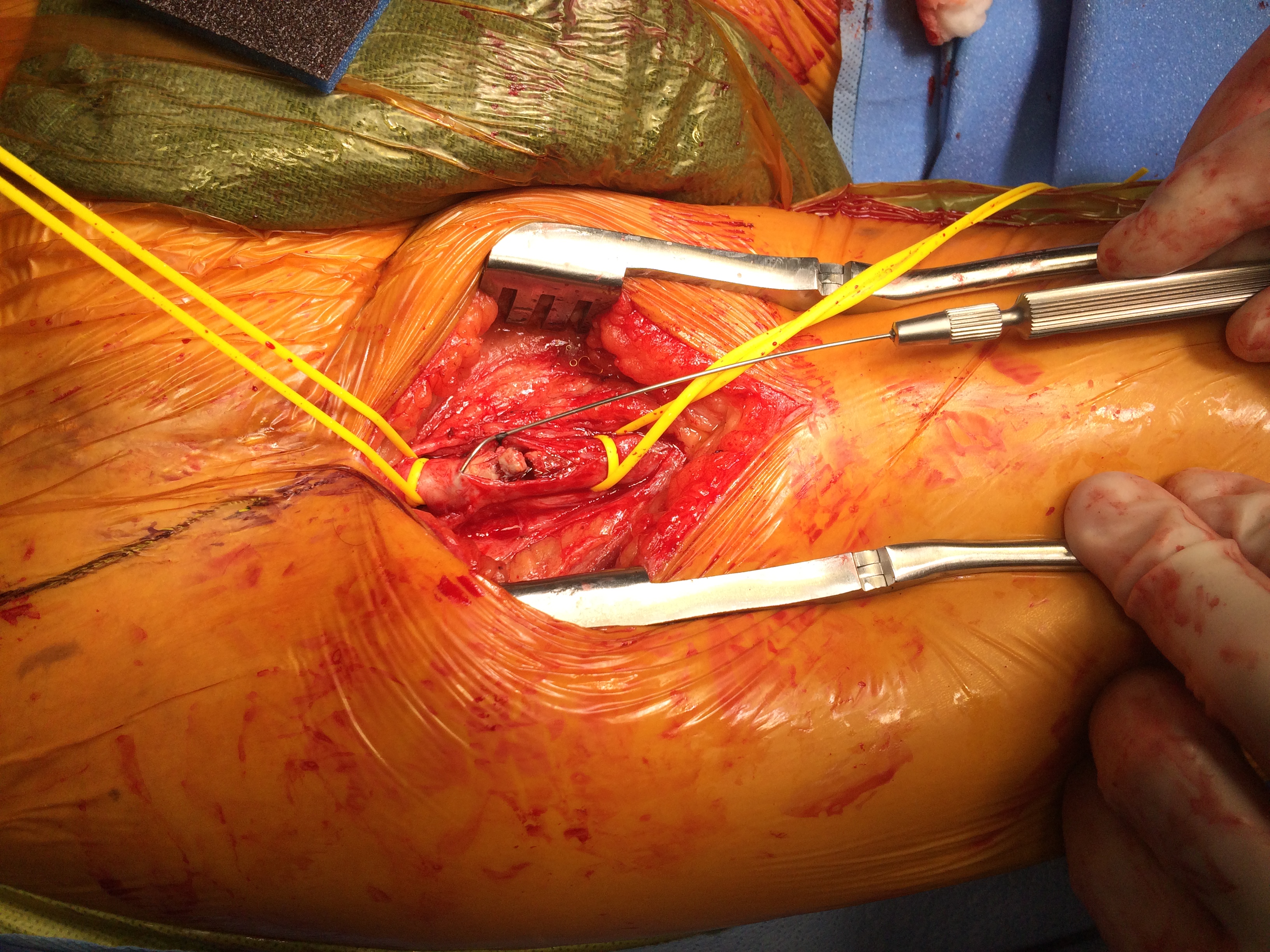
The SFA was a hard, calcified pipe and control was achieved with vessel loops which allow passage of the ring and occlusion of the artery once the plaque and stents were removed. The artery was opened via longitudinal arrteriotomy and the plaque mobilized and divided. The proximal SFA plaque was then dissected (above and below).

proximal dissection

There was immediate establishment of a robust pulse in the proximal SFA after removal of the plaque.

Photo Apr 15, 10 14 06 AM

Distally, the plaque would not mobilize at a point in the artery where there was laxity in the artery and especially adherent plaque and therefore, the distal SFA was cut down on to reaccess the stent from below.

Cutdown to reaccess plaque, basically a reversion to the original pre-endovascular technique.
Mobilizing stent from above and below
The distal plaque was cut with a Moll Ring Cutter. The removed specimen in total is below.Photo Apr 15, 12 03 16 PM

The arteriotomies were repaired with patch angioplasties using bovine pericardium. This allowed for completing the procedure with endovascular techniques which included the distal end point dissection, profunda stenosis, and external iliac stenosis.

Distal end point managed with self expanding stent.
PFA

EIA

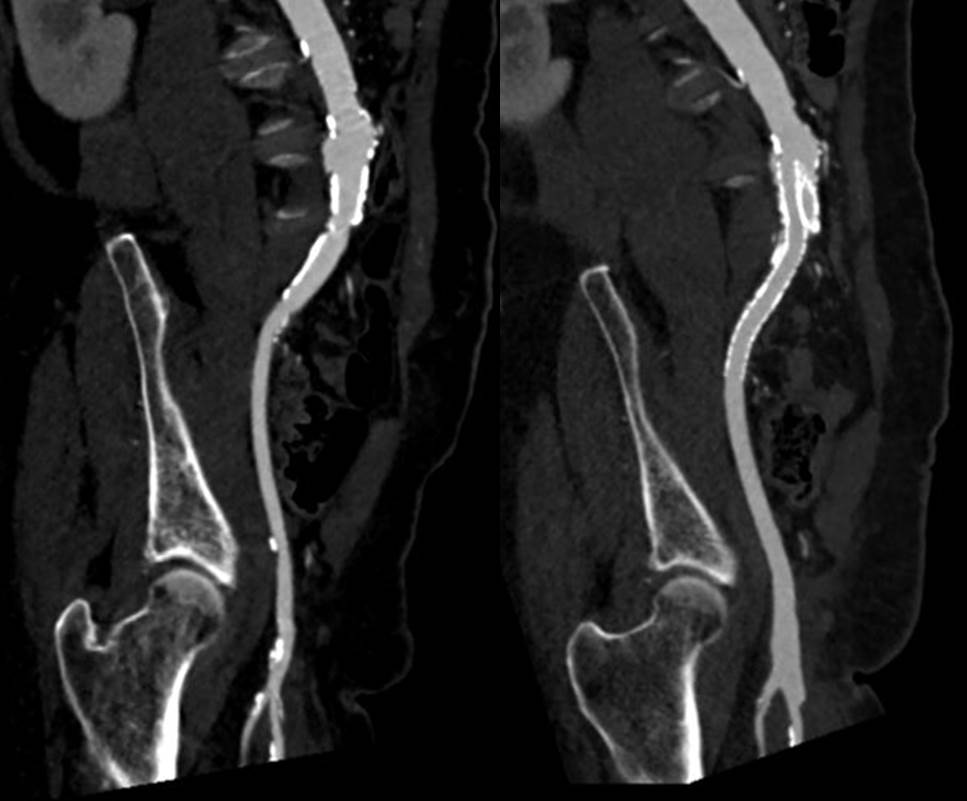
At completion, there was a palpable dorsalis pedis artery pulse. The composite angio with preop CTA centerline reconstruction are shown below.

completion

He had relief of his symptoms. Prior to discharge, ABI and PVR’s show normalization of flow to his foot.

Image-2

Conclusion: In my experience, the longevity of these lesions is dependent on the same factors dictating other revascularizations -excellence of inflow, optimization of profunda outflow, and good tibial outflow. The conduit, being the recanalized original artery, is not as good as a single vein, but it remodels and becomes normal artery based on micro pathology. Failure occurs at the stent with the usual restenosis that can occur in some but not all people, and in isolated points in the artery where likely remnant tissues scar creating focal lesions. Frequent surveillance achieves acceptable primary and secondary patencies. Thromboses do occur. Unlike PTFE grafts, thromboses in EndoRE is usually limited to the recanalized artery without distal embolization. Stent removal is challenging but feasible. In this patient, a second cut down was required to achieve plaque and stent removal. The groin was not re-entered, avoiding dissection in a recently infected, surgical wound. If the popliteal was occluded, a popliteal endarterectomy via a below knee cutdown is possible achieving total femoropopliteal plaque clearance, and the below knee popliteal artery can then be used for a very short bypass to one of the tibial arteries if indicated and if autologous vein is limited in availability.

EndoRE offers a third option after bypass and intervention and should be in a vascular surgeon’s armamentarium.

Categories
Journal Club SVC

April Journal Club

April Journal Club is coming up on us this Tuesday, April 21, and will be centered around SVC Syndrome and central venous occlusive disease. Dr. XY Teng won the award for best presentation in the March Club meeting. Our presenters this Tuesday are:

Dr. M. Abbasi – Aldoss et al link

Dr. D. Hardy – Gwon et al link

Dr. L. Rangel – Bakken et al link

Same rules apply. See you there.

Categories
bypass PAD techniques Wounds

Deep rescue from a hospice: saving a patient from hip disarticulation with advanced hybrid inflow procedure and vein bypasses

PREOP.001

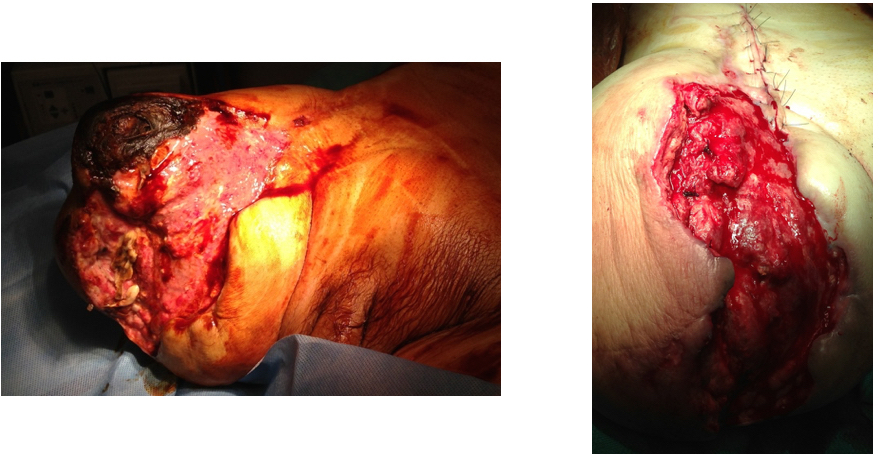
The patient is an elderly man who had bilateral above knee amputations after failure of aortobifemoral bypass grafts at an outside institution. Unfortunately, he had no femoral pulses and his amputation on the right broke down (image above). His left stump had erosion of his femur to the skin with rest pain as well, but was at least covered by skin for now. He was declared too sick for hip disarticulations and was sent to a hospice where he failed to pass away. After a year there, he was sent to us for an evaluation.

He was suffering from rest pain and had complete breakdown of the skin over his amputation stump. More worrisome was the development of gangrenous scrotal and decubitus ulcers which were small but persistent and also foci of pain. CTA showed the following:

PREOP CTA.001

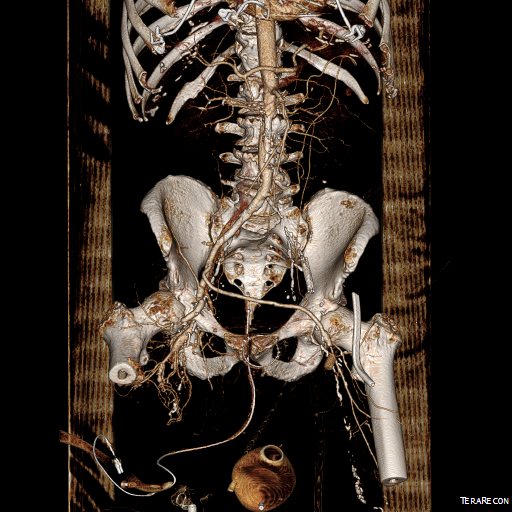
The aorta was occluded below his renal arteries. An AV fistula near his common femoral vein lit up his right iliac vein on the CT above. He had had a prior aortobifemoral bypass but this was occluded. Gratifyingly, it was anastomosed proximally end to side, giving us options. As with any revascularization, we had an inflow source -his aorta, and several potential outflow sources (CTA below, contrast filling iliac vein from AVF’s).

OUTFLOW.001

In particular, his distal profunda femoral artery showed promise. Vein mapping revealed a short segment of basilic vein in his arm to use as bypass, but we needed inflow from the aorta.

I have come to appreciate two things about aortoiliac recanalization. First is that passing the wire antegrade is far likelier to stay in the true lumen at least in the aortic inflow segment -retrograde wire passage inevitably dissects the occlusive aortic plaque and reentry into the true lumen of the diseased aorta is just as challenging as in the leg. The second is vein bypasses have excellent patency in challenging conditions -you just need excellent inflow and an arterial bed to perfuse.

My plan was to cross the aortoiliac occlusion with a wire from the left arm. Once the right iliac system was entered, it didn’t matter if I was in a subintimal plane. The wire could be seated in the common femoral artery to access with a surgical exposure. Once this was done, my intention was to perform remote endarterectomy of the external iliac artery and stent from the aorta to the common iliac artery. The endarterectomized external iliac artery would be the inflow source of a later staged ilio-cross femoral bypass to revascularize his left AKA stump. The common femoral artery at its origin would provide inflow to a short vein bypass to his profound femoral artery.

The wire passed readily into the right iliofemoral system and a groin exposure and common femoral arteriotomy allowed me to retrieve the wire which had been passed from the left arm. A remote endarterectomy was performed over the wire which I do to ensure access in case the artery ruptures (specimen below).

OR IMAGES.001

This allowed me to place a sheath into the right iliac system in the now reopened external iliac artery. Balloon angioplasty of the aortoiliac segment created working space for placement of balloon expandable stents from the infrarenal aorta to the common iliac artery, restoring an excellent pulse in the right groin.

The profunda femoral artery was encased in scar tissue, but following the occluded PFA from the CFA, I was able to expose an open segment and cut it open in the scar tissue. There was back bleeding, and I controlled the artery by placing a small Argyll shunt into the artery and reperfusing it from the recanalized right iliac system.

OR IMAGES.002

The Doppler flow in the shunt was excellent, suggesting great outflow potential. The bypass was performed over the shunt with reversed basilic vein. Completion arteriography showed excellent flow.

PLANNING SLIDE.001

The amputation stump was debrided of dead bone and muscle and the graft was covered with a sartorius muscle flap.

OR IMAGES.003

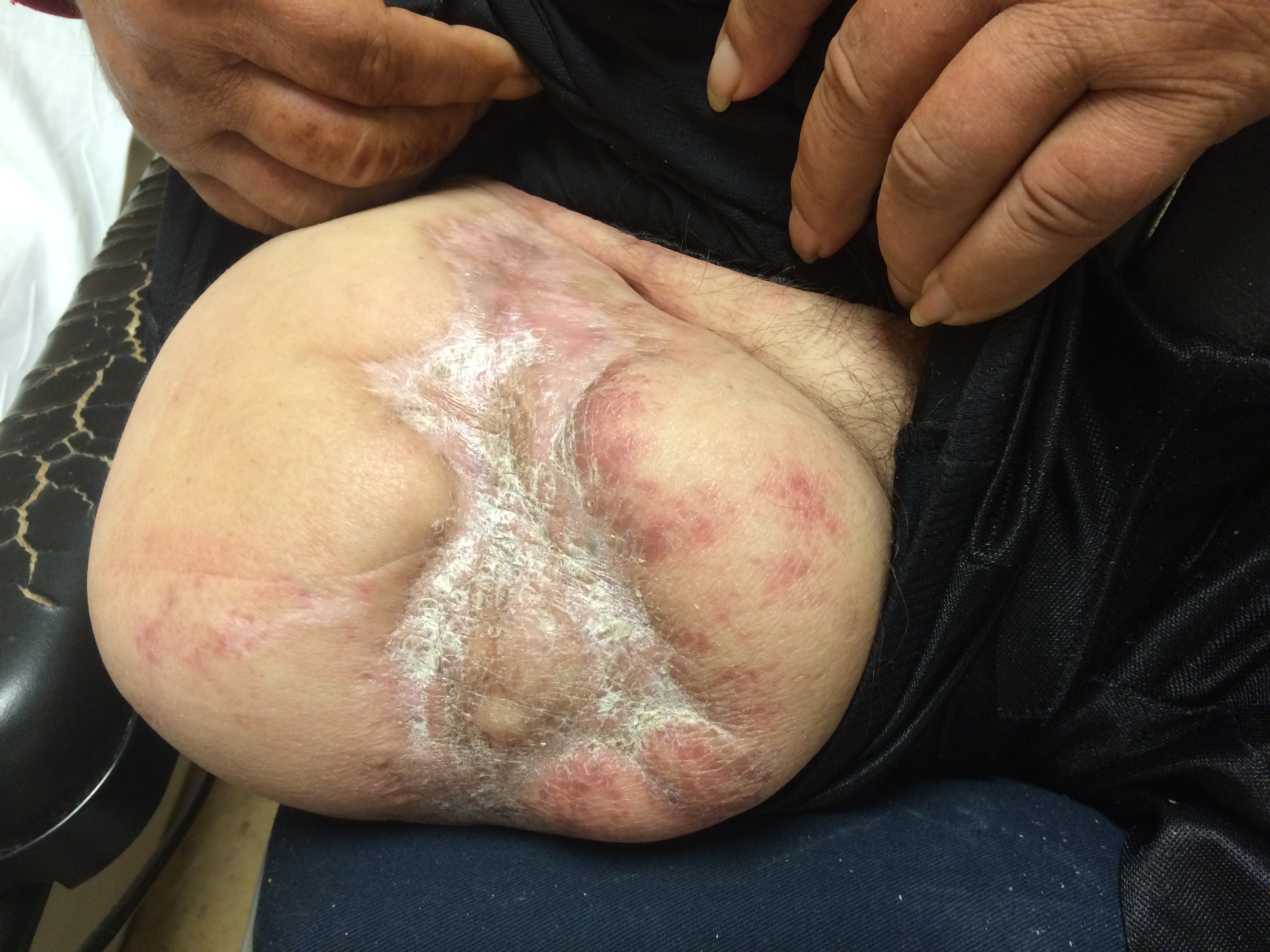
Before and after images are shown. The remaining open wound granulated well, and ultimately accepted a split thickness skin graft. His scrotal and decubitus ulcers healed as well (below at 6 months post op).

IMG_2380

His left AK stump subsequently degraded while he recovered so three months after this operation, he underwent a right external iliac to left profunda femoral artery bypass with cadaveric vein.

00018205637_20131006_1

00018205637_20131006_6

I don’t like using cadaveric vein, but we really had no options. The right external iliac artery was approached through a right lower quadrant (transplant) incision and a punch biopsy of the artery revealed only normal adventitia on pathology. The EIA was soft and sewed well -essentially a normal artery brought back from the dead. The left profunda femoral artery was large after endarterctomizing its origin and accepted the bypass flow well.

The mortality from hip disarticulation in the setting of gangrene and infection is very high, and I feel that standard approaches to this problem -prosthetic axillo femoral bypasses, thoracobi-femoral bypasses, in the setting of advanced infection and gangrene were unlikely to succeed. In over 1.5 years of followup, everything has remained patent, and the patient lives independently.

Categories
bypass PAD techniques Uncategorized

The best last conduit is your own artery


The patient is a 60 year old with severe peripheral vascular disease. Risk factors included smoking, hypertension, and type I diabetes. The patient had developed gangrenous eschar over toes 1, 2, and 3. He had had prior bilateral femoropopliteal bypasses with saphenous vein, which was occluded on his symptomatic side, and stent grafts had been placed on his distal femoral to popliteal artery, but these were occluded. He also had chronic edema with some early lipodermatosclerosis and pitting edema. He was emaciated and had a low prealbumin. 

CTA showed diffuse aortoiliac atherosclerosis with a severe stenosis in the proximal common femoral artery.


The femoropopliteal stent grafts were occluded but the popliteal artery reconstituted into a diseased set of tibial vessels -only the posterior tibial artery remained patent into the foot and remained as a target.


Preoperative angiography corroborated the CT findings.


The preoperative vein mapping suggested there was an acceptable anterior thigh tributary vein and marginal segments of vein below the knee. Arm vein was available as well. 

My plan was to explore the veins on his legs and expose his CFA and BKPOP along with the posterior tibial artery. If the veins were inadequate, I would proceed with open endarterectomy of the common femoral artery and remote endarterectomy of the external iliac artery and stenting of the diffusely diseased common iliac artery and remote endarterectomy of the femoropopliteal segment above the stent to use as inflow for a shorter bypass with the vein we had. 

Exploration showed that the anterior thigh vein was thin walled and became diminutive in the mid thigh. The infrageniculate veins were numerous and too small. I thought I might have enough for a short bypass from a recanalized mid SFA. 

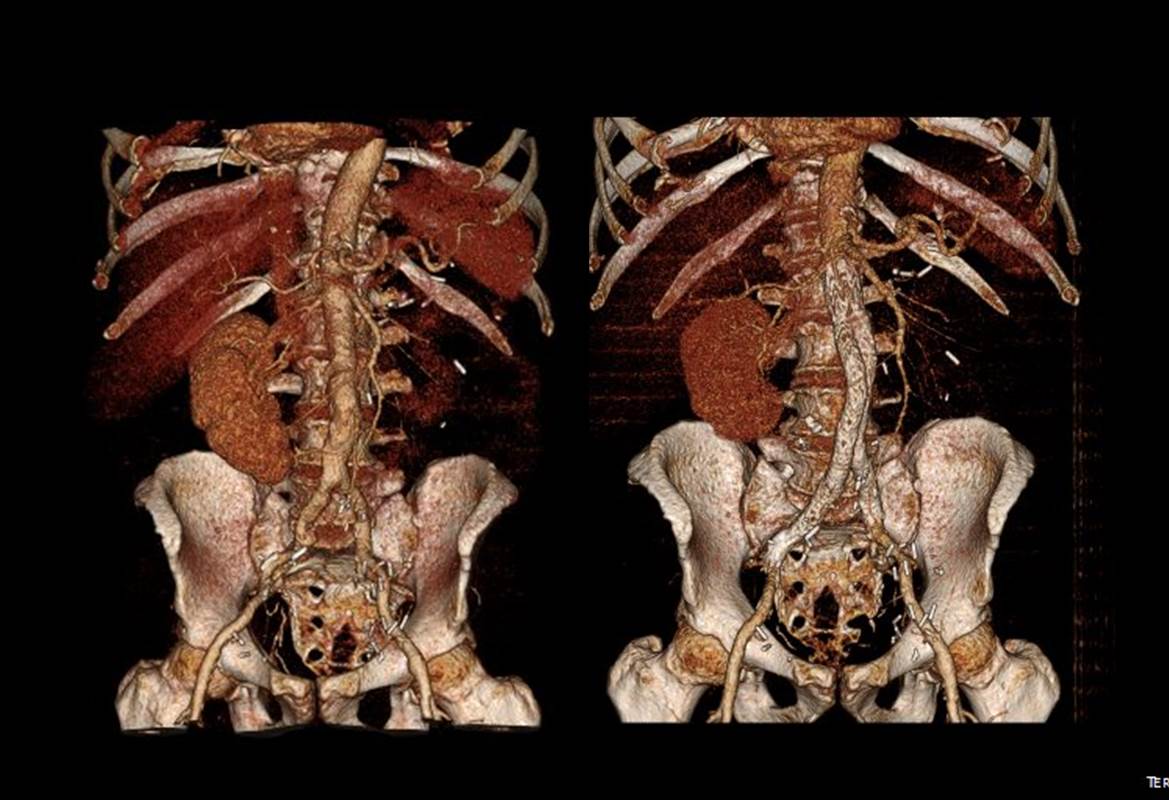
The remote endarterectomy of the external iliac and stenting of the common iliac went without complications. I do this over a wire to ensure access in case of rupture. A postop CTA shows the results in the aortoiliac segment.


Remote endarterectomy of the SFA went smoothly but was held up by calcified plaque above the occluded stents. 

SFA plaque

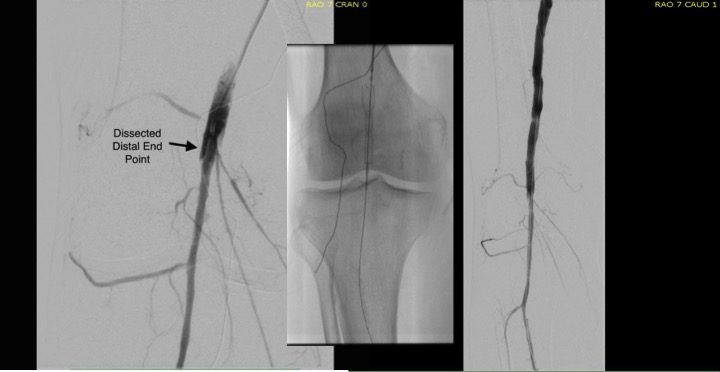
I cut down on the SFA and found that the vein from the thigh would be short. I mobilized the plaque and re engaged the Vollmer ring and was able to dissect the stents. By starting another dissection from the below knee popliteal artery, the stent was mobilized and removed.

Viabahn stent grafts, occluded, removed

The figure below shows the procedure angiographically. I used a tonsil clamp to remove the mobilized stents.

Left, prior to remote endarterectomy, Mid -stent removal, Right -completion

The common femoral and mid SFA arteriotomies were repaired with patch angioplasties. The infrageniculate popliteal arteriotomy was used as inflow to a very short reversed vein bypass with the best segment of thigh vein to a soft posterior tibial artery.

Before and after of thigh segment


Before and after, the CTA on right is late in phase and has venous contrast.

Before and after, centerline.

The patient had a palpable posterior tibial artery pulse at the ankle. CTA predicted the plaque found in the tibioperoneal trunk which compelled me to do the short bypass. In my experience, remote endarterectomy, sometimes with short single segment bypass, successfully restores native vessel circulation without need for lengthy multisegment arm vein bypass. Remote endarterectomy of the external iliac artery avoids the difficult CFA plaque proximal end point that often requires stenting across the ligament down to the patch. Only a single common iliac stent is required. I generally anticoagulate these patients with warfarin, especially if they are likely to resume smoking or have poor runoff. I hope to show this is the equal of multisegment vein bypass, and superior to it by virtue of avoiding long harvest incisions which are the source of much morbidity and now readmissions which are penalized.


Categories
AAA EVAR techniques training

A Troublesome Accessory Renal Artery Complicating a Complicated Patient

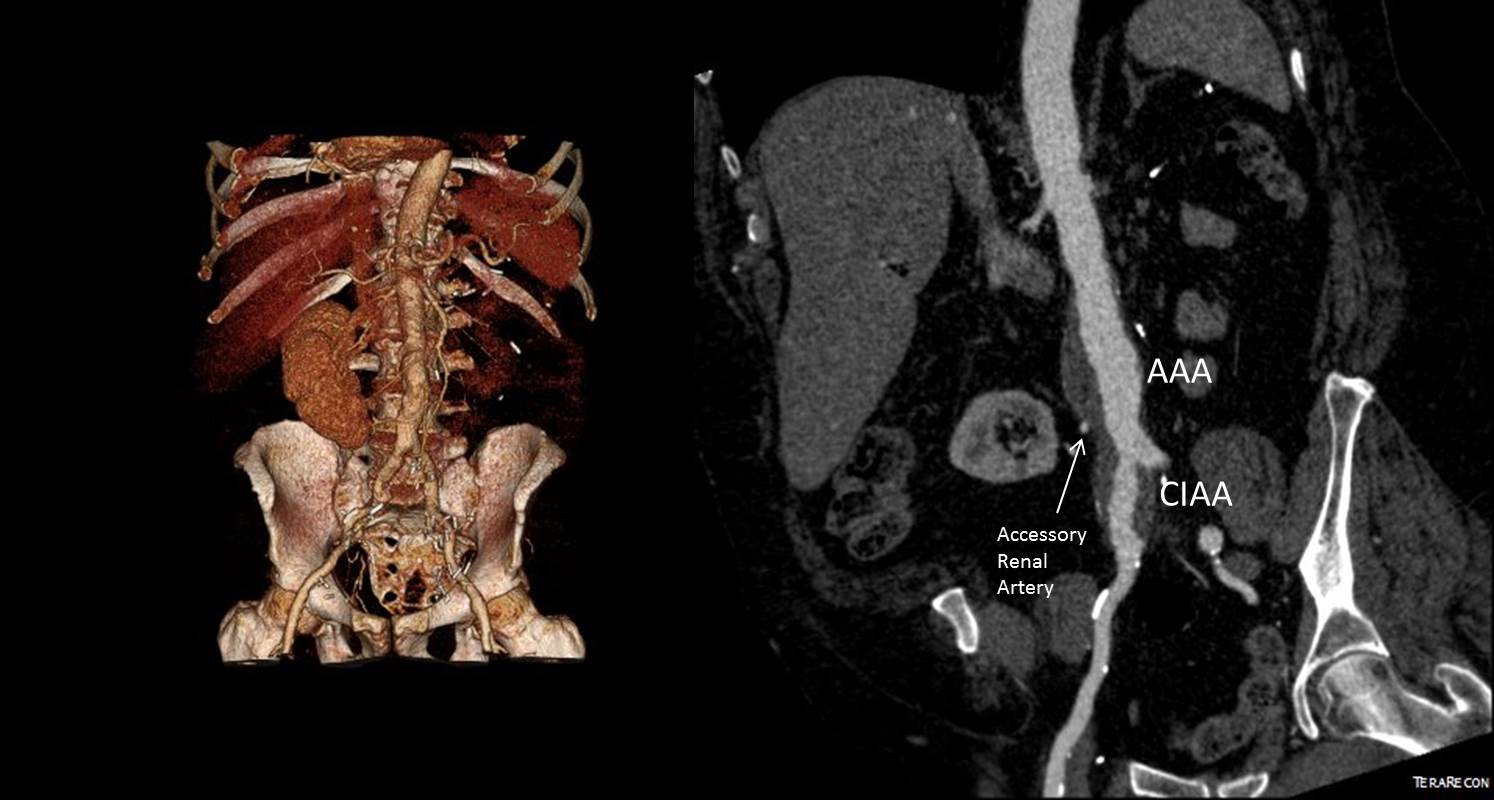
Preop Figure

The patient is an 65 year old man with a growing right common iliac artery aneurysm of 3.7cm, a small AAA, and severe COPD (not oxygen dependent, FEV 1.5L) . He had a prior left nephrectomy for cancer as well as a bladder resection and prostatectomy with an ileal conduit (Indiana pouch or neobladder), with complex abdominal wall closure complicated by infection of Marlex in the past, and prior operations for small bowel obstruction. He is morbidly obese. His kidney function was stable with a Cr 1.5dL/mL, calculated GFR or 44mL/min. His nuclear cardiac stress test (pharmacologic) was normal.

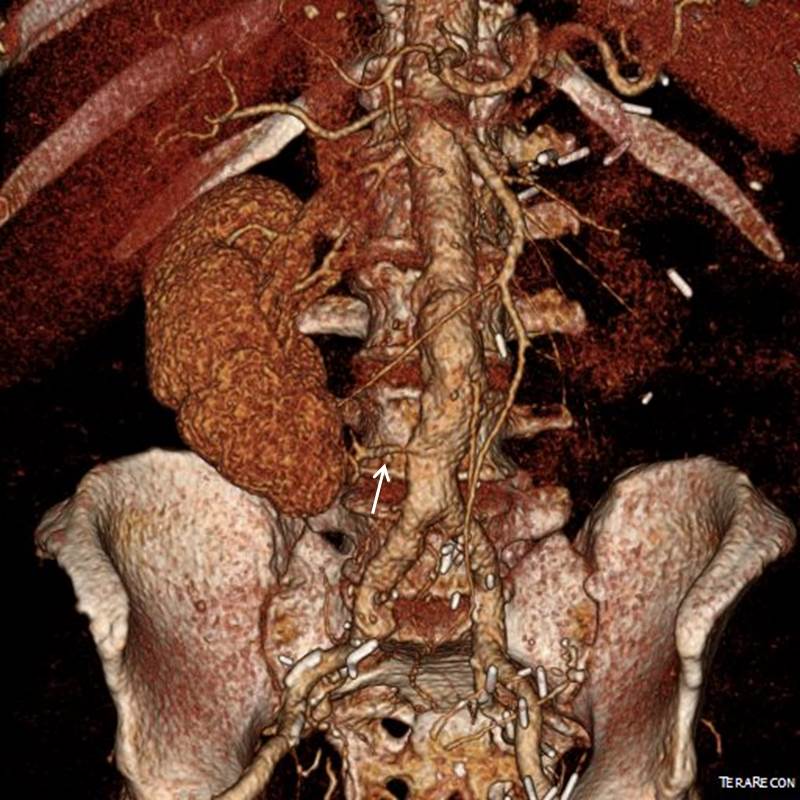
A magnified view of the accessory renal artery is shows below with the arrow

mag preop CT

He needed to have his right CIAA treated but the issues were what to do with his accessory renal artery. Vascular surgery is all about making the right decisions with fall back plans. As with most complicated patients, the options are numerous.

  1. Direct transabdominal open repair
  2. Open retroperitoneal repair –Left sided approach.
  3. Open retroperitoneal repair –Right sided approach
  4. Open debranching right accessory renal artery and EVAR
  5. Parallel graft to right accessory renal artery and EVAR
  6. Coil embolization right accessory renal artery, anticipate worst case postop GFR 20ml/min
  7. Medical management

I informally polled my partners and found an absence of consensus except for rejecting #1, 2, and 7. The first two options were not optimal because of his prior operation and because of the location of his disease. The third option had its proponents, but I felt that the kidney and pouch were in jeopardy from dissection in that area. The open debranching had its appeal for others, but for the same reasons that I rejected #3, I rejected #4 –potential harm to the kidney. #5 may be an option, but in my experience, I have seen too many patients referred for failure of parallel grafts to feel secure about offering it.  #6 would be reasonable if the patient could avoid dialysis. With a calculated CGF of 44ml/min, losing half the remaining kidney would barely leave him off dialysis. By appearances though, the smart money was on losing less than 50% but more than 20%. A 30% loss would result in a GFR of 30mL/min or a Cr of 2.1 which made dialysis not likely. In my experience, the kidney does have some collateralization as evidenced by backbleeding of accessory renals with an infrarenal clamp so it may be that he might lose only 10-15%. I discussed all of these options and medical management with the patient who agreed to proceed with option 5 under my recommendation. My plan was to assess the flow from the accessory renal and proceed if it was small, with plan B being a parallel graft, plan C debranching.

nephrogram

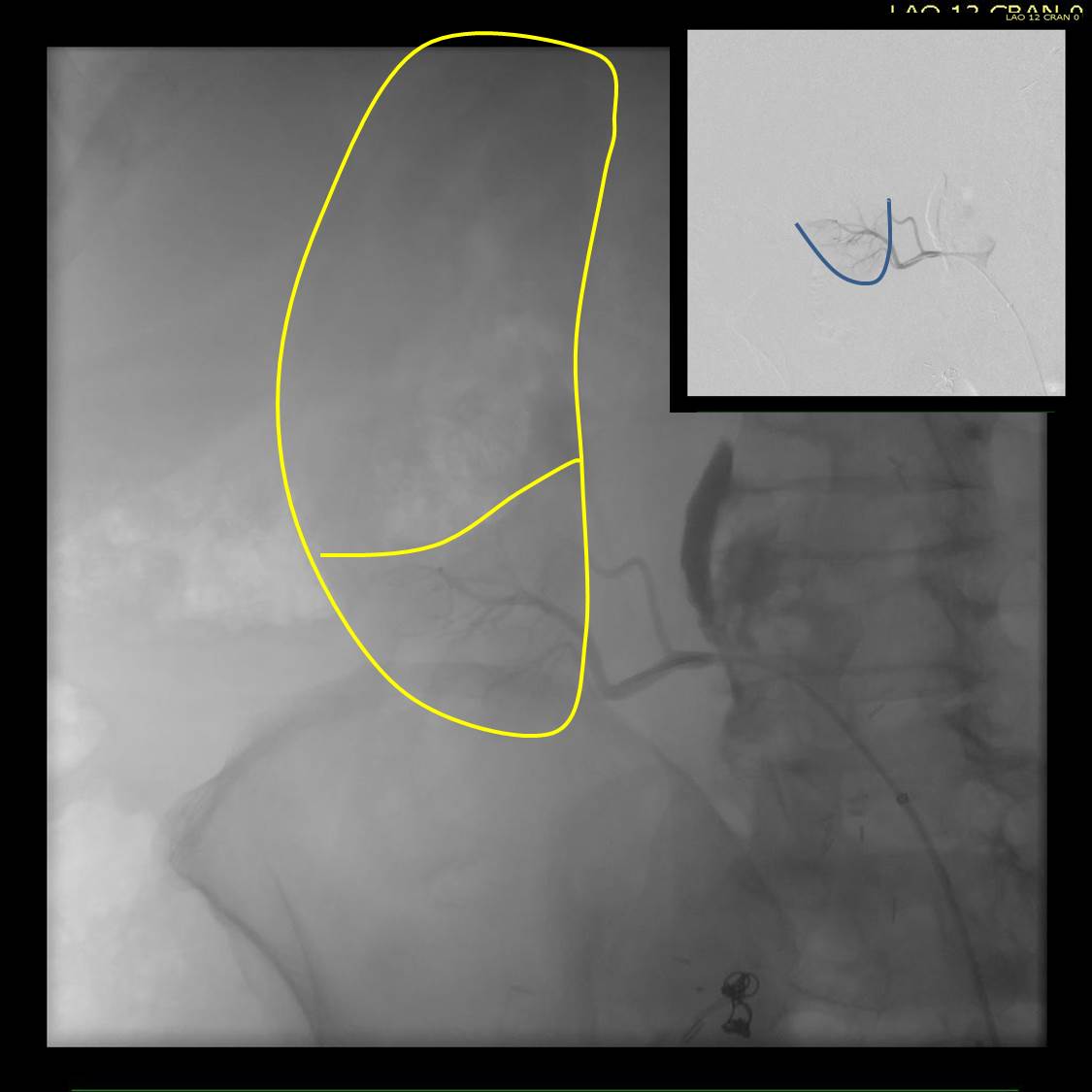
In the OR, the right accessory renal artery was selectively catheterized and a nephrogram revealed that it supplied less than 20% of the kidney. The above diagram shows the extent of the total kidney and the area perfused by the accessory renal artery. I proceeded with coil embolization of it and the right hypogastric artery and EVAR of the AAA/R.CIAA.

post CT

In followup, the patient had a Cr of 1.7mg/dL, representing about 15% loss of kidney function. As the case was done percutaneously, he only had 1cm incision in both groins, and was pleased with his result. No endoleak was seen (CT above).

The telling lesson about this case is that at the time of initial consultation, my first instinct was to prepare the patient for open repair via a right retroperitoneal approach with debranching of the right accessory renal artery as a fallback position. Open surgery is my fallback as it was the foundation of my training. But experience has also taught me that patients with multiple comorbidities often struggle to recover from big operations even if one particular problem is not prohibitively severe. Finally, having smart partners to bounce ideas off of is a not only a luxury but a critical asset.

Categories
Journal Club

March Journal Club -3-10-2015

The February Journal Club’s winner was Dr. Daniel Lopez.

The March Journal Club is a week earlier because St. Patrick’s Day falls on the usual day we have the Journal Club. To my international readers, St. Patrick’s Day (March 17th) is an important holiday in the United States to celebrate St. Patrick, bringer of Christianity to Ireland, by quiet contemplation of that seminal event.

Assuming the truth of genotype analysis, the Celts migrated out of West Central Asia prior to the bronze age -tombs in Mongolia have found red haired maidens in woolen plaid tartans, making them a far flung Asiatic people. Prior to St. Patrick’s conversion of the Irish, they were known for a fierce reputation wherever they settled. The Celts were even in the Middle East for a while, and have a chapter of the New Testament named after them -Galatians (Celts). The Romans tired of continuously fighting them in Northern Italy, Spain, France, Wales, Anglia, and eventually built a wall to keep them in Scotia and Hibernia. When they weren’t fighting foreign invaders, the Irish were excellent at fighting among themselves, and were eventually locked in to a plantation type share-croppery that failed when a blight affected their primary calorie source, the potato, causing an Irish diaspora that has enriched the world. So journal club is a week earlier in honor of St. Patrick.

March 10, 2015, at the usual venue, we will meet to discuss thoracic outlet syndrome. The papers are being presented by:

Dr. Xiaoyi Teng –nTOS paper link

Dr. Dimitrios Virvilis –vTOS paper link

Dr. Max Wohlauer –Paraclavicular Approach TOS paper link

Categories
Journal Club PAD

February Journal Club Articles -Aortoiliac Occlusive Disease

Congratulations to Dr. Moqueet Qureshi who gave the best presentation at the January journal club. It was a close one as all the presentations were excellent analyses of their papers. This months journal club presenters are:

Dr. Daniel Lopez: paper link -Humphries et al. Outcomes of covered versus bare metal balloon expandable stents for aortoiliac occlusive disease. JVS 2014;60:337-44.

Dr. John Weber: paper link -Aihara et al. Long term outcomes of endovascular therapy for aortoiliac bifurcation lesions in the Real-AI Registry. J Endovasc Ther 2014;21:25-33.

Dr. Michael O’Neil: paper link -Vallabhaneni et al. Iliac artery recanalization of chronic occlusions to facilitate endovascular aneurysm repair. JVS 2012;56:1549-54.

The Journal Club will start at 6:30pm, congregating at 6pm for conversation, dinner and beverages, at the Foundation House, Cleveland Clinic and Foundation.

Categories
PAD techniques TEVAR

External iliac remote endarterectomy in lieu of a conduit for TEVAR

IMG_1281

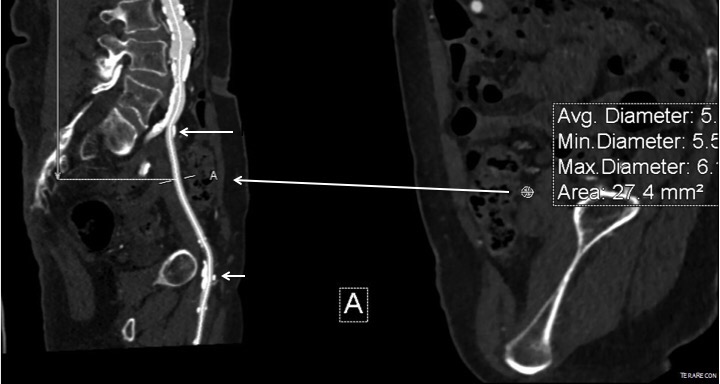
The patient had diffuse atherosclerosis with small luminal area even in areas without calcified plaque. It predicted inaccessibility for the 22 French sheath required to deliver the 32mm C-TAG device to be placed for a symptomatic type B thoracic aortic dissection associated with a small but expanding proximal aneurysm.

IMG_1277

My options included direct aortic puncture, an aortofemoral conduit, or an endoconduit. The aorta was heavily calcified and the bifurcation was narrowed by circumferential plaque down to 6-7mm at its narrowest and the left iliac had a severe narrowing due to this plaque. The common femoral artery was severely diseased with a lumen diameter of 4mm due to heavily calcified plaque.

I have come to favor direct aortic puncture over conduits, but the heavily calcified aorta and the absence of safe areas to clamp made me think about other options. My experience with endoconduits has been limited to revising problems of endoconduits from elsewhere, but others report it as a feasible option.

The problem with a long artery narrowed with irregular plaque and even intimal thickening is that it will readily expand to accommodate a large sheath but removing it involves the frictional resistance of the whole artery and typically the “iliac on a stick” avulsion involves the whole length of external iliac artery, likely because the common iliac is anchored by the aortoiliac plaque, the smaller diameter of the EIA, and the longer more tortuous path offering greater resistance in the EIA compared to the aorto-common iliac segment.

IMG_1272

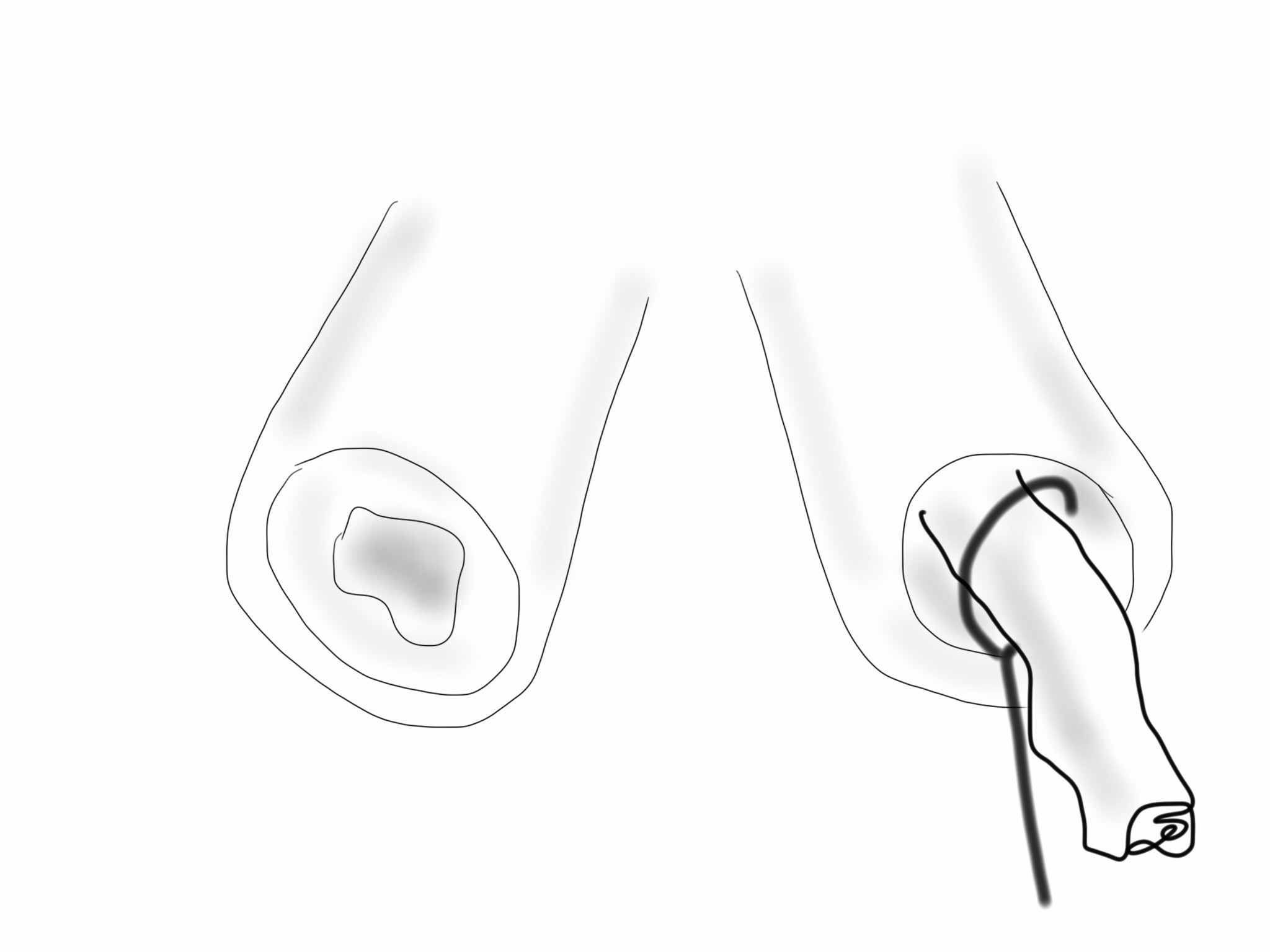
Remote endarterectomy, a technique involving endarterectomizing an artery through a single arteriotomy, offers the possibility of increasing the lumen of even a mildly diseased artery and reducing the frictional coefficient, assuming the remnant smooth adventitia is less resistant than rough irregular intimal plaque.

IMG_1275

The plan was to expose the right common femoral artery and endarterectomize it and gain wire access from the R. CFA. A wire would be placed on the left iliofemoral system to protect it for later kissing iliac stents. A right EIA remote endarterectomy would be performed, and then the right aorto-common iliac segment would be balloon dilated to 8mm.

IMG_1278

The operation went as planned. The external iliac plaque was removed in a single piece from the EIA origin.

IMG_1279

Arteriography showed the right EIA to be free of intimal disease, and dilators and ultimately the 22F sheath went in easily.

IMG_1276

The TEVAR also went uneventully -the left subclavian which had a prior common carotid to subclavian bypass, was covered and the aneurysm and flap were excluded from the left CCA to the celiac axis.

IMG_1280

The most difficult part of the operation was removing the sheath, as is usually the case with a tight iliac, but the friction point was largely at the common iliac and not the external iliac. No artery could be seen extruding with the sheath at the groin while steady tension was applied to the sheath under fluoro. The aortic bifurcation was repaired with kissing iliac stent. The patient recovered well and her chest pain resolved.

I have done this for EVAR, including reopening occluded external iliac arteries, and even for a 26F access for TAVR, avoiding the need for placement of a conduit in selected patients.

Addendum: in followup, I had the chance to check up on the repair -the EIA remained large and patent.

before after

Categories
Carotid

Oblique Incisions Do Not Compromise Exposure During Carotid Endarterectomy

IMG_3959

I was asked to assist one of my otolaryngology colleagues in extirpating a neck tumor that encroached on the carotid artery at the base of the skull early in my career. While the operation was complex and interesting, the most impressive part of it was the complete exposure of the neck from base of skull to the base of neck that was possible with an oblique skin line incision. This challenged bias I had about “exposure,” because up to that time, I had done the mastoid process to manubrium incision along the anterior border of the sternocleidomastoid muscle. What was doubly remarkable was that the incision was invisible in followup despite curling from ear to epiglottis because it was hidden in the fold under the submandibular fat.

This patient above had his carotid endarterectomy performed with a skin line incision. He didn’t even need his beard shaved for the operation.

IMG_3958

The key is developing subplatysmal flaps like the kind you make with thyroidectomy. This allows cephalad and caudad exposure. More exposure means just extending the incision medially and laterally. These flaps heal well. This with retraction allows for excellent exposure of the neck.

OR

plaque

The other advantage is that the fat is never cut across but completely avoided if you go under it and lift it up. The incision is far less disfiguring and heals well because the forces co-apt the skin without relying on tension from the closing sutures. Preop planning with CTA and 3D virtual reconstruction confirm where the incision should be placed. But most of all, the patients appreciate not having a scar on the neck that they have to constantly explain.

Planning starts with visualizing the proximal and distal extend of plaque needed to be removed.

00026124719_20130925_1

The 3D reconstruction view can be “Window Level”-ed to bring in soft tissues and skin to anticipate the operative exposure.

planning

Experience has shown me that it is possible to avoid cutting through the fat on the neck, and what is visually the lower part of the face as much as it is the neck, but performing this oblique incision in the skin fold.

incision