Categories
AAA EVAR techniques training

A Troublesome Accessory Renal Artery Complicating a Complicated Patient

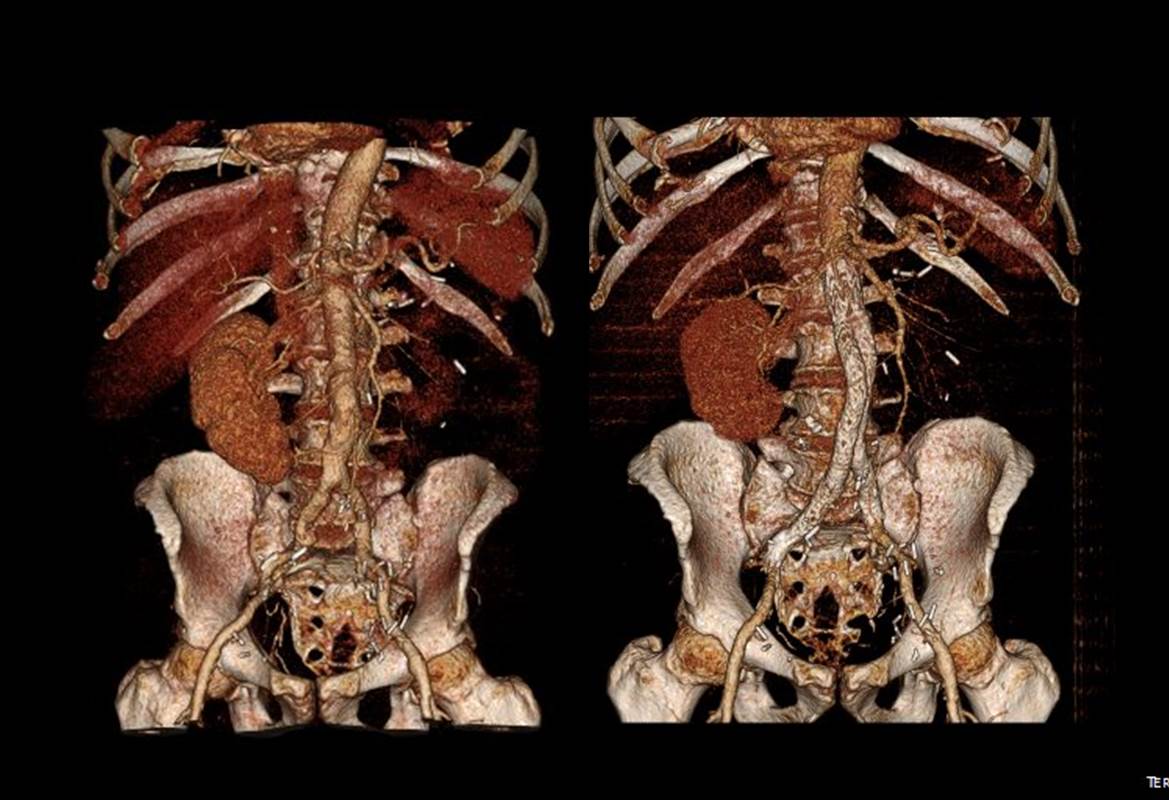
Preop Figure

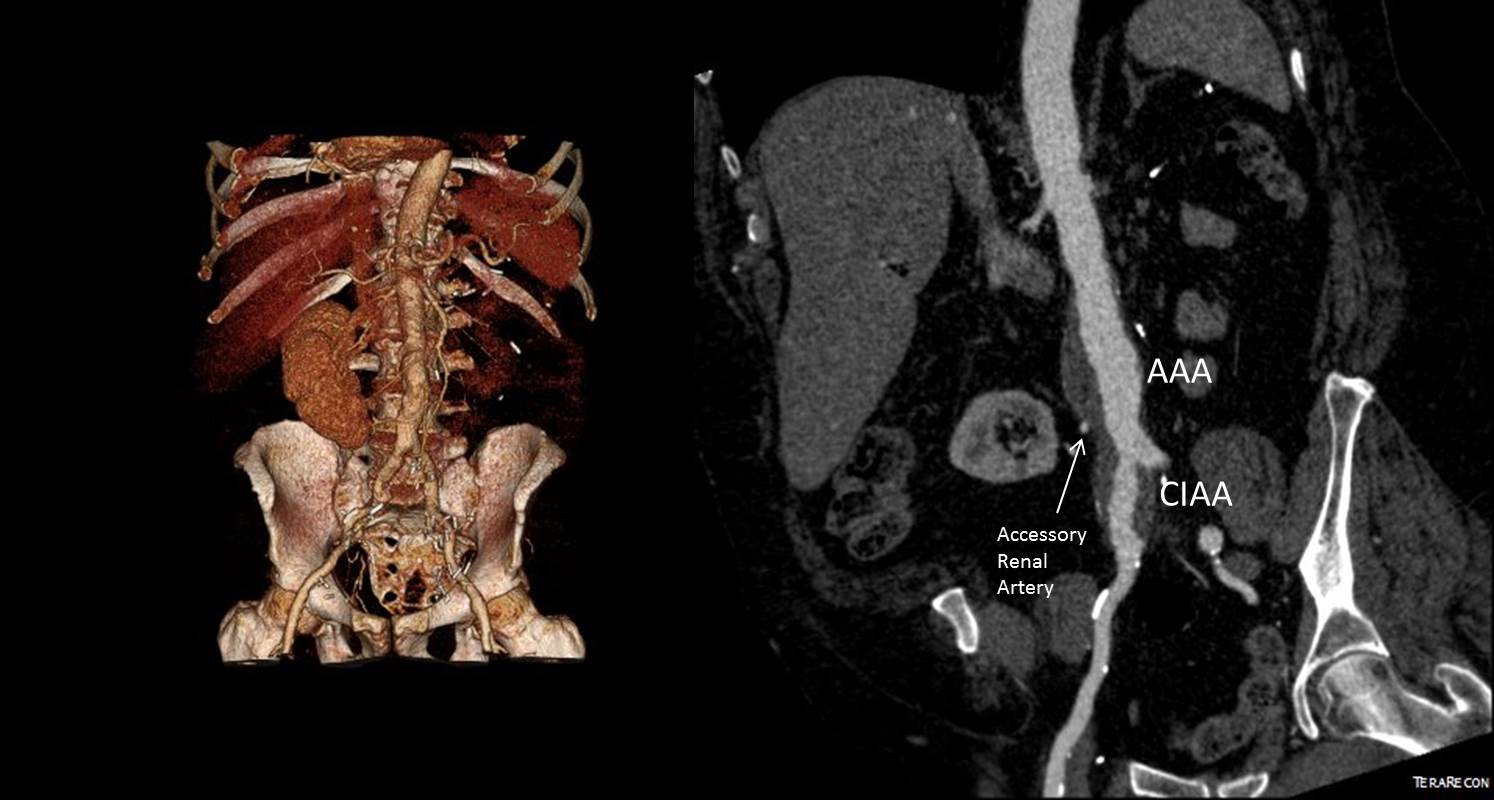
The patient is an 65 year old man with a growing right common iliac artery aneurysm of 3.7cm, a small AAA, and severe COPD (not oxygen dependent, FEV 1.5L) . He had a prior left nephrectomy for cancer as well as a bladder resection and prostatectomy with an ileal conduit (Indiana pouch or neobladder), with complex abdominal wall closure complicated by infection of Marlex in the past, and prior operations for small bowel obstruction. He is morbidly obese. His kidney function was stable with a Cr 1.5dL/mL, calculated GFR or 44mL/min. His nuclear cardiac stress test (pharmacologic) was normal.

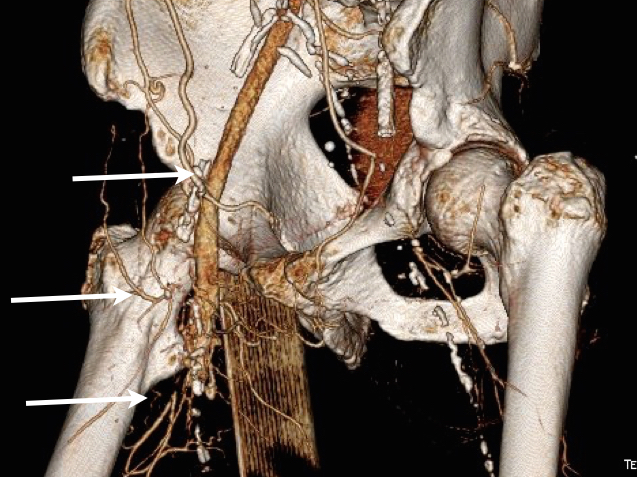
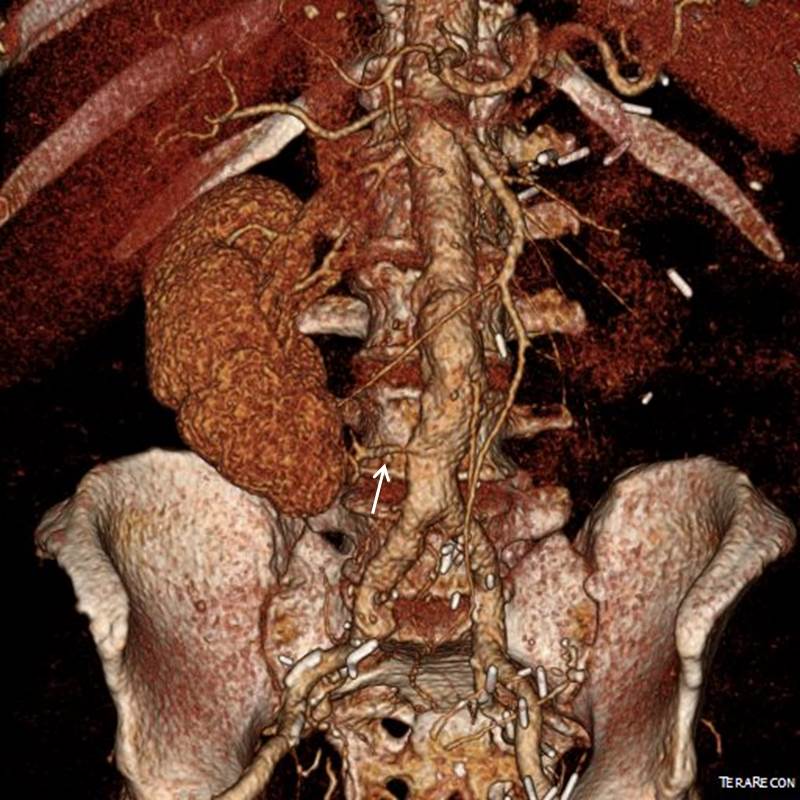
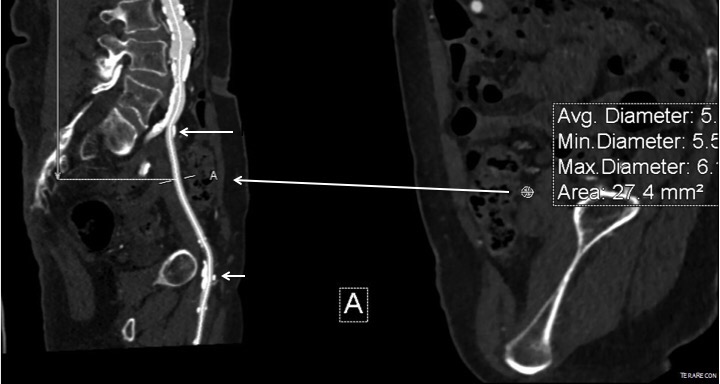
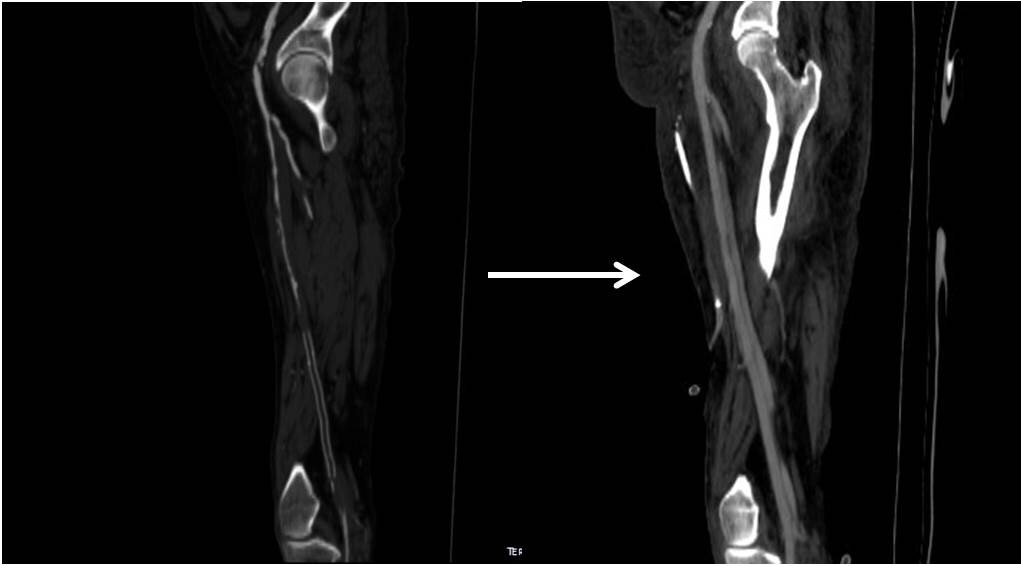
A magnified view of the accessory renal artery is shows below with the arrow

mag preop CT

He needed to have his right CIAA treated but the issues were what to do with his accessory renal artery. Vascular surgery is all about making the right decisions with fall back plans. As with most complicated patients, the options are numerous.

  1. Direct transabdominal open repair
  2. Open retroperitoneal repair –Left sided approach.
  3. Open retroperitoneal repair –Right sided approach
  4. Open debranching right accessory renal artery and EVAR
  5. Parallel graft to right accessory renal artery and EVAR
  6. Coil embolization right accessory renal artery, anticipate worst case postop GFR 20ml/min
  7. Medical management

I informally polled my partners and found an absence of consensus except for rejecting #1, 2, and 7. The first two options were not optimal because of his prior operation and because of the location of his disease. The third option had its proponents, but I felt that the kidney and pouch were in jeopardy from dissection in that area. The open debranching had its appeal for others, but for the same reasons that I rejected #3, I rejected #4 –potential harm to the kidney. #5 may be an option, but in my experience, I have seen too many patients referred for failure of parallel grafts to feel secure about offering it.  #6 would be reasonable if the patient could avoid dialysis. With a calculated CGF of 44ml/min, losing half the remaining kidney would barely leave him off dialysis. By appearances though, the smart money was on losing less than 50% but more than 20%. A 30% loss would result in a GFR of 30mL/min or a Cr of 2.1 which made dialysis not likely. In my experience, the kidney does have some collateralization as evidenced by backbleeding of accessory renals with an infrarenal clamp so it may be that he might lose only 10-15%. I discussed all of these options and medical management with the patient who agreed to proceed with option 5 under my recommendation. My plan was to assess the flow from the accessory renal and proceed if it was small, with plan B being a parallel graft, plan C debranching.

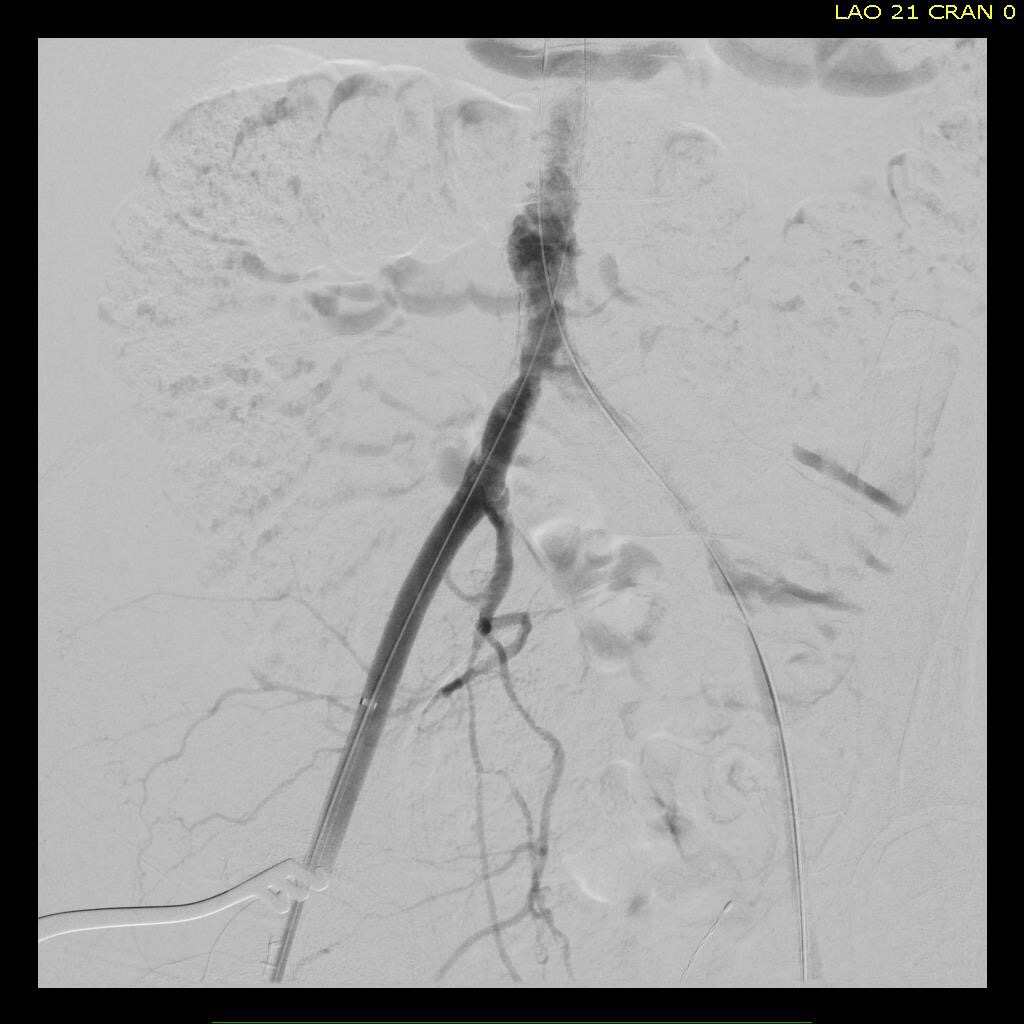
nephrogram

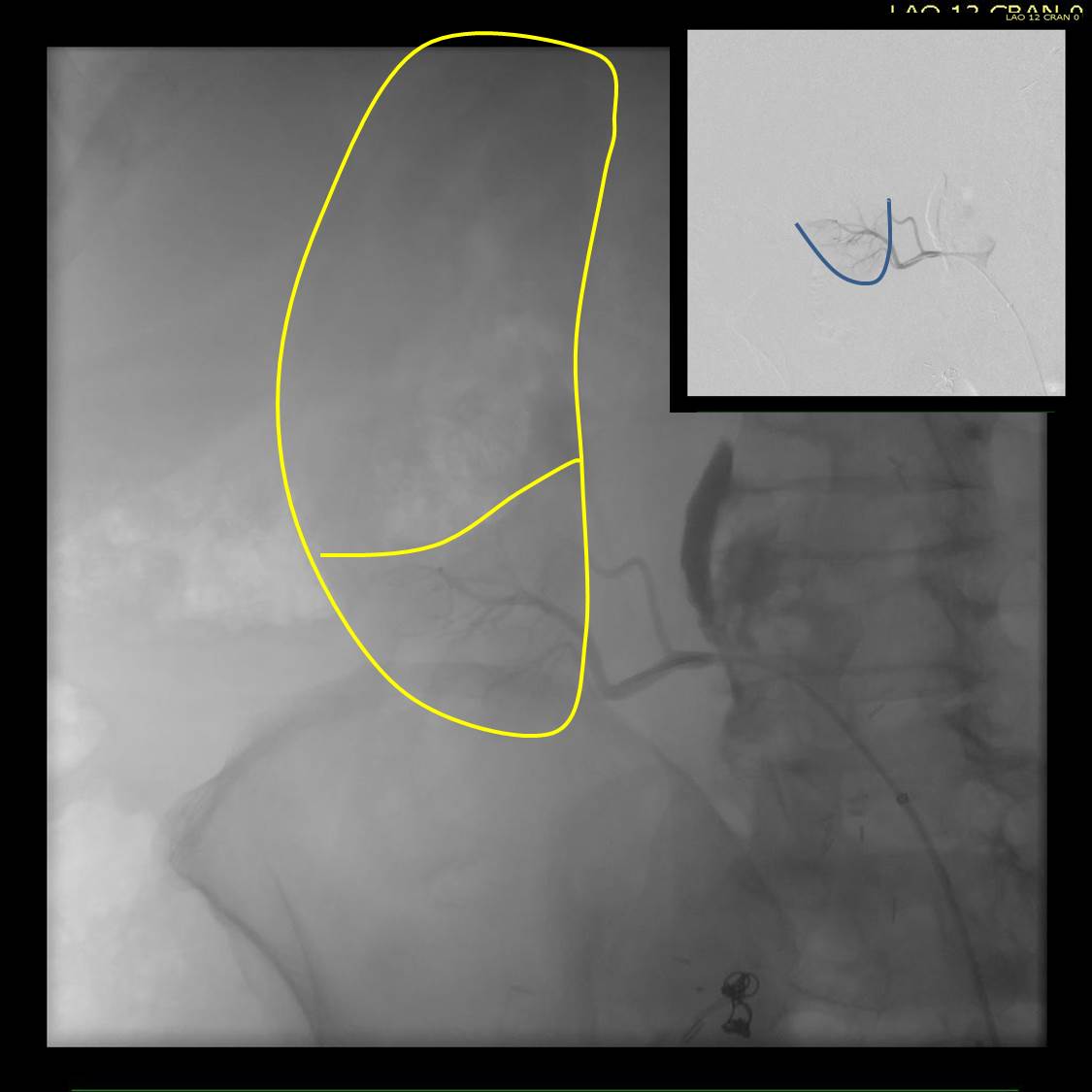
In the OR, the right accessory renal artery was selectively catheterized and a nephrogram revealed that it supplied less than 20% of the kidney. The above diagram shows the extent of the total kidney and the area perfused by the accessory renal artery. I proceeded with coil embolization of it and the right hypogastric artery and EVAR of the AAA/R.CIAA.

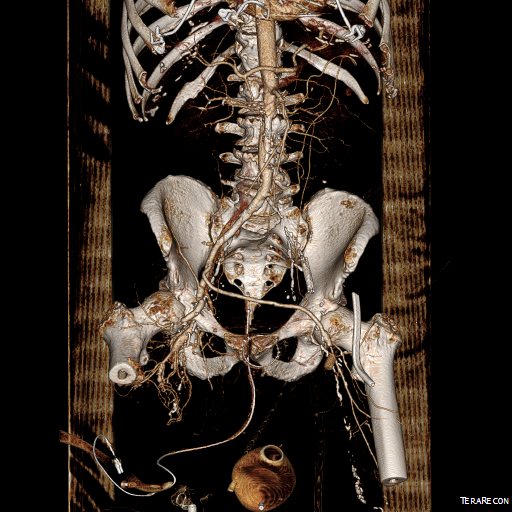
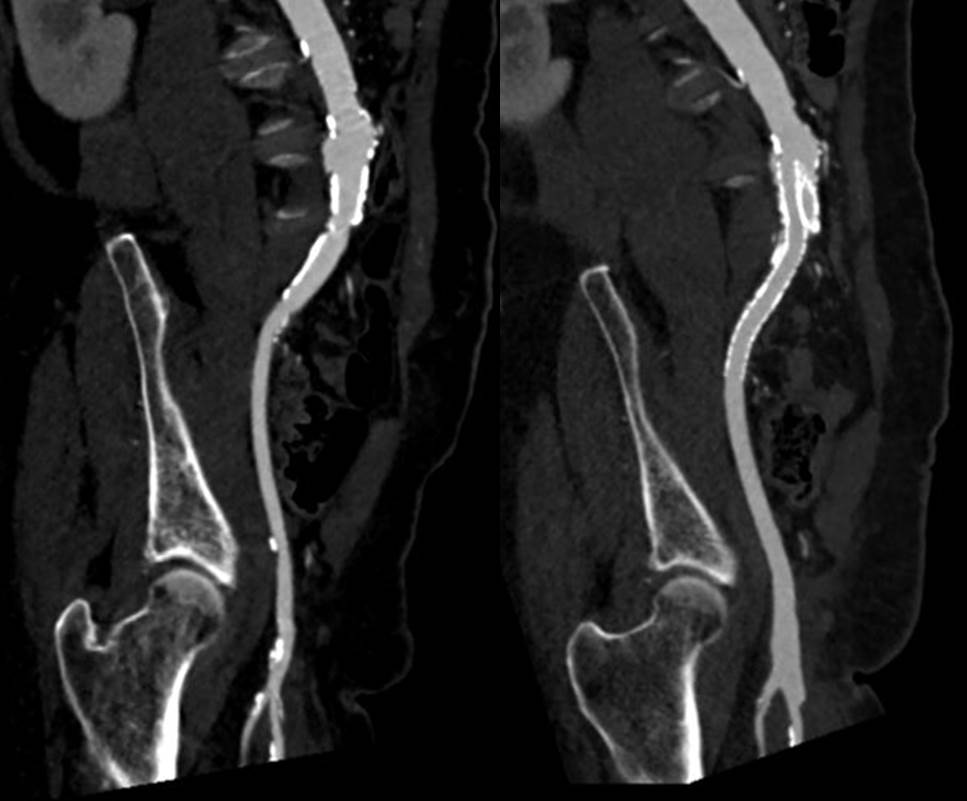
post CT

In followup, the patient had a Cr of 1.7mg/dL, representing about 15% loss of kidney function. As the case was done percutaneously, he only had 1cm incision in both groins, and was pleased with his result. No endoleak was seen (CT above).

The telling lesson about this case is that at the time of initial consultation, my first instinct was to prepare the patient for open repair via a right retroperitoneal approach with debranching of the right accessory renal artery as a fallback position. Open surgery is my fallback as it was the foundation of my training. But experience has also taught me that patients with multiple comorbidities often struggle to recover from big operations even if one particular problem is not prohibitively severe. Finally, having smart partners to bounce ideas off of is a not only a luxury but a critical asset.

Categories
Journal Club

March Journal Club -3-10-2015

The February Journal Club’s winner was Dr. Daniel Lopez.

The March Journal Club is a week earlier because St. Patrick’s Day falls on the usual day we have the Journal Club. To my international readers, St. Patrick’s Day (March 17th) is an important holiday in the United States to celebrate St. Patrick, bringer of Christianity to Ireland, by quiet contemplation of that seminal event.

Assuming the truth of genotype analysis, the Celts migrated out of West Central Asia prior to the bronze age -tombs in Mongolia have found red haired maidens in woolen plaid tartans, making them a far flung Asiatic people. Prior to St. Patrick’s conversion of the Irish, they were known for a fierce reputation wherever they settled. The Celts were even in the Middle East for a while, and have a chapter of the New Testament named after them -Galatians (Celts). The Romans tired of continuously fighting them in Northern Italy, Spain, France, Wales, Anglia, and eventually built a wall to keep them in Scotia and Hibernia. When they weren’t fighting foreign invaders, the Irish were excellent at fighting among themselves, and were eventually locked in to a plantation type share-croppery that failed when a blight affected their primary calorie source, the potato, causing an Irish diaspora that has enriched the world. So journal club is a week earlier in honor of St. Patrick.
March 10, 2015, at the usual venue, we will meet to discuss thoracic outlet syndrome. The papers are being presented by:

Dr. Xiaoyi Teng –nTOS paper link

Dr. Dimitrios Virvilis –vTOS paper link

Dr. Max Wohlauer –Paraclavicular Approach TOS paper link

Categories
Journal Club PAD

February Journal Club Articles -Aortoiliac Occlusive Disease

Congratulations to Dr. Moqueet Qureshi who gave the best presentation at the January journal club. It was a close one as all the presentations were excellent analyses of their papers. This months journal club presenters are:

Dr. Daniel Lopez: paper link -Humphries et al. Outcomes of covered versus bare metal balloon expandable stents for aortoiliac occlusive disease. JVS 2014;60:337-44.

Dr. John Weber: paper link -Aihara et al. Long term outcomes of endovascular therapy for aortoiliac bifurcation lesions in the Real-AI Registry. J Endovasc Ther 2014;21:25-33.

Dr. Michael O’Neil: paper link -Vallabhaneni et al. Iliac artery recanalization of chronic occlusions to facilitate endovascular aneurysm repair. JVS 2012;56:1549-54.

The Journal Club will start at 6:30pm, congregating at 6pm for conversation, dinner and beverages, at the Foundation House, Cleveland Clinic and Foundation.

Categories
PAD techniques TEVAR

External iliac remote endarterectomy in lieu of a conduit for TEVAR

IMG_1281

The patient had diffuse atherosclerosis with small luminal area even in areas without calcified plaque. It predicted inaccessibility for the 22 French sheath required to deliver the 32mm C-TAG device to be placed for a symptomatic type B thoracic aortic dissection associated with a small but expanding proximal aneurysm.

IMG_1277

My options included direct aortic puncture, an aortofemoral conduit, or an endoconduit. The aorta was heavily calcified and the bifurcation was narrowed by circumferential plaque down to 6-7mm at its narrowest and the left iliac had a severe narrowing due to this plaque. The common femoral artery was severely diseased with a lumen diameter of 4mm due to heavily calcified plaque.

I have come to favor direct aortic puncture over conduits, but the heavily calcified aorta and the absence of safe areas to clamp made me think about other options. My experience with endoconduits has been limited to revising problems of endoconduits from elsewhere, but others report it as a feasible option.

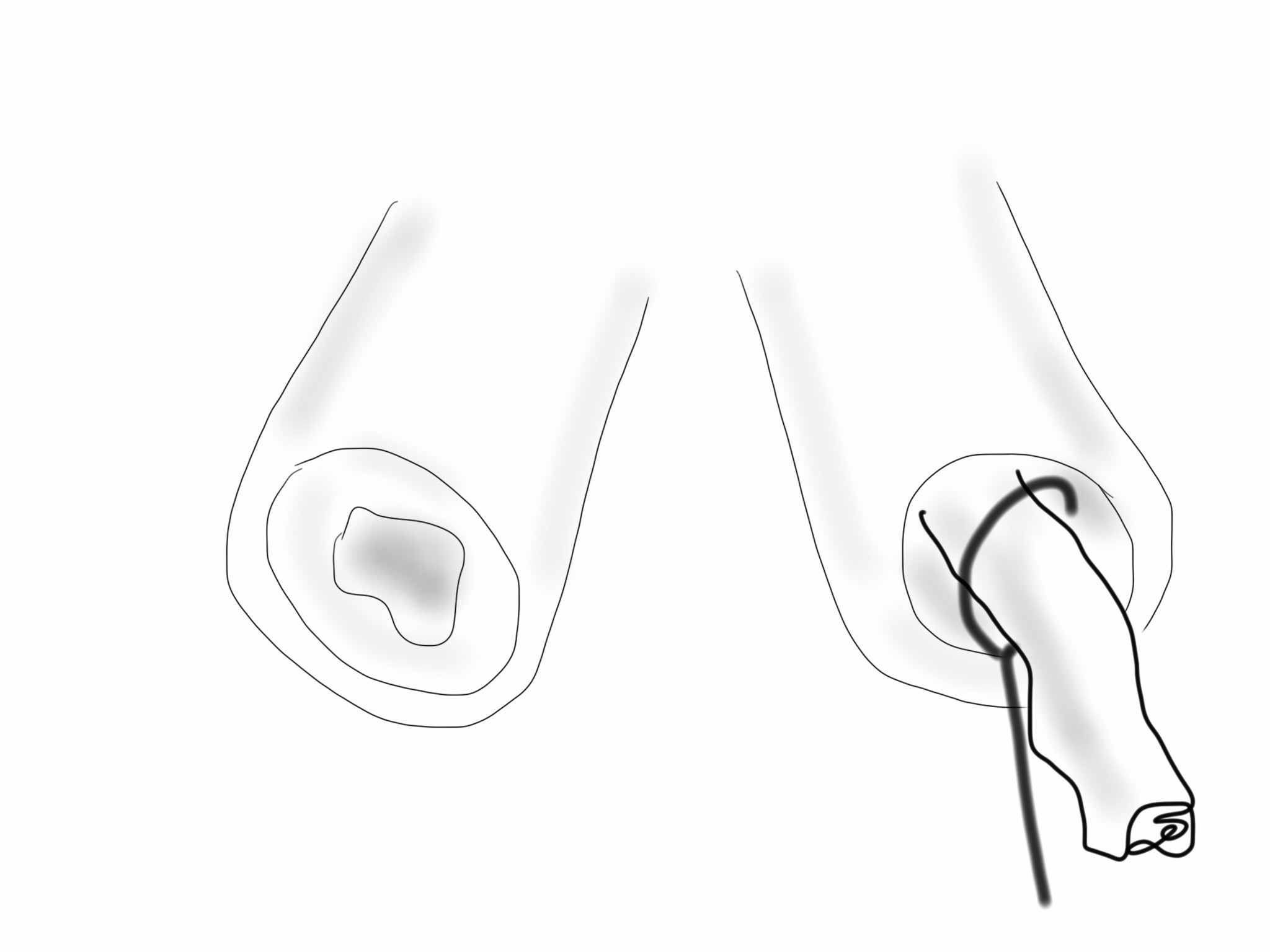
The problem with a long artery narrowed with irregular plaque and even intimal thickening is that it will readily expand to accommodate a large sheath but removing it involves the frictional resistance of the whole artery and typically the “iliac on a stick” avulsion involves the whole length of external iliac artery, likely because the common iliac is anchored by the aortoiliac plaque, the smaller diameter of the EIA, and the longer more tortuous path offering greater resistance in the EIA compared to the aorto-common iliac segment.

IMG_1272

Remote endarterectomy, a technique involving endarterectomizing an artery through a single arteriotomy, offers the possibility of increasing the lumen of even a mildly diseased artery and reducing the frictional coefficient, assuming the remnant smooth adventitia is less resistant than rough irregular intimal plaque.

IMG_1275

The plan was to expose the right common femoral artery and endarterectomize it and gain wire access from the R. CFA. A wire would be placed on the left iliofemoral system to protect it for later kissing iliac stents. A right EIA remote endarterectomy would be performed, and then the right aorto-common iliac segment would be balloon dilated to 8mm.

IMG_1278

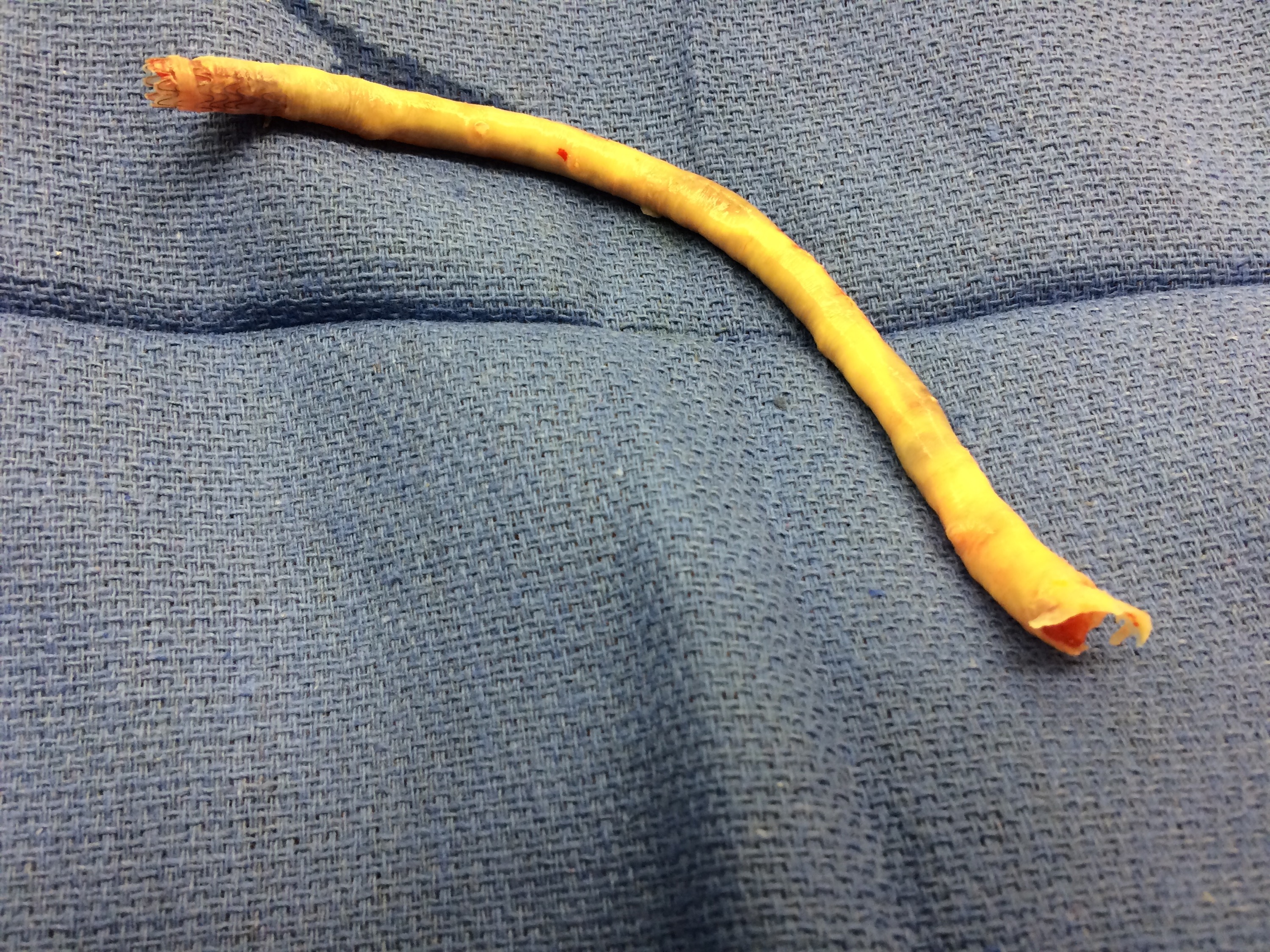
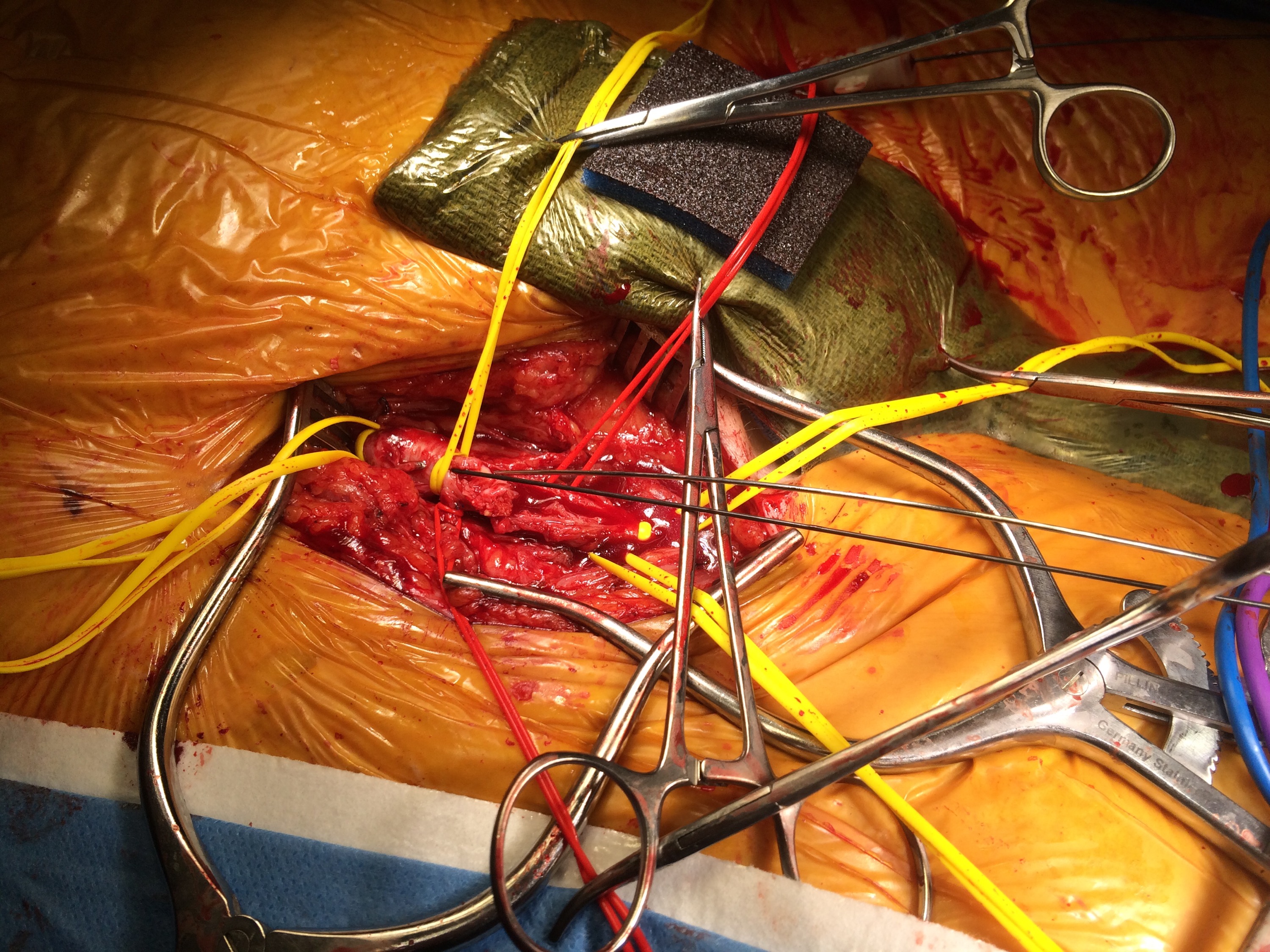
The operation went as planned. The external iliac plaque was removed in a single piece from the EIA origin.

IMG_1279

Arteriography showed the right EIA to be free of intimal disease, and dilators and ultimately the 22F sheath went in easily.

IMG_1276

The TEVAR also went uneventully -the left subclavian which had a prior common carotid to subclavian bypass, was covered and the aneurysm and flap were excluded from the left CCA to the celiac axis.

IMG_1280

The most difficult part of the operation was removing the sheath, as is usually the case with a tight iliac, but the friction point was largely at the common iliac and not the external iliac. No artery could be seen extruding with the sheath at the groin while steady tension was applied to the sheath under fluoro. The aortic bifurcation was repaired with kissing iliac stent. The patient recovered well and her chest pain resolved.

I have done this for EVAR, including reopening occluded external iliac arteries, and even for a 26F access for TAVR, avoiding the need for placement of a conduit in selected patients.

Addendum: in followup, I had the chance to check up on the repair -the EIA remained large and patent.

before after

Categories
Carotid

Oblique Incisions Do Not Compromise Exposure During Carotid Endarterectomy

IMG_3959

I was asked to assist one of my otolaryngology colleagues in extirpating a neck tumor that encroached on the carotid artery at the base of the skull early in my career. While the operation was complex and interesting, the most impressive part of it was the complete exposure of the neck from base of skull to the base of neck that was possible with an oblique skin line incision. This challenged bias I had about “exposure,” because up to that time, I had done the mastoid process to manubrium incision along the anterior border of the sternocleidomastoid muscle. What was doubly remarkable was that the incision was invisible in followup despite curling from ear to epiglottis because it was hidden in the fold under the submandibular fat.

This patient above had his carotid endarterectomy performed with a skin line incision. He didn’t even need his beard shaved for the operation.

IMG_3958

The key is developing subplatysmal flaps like the kind you make with thyroidectomy. This allows cephalad and caudad exposure. More exposure means just extending the incision medially and laterally. These flaps heal well. This with retraction allows for excellent exposure of the neck.

OR

plaque

The other advantage is that the fat is never cut across but completely avoided if you go under it and lift it up. The incision is far less disfiguring and heals well because the forces co-apt the skin without relying on tension from the closing sutures. Preop planning with CTA and 3D virtual reconstruction confirm where the incision should be placed. But most of all, the patients appreciate not having a scar on the neck that they have to constantly explain.

Planning starts with visualizing the proximal and distal extend of plaque needed to be removed.

00026124719_20130925_1

The 3D reconstruction view can be “Window Level”-ed to bring in soft tissues and skin to anticipate the operative exposure.

planning

Experience has shown me that it is possible to avoid cutting through the fat on the neck, and what is visually the lower part of the face as much as it is the neck, but performing this oblique incision in the skin fold.

incision

Categories
Commentary

VESS Meeting -Vail, CO 2015

IMG_3767

VESS is a special medical society whose mission is to foster academic activity and collegiality among young vascular surgeons. Dr. Vikram Kashyap, the outgoing president, gave an engaging talk about changing with the times, referencing three powerhouse rock groups -Rush, The Police, and the Red Hot Chili Peppers, three of my favorite groups.

Dr. Max Wohlauer presented our case report on “Osteosarcoma masquerading as an axillary artery pseudoanuerysm.”

IMG_3804

The case report ended the Friday morning session and was well received.

IMG_3805

Dr. John Weber opened the Friday afternoon session with “Median arcuate ligament syndrome is not a vascular disease.” Shown above prepping for the talk, he is also in the conference dress code of being ready for the slopes.

The talk was also well received and not surprising to most who agreed. In a conversation I had with Dr. Kenneth Cherry, he mentioned that he and Dr. Jeb Hallett had concluded as much decades ago.

The scuttlebutt in the conference was about the NY Times article about the scandalous overuse of femoral stents by some physicians. It is a matter of course that the first line of therapy for mild to moderate claudication is a combination of risk factor modification and exercise therapy -something not mentioned by the writers as something emphasized by Vascular Surgeons who as a rule are against plying stents on asymptomatic or mildly symptomatic patients.

The other thing was the tremendous demand for vascular surgeons, and the success of the 0-5 training programs which represent the future of vascular surgery. Dr. Karl Illig professed as much in the Q&A of a report from Wake Forest. Surprisingly the majority (100%) of 0-5 graduates in 2013 went into academic practice.

Categories
TEVAR

Aortic Zones

TEVAR zones

Categories
techniques TEVAR training

Kitchen-top Thoracic Stent Graft

IMG_1237

Before manufactured thoracic stent grafts were approved for use, you had to make your own. I think that even in theory you should have this in your mental locker, because it is pretty straight forward to accomplish. The patient was a homeless man who got struck by an SUV while crossing Broadway merely blocks from Columbia Presbyterian. The specifics are lost to time, but he was found to have among his multiple injuries a tear in his thoracic aorta at the ligamentum arteriosum. Cardiothoracic surgery felt that he was far too high a risk to undergo open repair. I was on call, and when I looked at this patient’s scans, I realized that he might survive with a stent graft across the tear, but the only suitable grafts were short aortic cuffs intended for infrarenal repair with short delivery systems. Being young staff, I called our site chief at that time, a grizzled veteran, for some advice about making stent grafts.

IMG_1232IMG_1234
The process is simple enough, and discovering it is like finding out that a seemingly complicated dish has an exceedingly simple recipe. The process starts with an iron and an ironing board, with which you press flat a Cooley graft of 32 or larger diameter. The Cooley graft is a fine weave graft that has pressed cylindrical folds that allow you to collapse it like a Slinky toy. Ironing between two sheets of paper allows you to avoid overheating the fabric.

IMG_1233
Once flattened and stretched, it is now ready for placement of stents. The stents shown here are Gianturco stents which typically are constrained with a monofilament and has barbs. The barbs are removed with needle nose pliers. 5-0 monofilament suture is used to secure the stents in the graft. More spacing allows for the graft to accommodate tortuosity, but the graft may bunch up in the sheath. The top and bottom stents should be within 5mm of the graft edge –this way you will remember that at deployment.

IMG_1235
For this case which required only one stent, three were made and they were autoclaved. Loading into a large sheath of 24F is done over a catheter to preserve a wire channel. The graft is pushed in using the umbilical tape or silk suture technique referenced in Oderich’s paper about reloading modified stent grafts.
Because of the large deliver system, a conduit was required and sutured end to end into the common iliac artery –I no longer do this unless there is a problem with severe plaque requiring endarterectomy. The graft was deployed by push-pull technique with the heart rate slowed pharmacologically. The patient stabilized from this, took several months to recover from his other injuries but was discharged and lost to followup.

IMG_1236IMG_1237
Is this knowledge helpful? In 2015, debatable, but in 2003, it saved a life.

Categories
Lymphatic techniques Wounds

Extremity lymphatic leaks -a rare complication

2015/01/img_1225.jpg

This patient had had an endoscopic saphenectomy for coronary bypass at another institution and had developed a wound infection that eventually healed, but developed a pore at the scope site that continued to drain clear fluid soaking an ABD pad hourly. This had been cauterized and sutured without improvement.

2015/01/img_1227.jpg

The patient was taken to the operating room for dye lymphangiography and resection of the leak. The dye used was isosulfan blue which is lipophilic and is taken up by the lymphatics from the extra cellular space and pumped centrally within minutes of injection. The lymphatics are easily visible and the leak can be resected and the source vessels can be oversewn.

2015/01/img_1228.jpg

The suction cannula is on top of a lymphatic that was feeding the pore and was oversewn. I have had this occur in the forearm as well after a braciocephalic fistula creation.

2015/01/img_1229.jpg

The would was closed primarily. The lymphatics are evolutionarily the most primitive of our vasculature. They are gossamer threads often of single cell layer that have openings into the extracellular space and draw in fluid past bicuspid valves that bracket smooth muscle cells that periodically contract -a very primitive heart. The heart evolved from this mechanism.

It’s believed that multicellular organisms gained an advantage by maintaining an inner sea that was more organized and concentrated with nutrients than the surrounding sea, and to benefit all of the cells, it was necessary to circulate this inner ocean. The extracellular space is as porous as a sponge because that is what the ECM evolved from. Holding a wet sponge up in the air and watching the water go down with gravity is what happens when you stand up -edema. It is also why you can patiently and gently massage the extravasated saline from a displaced IV out of a hand and forearm. When the lymphatics stop pumping, the protein in the fluid eventually comes out of solution forming an insoluble solid -same thing that happens in cheese making when you add acid to milk -the hardened tissues of chronic lymphedema.

The pumping action is so efficient that injecting an amp of isosulfan blue into the web space between the toes subcutaneously will travel up the leg in about 5-10 minutes. There is a list of contraindications and precautions for its use, and hypersensitivity and anaphylaxis is reported to occur in up to 2 percent of patients.

This patient had primary closure and stopped leaking, after suffering from nearly a year of leakage.

Categories
AAA EVAR techniques training

Homemade laparoscopic suturing station -video

Tinkering in the basement, because bringing a laparoscopic tower and simulation setup into my house would be difficult.