Categories
Journal Club Uncategorized

February Journal Club -Venous Disease

February 16, 2016 630pm at Foundation House.

Presenters:

Dr. Mohammed Abbasi – joi150040 -Effect of a Retrievable Inferior Vena Cava Filter Plus Anticoagulation vs Anticoagulation Alone on Risk of Recurrent Pulmonary Embolism A Randomized Clinical Trial. JAMA 2015;313:1627-1635.

Dr. Keith Glover –PIIS1078588413005947 -Percutaneous Manual Aspiration Thrombectomy Followed by Stenting for Iliac Vein Compression Syndrome with Secondary Acute Isolated Iliofemoral Deep Vein Thrombosis: A Prospective Study of Single-session Endovascular Protocol. Eur J Vasc Endovasc Surg 2014;47:68-74.


Categories
VESS

Case presentation at VESS Winter Meeting 2016 at Park City

  
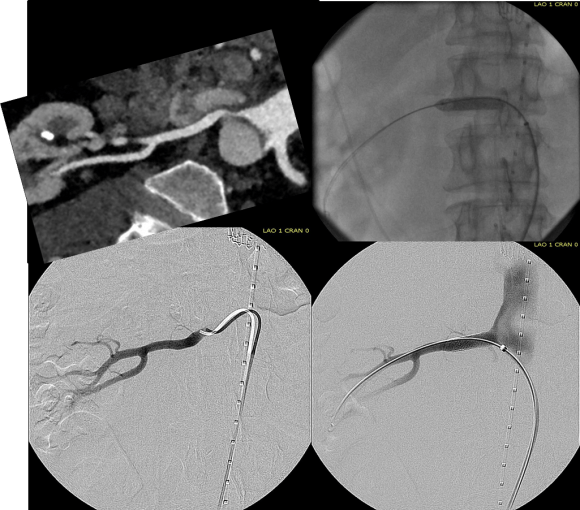
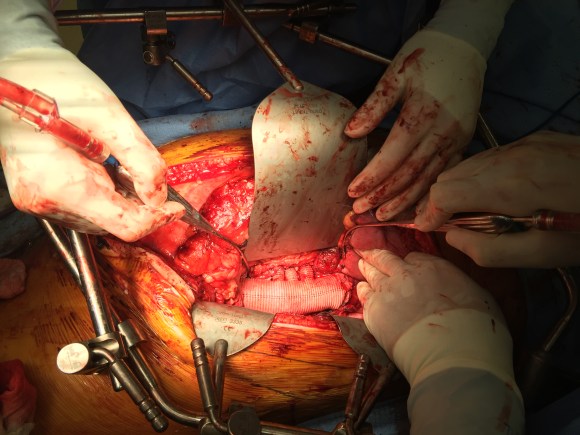
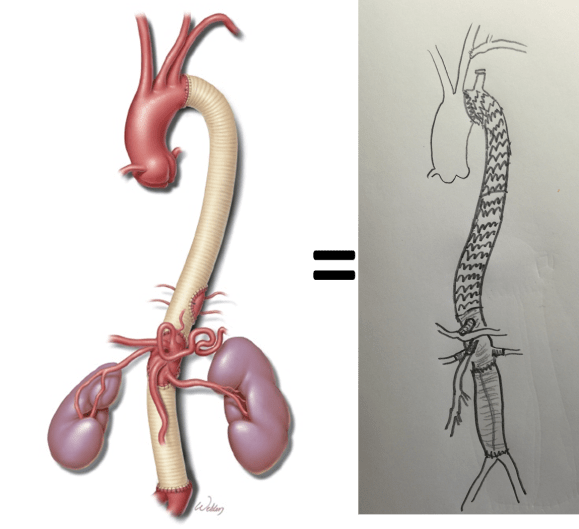
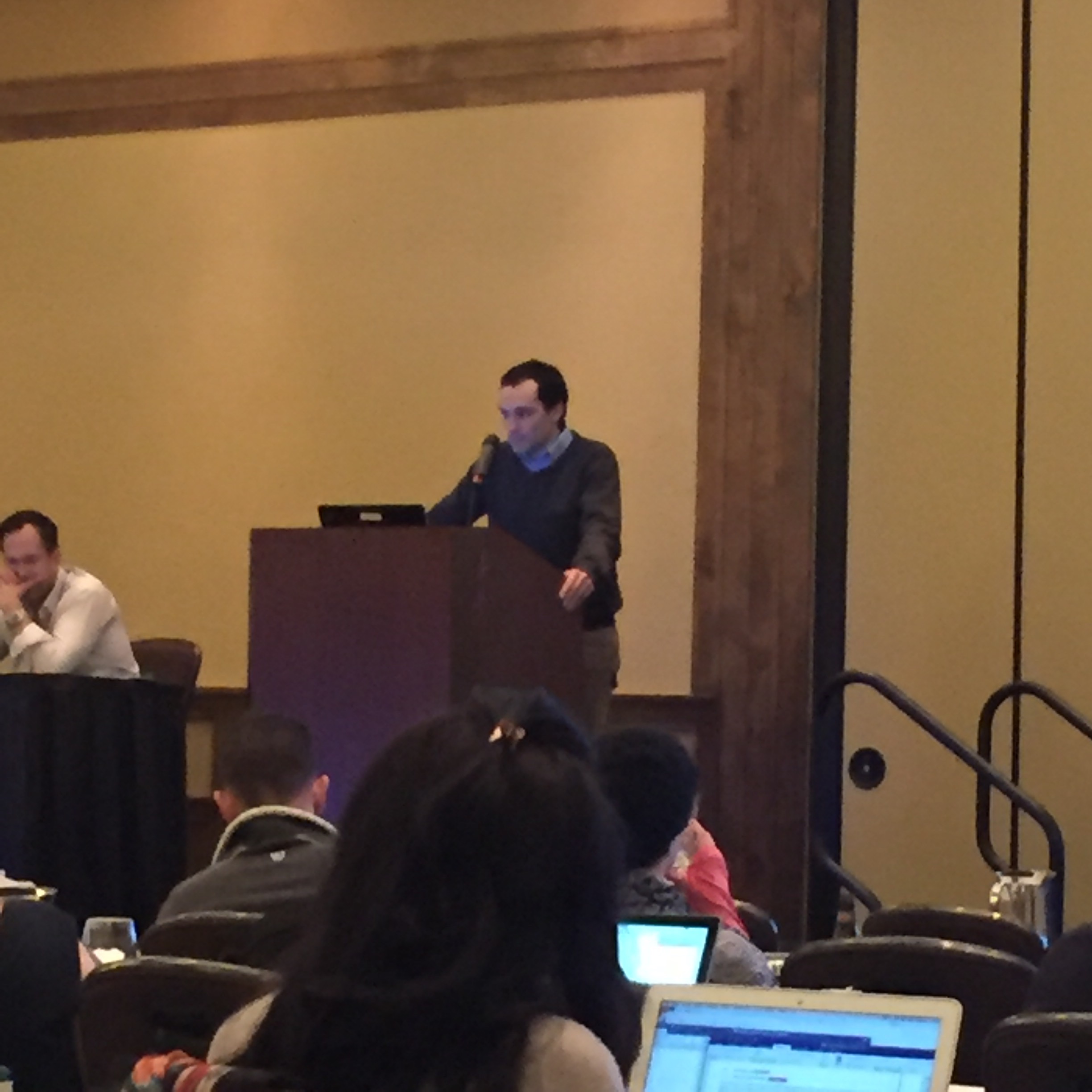
Dr. Francisco Vargas presents for Dr. Max Wohlauer our case report on managing SMA thrombosis post type B thoracic aortic dissection. Photo credit R. Kelso. 

Categories
Venous vte

The student is now the master: IVC filter removal is easy until it is not, then it is very difficult


The inferior vena cava filter when it first invented by Dr. Greenfield was a minimally invasive solution that offered continued caval patency. The options up to then were ligation of the inferior vena cava using sutures or with an implantable plastic clip. The use of these filters exploded over the past 15 years corresponding to increasing recognition of venous thromboembolism as a morbid complication, the increasing numbers of implanters, and the introduction of retrievability.

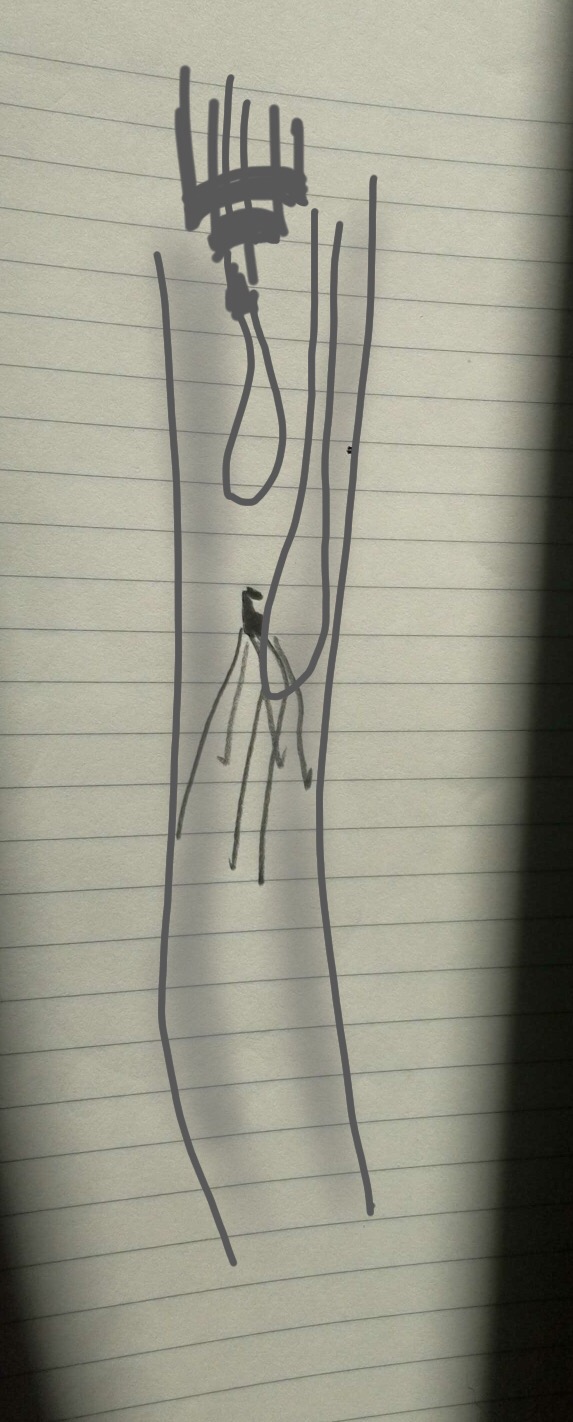
Removing filters is a serious business because leaving them in for life is not inconsequential. Typically, the period of time that the filter are required for protection exceeds the limits of retrievability recommended on the instructions for use. It is not generally understood that many filters can be retrieved years after implantation, but it is not as simple as retrieval within a few months of implantation which can be done in under 30 minutes. In patients like the one in the illustrations, several years after implantation, the filter comes out only with some patience and a little help from friends.

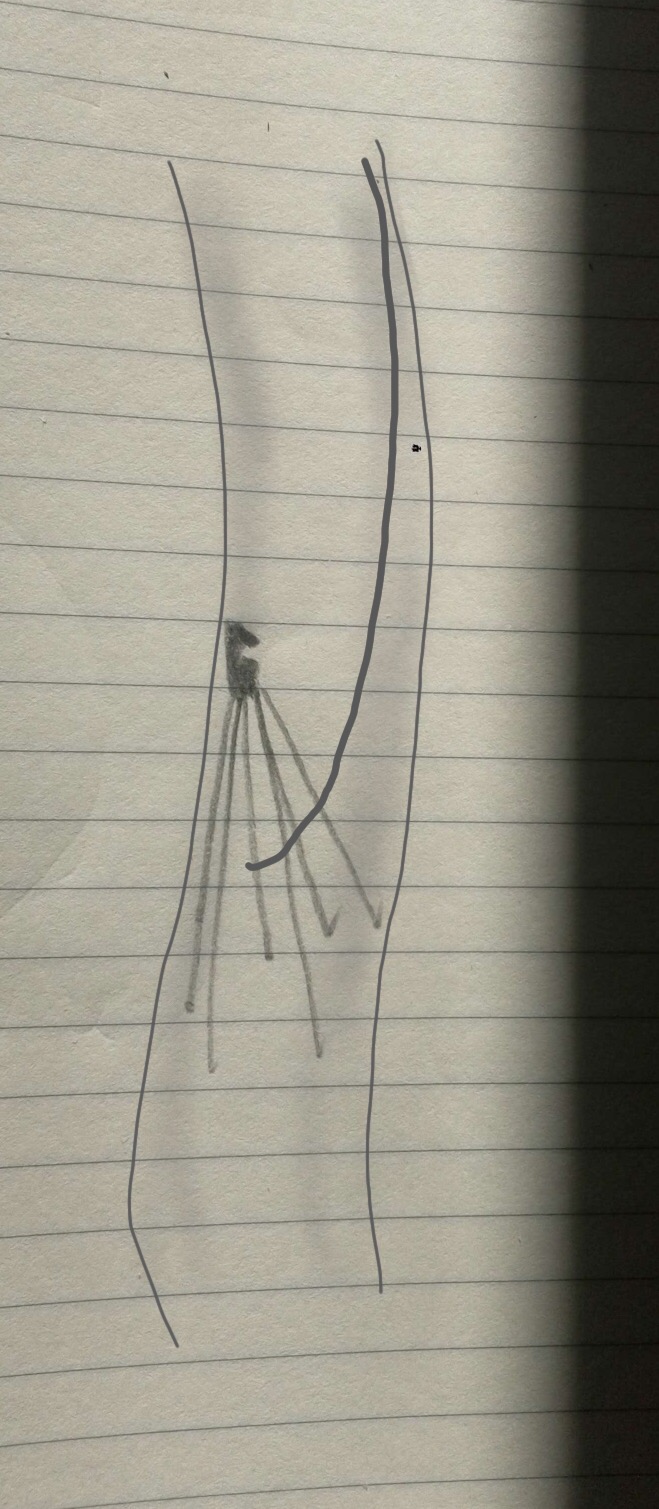
The IVC filter is embedded in the right sided wall of the vena cava and the hook would not engage. From a right internal jugular vein, wire access to the filter was achieved and an 18F x40cm sheath was placed through which a 12Fx50cm sheath was placed. Through this, a floppy glide wire was directed above the struts of the filter, and it curved around and snaked under one of the far struts.

This allowed me to snare the wire and bring that out.


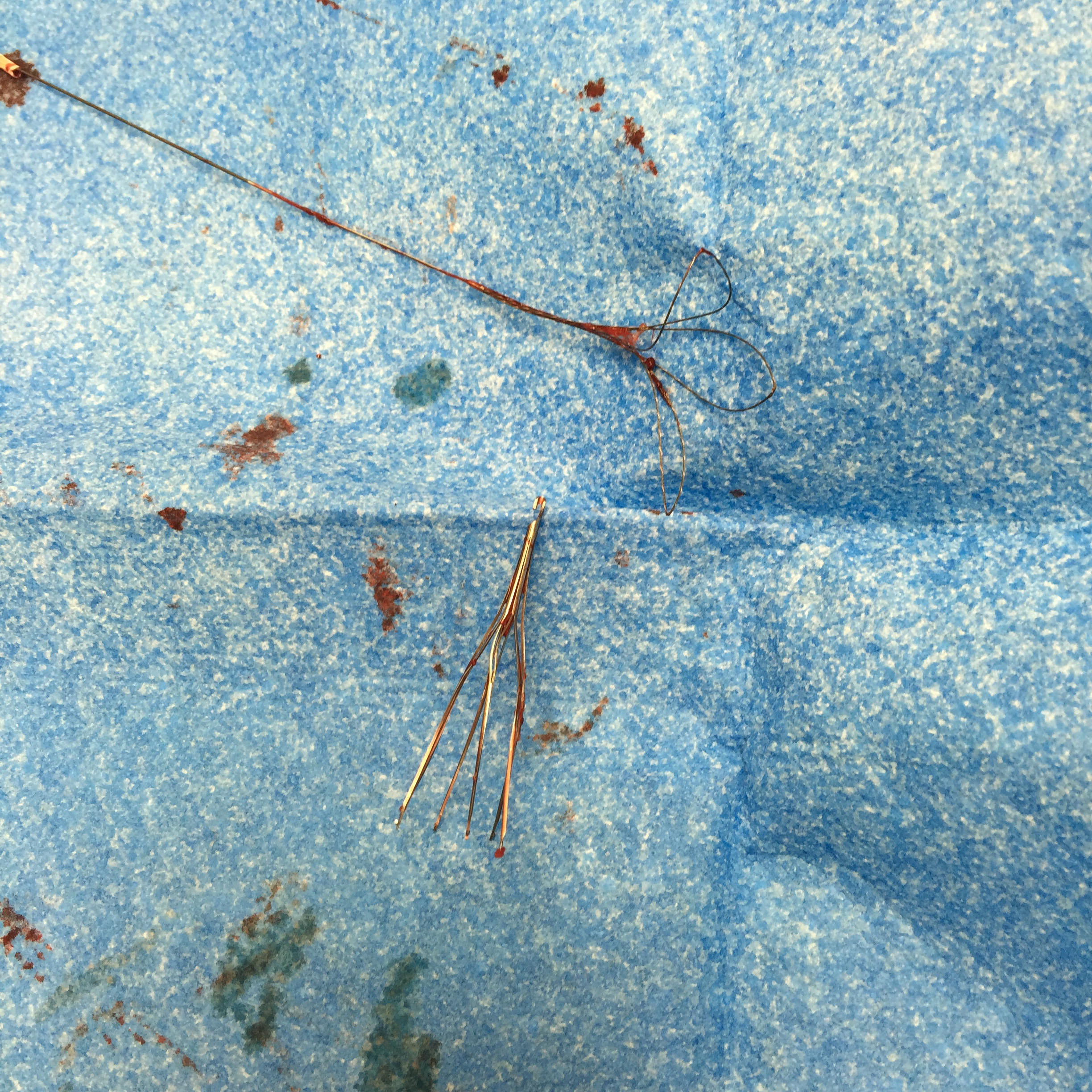
I placed another wire through the sheaths and removed the sheaths which were around both the Glidewire which was wrapped, and the second wire which was through. The sheaths were then replaced over that second wire, giving me room to maneuver I inside the 12F sheath. The first wire was then retracted with modest tension and it succeeded in lifting the hook away from the wall, allowing me to snare the hook through the sheaths.


Once the top of the device was securely in the 12F sheath, the first wire was removed and the filter was removed.


The retrieval of an IVC filter device within the parameters of IFU (instructions for use) is like level one of a video game. Challenging for the novice, but eminently doable. The retrieval of these filters left in for years is more like level 25 of the same video game. The nice thing is having friends who can give you tips on defeating that level.

At VEITH symposium a couple of years ago, Dr. Paul Foley presented data and technical details on removing these filters, and this has been enthusiastically taken up by my partner Dr. Christopher Smolock who happened to be walking the halls the day of that case. His tip: “18F Sheath over 12F sheath, tilt the filter, and capture,” he said. “Wasn’t Foley your resident back at Columbia (in 2004)?” he added.

“Yes…” I replied.

“Now the student has become the master,” quoting Darth Vader. Which was fine with me because that made me Obi Wan Kenobi, which isn’t too bad. The great privilege of being a teacher is having that go around full circle. Or as Vader said, “The circle is now complete.”


Categories
VESS

VESS 2016 Winter Meeting

  
Drs. John Weber (CCF Vascular Residency class of 2015) and Rebecca Kelso (faculty) enjoying the pre-session high tea. Great vascular meeting for young vascular surgeons at the Canyons Resort, Park City, Utah. 


Categories
Carotid hypertension

A non-renal operation to lower blood pressure?

eversion 1

Our journal club today is discussing one of the many trials that have tried to validate endovascular renal denervation to control severe hypertension. One of the devices I was on trial for back in the 00’s was the CVRx Rheos trial which stimulated the carotid sinus using a surgically placed electrode and generator. While the approval trial failed in the US, it was approved in Europe and my observation of over 30 patients who had this at my center at that time was that it was effective. So effective that I believe many patients stopped taking their pills in exchange for electrical energy -some patients required at least once a year generator changes, often more, but they had normal blood pressures and less to none of the side effects of their medications which frequently exceeded 5 agents.

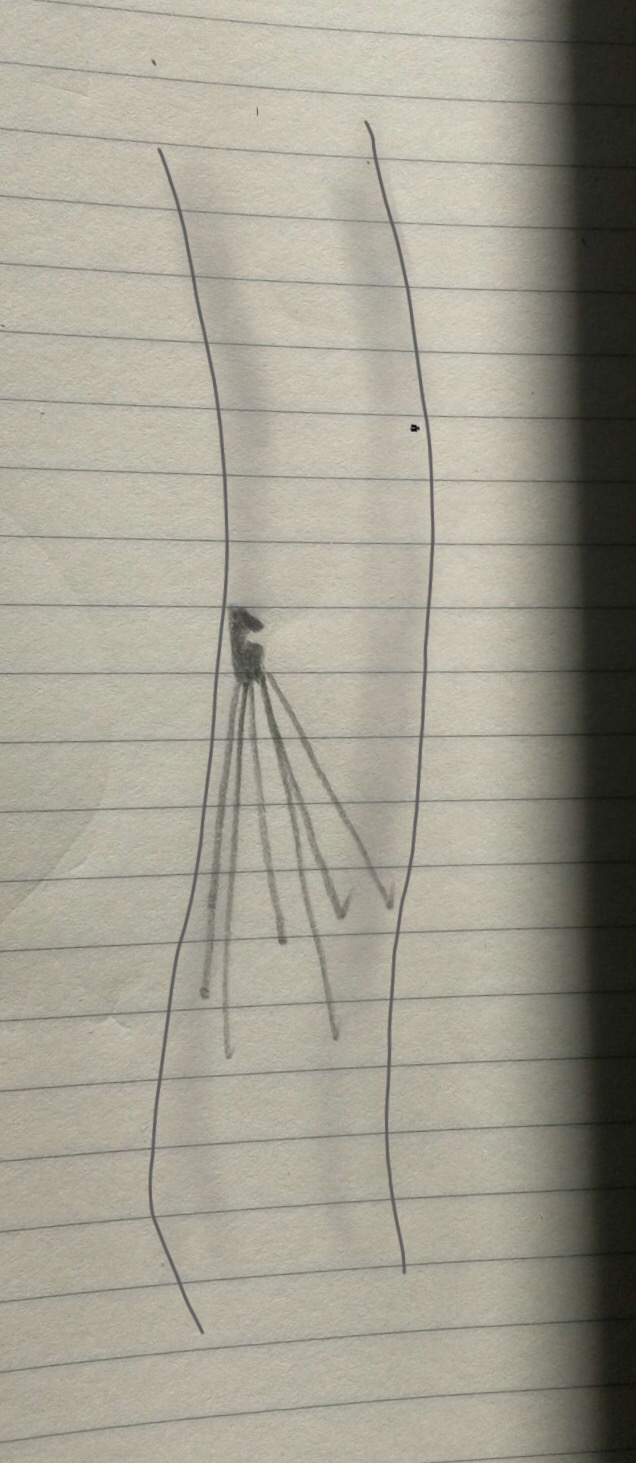
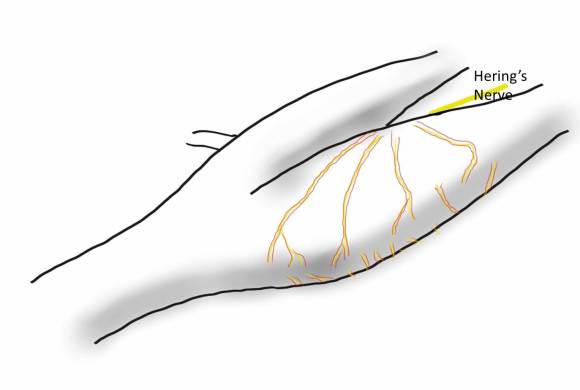
I have observed that on the carotid baroreceptor, which is shaped like an aneurysm by the way, there are paired vasovasorum in the pattern seen above. The only other time I have seen paired arteries is with a nerve. The baroreceptor nerves are very hard to see, but they are there and you can find them between these paired vessels.

The observation that the baroreceptor looks like an aortic aneurysm isn’t a silly one. The area of maximal wall tension is in regions of greatest curvature change and these, teleologically, would be the shape of a baroreceptor. The stiffening of these regions with atherosclerotic plaque would decrease the signal sent to modulate blood pressure and heart rate, and create a pathologic cycle of increasing pressures in response to increased vessel stiffness and vice versa. Just saying.

I began to wonder if restoring the elasticicty of these vessels and the shape of the baroreceptor would have a lasting impact on blood pressure. The operation is eversion carotid endarterectomy with sparing of Hering’s nerve.

Eversion2

The plaque can be removed without stripping the carotid sinus nerves, resulting in restoration of the sinus/baroreceptor complex.

eversion 3

This would result in bradycardia/hypotension, which I have observed in a percentage of my eversion endarterectomy patients. Cutting the nerves results in hypertension, and was the subject of a paper from Montefiore (reference).

However, the proximal ICA at the carotid bifurcation was mobilized circumferentially to facilitate its transection from the CCA at the carotid bulb. During this approach, carotid sinus nerve fibers derived from the glossopharyngeal nerve and innervating the carotid body within the adventitia of the proximal ICA were routinely divided (Mehta et al.)

In that paper, hypertension was seen in 24% of patients undergoing eversion CEA with denervation compared to 6% undergoing standard endarterectomy, and as an aggregate occured for a prolonged period of time:

hypertension graph

The hypotension and bradycardia that I observe in nerve sparing eversion endarterectomy appears to be transient, but it is my unstudied observation that some of these patients subsequently have a lower need for blood pressure medication. This will deserve further study, but may explain the variable results of denervation procedures aiming to control hypertension. To some extent, all blood vessels are innervated and provide an aggregate signal to the CNS. Without understanding the central pathways of hypertension, the baroreceptors offer the best way of controlling blood pressure without medication like lighting a flame under a thermostat to get the building colder.

Reference

J Vasc Surg 2001;34:839-45.


Categories
complications CTA tbad techniques TEVAR type b aortic dissection visceral malperfusion

Reversing paralysis with a bypass

Dissection CTA

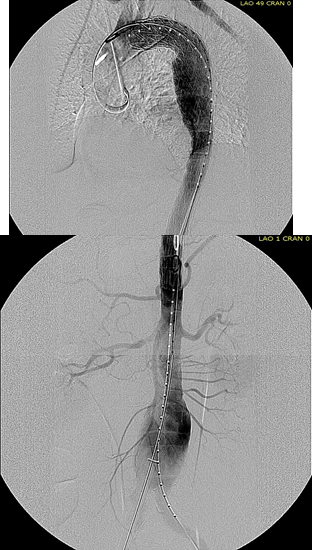
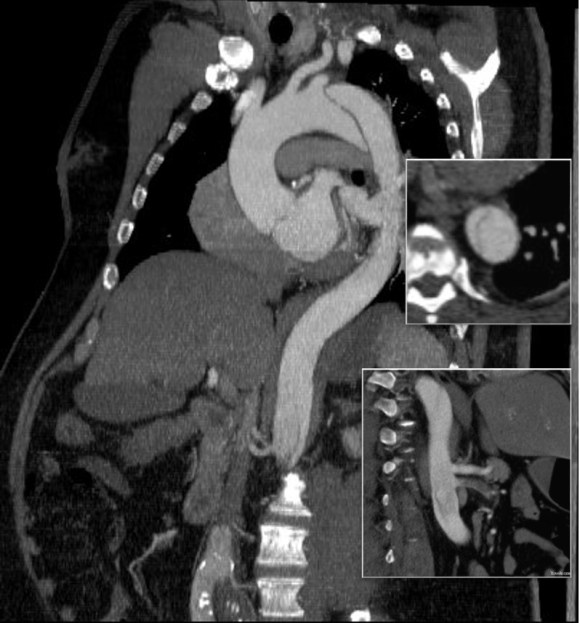
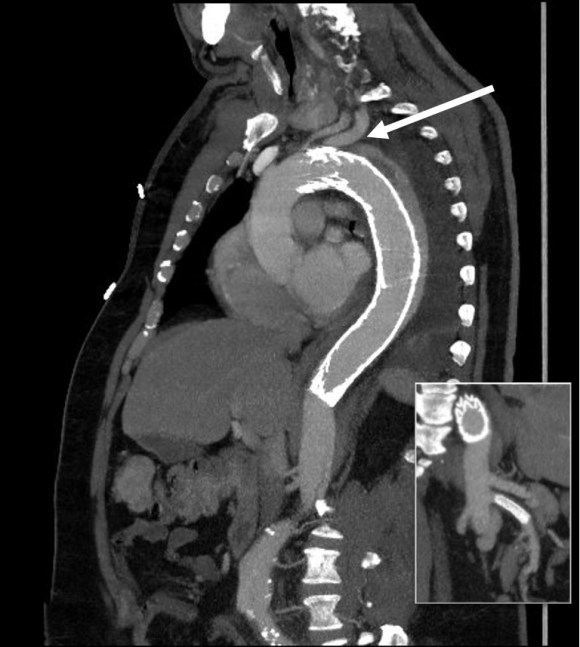
The patient is middle aged and had a type B thoracic aortic dissection (TBAD) as a consequence of recreational substances that acutely raised his blood pressure. At the outside hospital, he had a CTA showing the dissection extending from his left subclavian artery and causing occlusion of his superior mesenteric artery (SMA). He developed abdominal pain and was swiftly transported to our acute aortic syndrome unit. He was taken to the operating room and underwent a TEVAR of the dissection and stenting of his SMA -this is similar to other cases I have discussed in prior posts so I am omitting the technical details. The stent covered the left subclavian artery origin to exclude the origin of the dissection. The stent was extended to the distal thoracic aorta but did not go to the celiac origin. 

TBAD post stent

Post procedure, his lactate never rose and he was maintained on the usual post procedure protocol of keeping MAP’s (mean arterial pressure) above 80mmHg. His left subclavian artery was covered but I do not routinely bypass, especially when the left vertebral artery is at least equal in size to the contralateral one. I don’t often place spinal drains for urgent/emergent cases particularly in patients who have never had infrarenal aortic surgery and patent hypogastric arteries. He was kept sedated overnight and awoke in the morning unable to move his legs to command. He had no pain sensation up to his umbilicus.

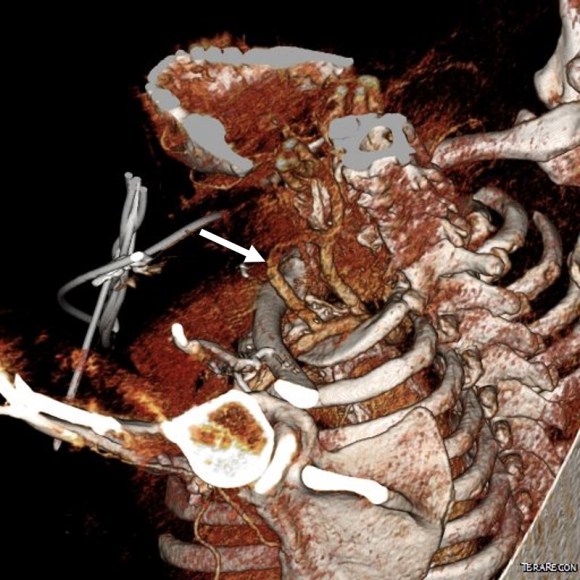
A spinal drain was emergently placed and his blood pressure was raised to MAPs of 90+, but these failed to reverse his paralysis. After discussion among my world class partners, I chose to take the patient back for a carotid subclavian bypass which was done through a single incision with a dacron bypass graft.

Carotid subclavian bypass CTA

His paralysis resolved. He was discharged home, ambulating without assistance. Spinal cord complications are reported to occur between 1-5 percent of patients undergoing TEVAR for complicated TBAD. They were seen in 2 of 72 patients in the TEVAR arm of the INSTEAD trial (Circulation, 2009 vol. 120(25) pp. 2519-28), and was permanent in 1. While there are some who routinely place prophylactic drains, it is unclear to me that they have a significant effect if placed unselectively. I will place a Preop drain in the instance of infra renal graft, hypogastric arterial occlusive disease. In the instance of a dominant left vertebral, I will perform concomitant bypass, but just as often not. This is a gratifying and rare outcome of paralysis reversed with a carotid subclavian bypass when spinal drain and permissive hypertension did not. 

Categories
Uncategorized

Off the shelf f-EVAR

image

Thoracoabdominal stent grafts off the shelf: link

Congratulations to Dr. Gustavo Oderich who has implanted the Gore off the shelf TAAA device at Mayo.

Categories
Journal Club Uncategorized

January Journal Club January 19, 2016

post angio

At usual location. Topic renal and mesenteric vascular disease. Presenting are:

Dr. Michael O’Neil – Symplicity HTN3

Dr. Daniel Scott –Reop OR Mesenteric Ischemia CCF-Mayo

Dr. Lynsey Rangel –Open v Endo Mesenteric Ischemia

Categories
AAA common iliac artery aneurysm iliac artery aneurysm ruptured AAA training

If the odds are against the patient, who is for the patient?

IMG_1484

The first patient, a man in his late 70’s, ruptured in the emergency room at around four in the afternoon on a weekday, which was fortuitous, as the hospital was fully staffed, fully armed. The patient had arrived only a bit earlier with the complaint of severe abdominal pain, and soon after getting his CT, arrested. CPR commenced as I arrived by Dr. Timothy Ryan, our chief resident at that time. 

Ruptured CIAA with CPR 1 -_1
a rupture
The patient was wheeled upstairs with ongoing chest compressions. The anesthesia and operating room staff started a bucket brigade of blood -there was enough staff to start a symposium. Within 5 minutes of hitting the operating, I poured betadine on the chest and belly and took a blade and cut open the abdomen. Blood poured out onto our scrubs and to the floor and our shoes. I pushed my hand into the retroperitoneum, gently sweeping aside the torn tissues and blood clot to feel the hill of the aneurysm. I walked over the slope of the aneurysm and tweedled my fingers around the aorta above the aneurysm. The cross clamp rode my fingers into position around the aorta. The patient, so very dead minutes before in the ED, came back as I began to feel a pulse above the clamp. The patient lived through the operation and the night where grim data -pH of 6.8, lactates in the double digits, four figure LFT’s, kidney failure all predicted a bad outcome. And yet he survived, and a few days later, a second operation to washout and close his belly which had been left opened and packed occurred, and he recovered. We still talk about that day now three years out, and while he thanks me, I thank the whole hospital because I don’t remember speaking very much -the right things just happened around me as we worked, the whole hospital and me.

More recently, while I was finishing up two urgent cases, I got a call that the patient with the leaking aneurysm had arrived from across town and was becoming hypotensive.

ruptured AAA -_1
another rupture
Gratefully, one of my partners, Dr. Christopher Smolock, was rounding that Saturday and stepped in to finish up the last of the two cases while I ran down to the patient, a man in his late sixties, who had arrived in our acute aortic syndrome unit.

IMG_7195 (1)
Dr. Christopher Smolock
We conversed, the patient and I, and he understood what laid ahead. We rolled him up to the OR, and while we were prepping and draping, my fellow, Dr. Francisco Vargas, looked to me gravely and said with certitude, “I think he’s dead.

IMG_7197
Dr. Francisco Vargas
Chest compressions commenced and again, knife in hand, I cut him open from sterum to pubis and got the clamp on. It took 15 minutes of CPR to get a pulse back. I was very pessimistic as during the case, ridiculously bad lab data came back like a pH of 6.9, lactate above 10, no urine.

IMG_7234
Graft Repair of Rupture
The blood bank sent down coolers like the kind you take to tailgates, only filled with blood and plasma. The aneurysm had grown like a rotten apple on a stick and the graft we needed to repair it was surprisingly short. He too made it to the ICU, and after a long recovery which included dialysis, a tracheostomy, and a reboot of the brain -the brain takes a while to recover from the anoxia, but his went “bonnnnng” like a waking Mac after days of spinning beach balls, and he started to follow commands. The morning before he transferred to rehab, we talked about what he could have done to prevent the rupture. Not knowing about it, not much, I replied. People traditionally lived to about 20-30 years of age, I said, before dying of disease, violence, or predation. Longevity has meant wear and tear on irreplaceable parts. We agreed it was good to be alive.

Ruptured aortic aneurysms are the sine qua non of vascular surgical practice. As a junior resident back in the antedeluvian 90’s, I remember one of my chiefs, Dr. Eric Toschlog, now a trauma surgeon out East, running a patient upstairs from the ER with a rupture, and before the attending arrived by taxi, had the graft in. When it became my turn, as a fellow working on a patient who had been helicoptered in from the frozen wastes of Minnesota, I remember playing a trick with my mind -that the patient was proportionally the same size as the rabbits I was working with in the research lab, that I was really big and the patient’s aneurysm very small. This works to calm the heart, steady the hand. Nowadays, my mind is blank, and my hands working reflexively.

There has been a series of papers that create scores that allow prediction of odds for survival, and both of these patients, particularly with their prolonged CPR, have greater than 90% predicted mortality on these measures. In this month’s JVS, Broos et al, in the aptly named paper, “A ruptured abdominal aortic aneurysm that requires preoperative cardiopulmonary resuscitation is not necessarily lethal” describe a 38.5% survival rate among their series of patients with rupture who had CPR (ref 1).

Practically speaking, no one I know would use these scores to decide to not operate. While many series show better survival for emergency EVAR compared to open repair, several randomized control trial failed to show better results when these methods were directly compared. A retroperitoneal approach is preferred by some in our group, but having tried both closed chest CPR with the patient in right lateral decubitus position and open cardiac massage -(both died), I prefer supine.

There is no survival if there is no attempt.

Reference

  1. J Vasc Surg 2016;63:49-54.
Categories
AAA common iliac artery aneurysm EVAR iliac artery aneurysm techniques

The Interrupted Natural History of Aortic and Iliac Artery Aneurysms

graphic

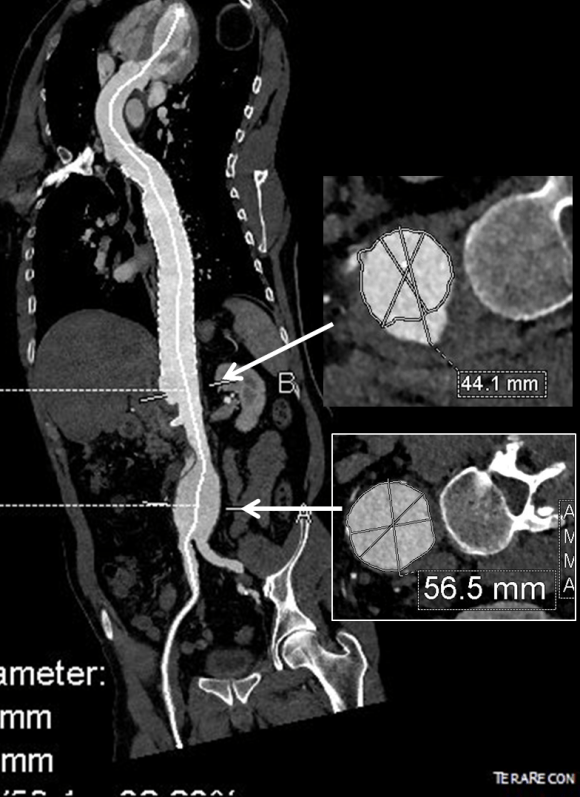
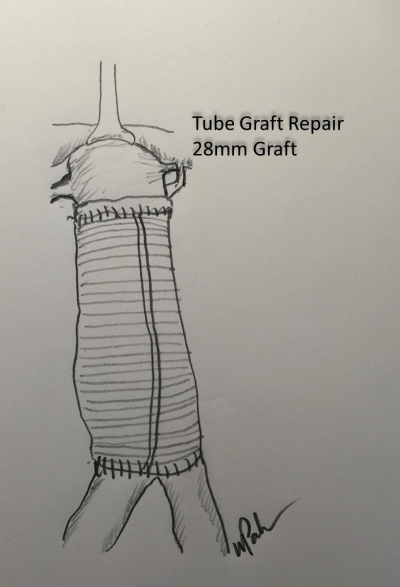
The patient, now in his 90’s, found out about his aortic and iliac artery aneurysms in his early 80’s, had been offered repair, but had refused. Several years ago, one of my partners emergently repaired his ruptured AAA (abdominal aortic aneurysm) via a retroperitoneal approach using a tube graft. At the time of the repair of the AAA, the common iliac artery aneurysms (CIAA’s) were not ruptured and would have added risky time to the repair. He survived and had a postop CT done about two years ago which showed his CIAA’s.

CT 5cm L CIAA 2014.png
Two years ago
The patient chose not to pursue repair of these aneurysms, I assume figuring that at his age, he’d again take the chance that he would pass on without the hassle of another procedure.

He was recently admitted for treatment of another condition, when his physicians noted a large visible pulsatile mass on his lower abdomen.

CIAA

A CT scan was performed. It showed a 13 cm left common iliac artery aneurysm which was responsible for the visible puslatile mass and a large right common iliac artery aneurysm. The left internal iliac artery was thrombosed. His right common iliac artery aneurysm was over 5cm in size.

CT 13cm L CIAA preop

My partner, Dr. Ezequiel Parodi, was consulted for this case. He performed a percutaneous EVAR. The procedure was made difficult by tortuosity in iliac artery and the tube graft in the aorta requiring a secondary access from the arm to straighten out and advance the stent graft (aka body floss).

Dr. Ezequiel Parodi
 
In followup, the aneurysms decreased in size and showed no endoleak around a patent stent graft.

CT postop L CIAA (1)

Common iliac artery aneurysms expand at a rate proportional to their starting size and have increased rates of expansion in those with prior aortic aneurysm expansion (ref 1). Rupture probably signals a tendency to expand rapidly. There is evidence that iliac ectasia and aneurysms left over after tube graft repair (aorto-aortic) of AAA is benign and can be safely observed (ref 2), but these were all small at the start.

I had been trained at the dusk of the open surgical era and the dictum was aortobi-iliac bypasses to avoid future problems with the iliac arteries. With EVAR, and soon bifurcated iliac branched stent-grafts (currently on trial), staged repair of metachronous iliac aneurysms after tube graft repair of AAA has not only an appeal, but some logic as open bypass to iliac bifurcations, particularly in large men, is challenging and potentially morbid. This is a case of a patient who had a large iliac aneurysm that was not repaired initially due to the exigencies of ruptured AAA and had refused planned staged repair. His aneurysm grew from over 5cm to 13cm in 2 years time without rupturing. Such good fortune is very rare.

Vascular surgeons like to collect large aneurysm stories like fishermen talk about big fish. This is the largest unruptured common iliac artery aneurysm I have seen. While it is baffling to many who are in healthcare, it is important to understand noncompliance is common. Denial is a powerful urge, and a uniquely human one.

2014-03-25


References

  1. J Vasc Surg. 2009 Apr;49(4):881-5
  2. Surgery. 2008 Nov;144(5):822-6.