Categories
Uncategorized

Questions from a medical student in South America

A day in my life

Today, I got up at 630, made some coffee, and Zoomed in on our morning report at our main campus hospital. I have a patient there who I will be operating on tomorrow and wanted to know the current status of the patient. Once the report was over, I brushed my teeth and drove into my hospital which is a regional community hospital. I had an angiogram for a patient who was having a problem with blood flow to the leg. The cath lab was ready to go at 0800, and I was done by 0900, where I quickly ran over to to my office for clinic. My fellow who was doing her community rotation helped me with the angiogram, and then came over to clinic where I saw 27 patients from 0900 to 1600hrs, two of them virtually. At 1600hrs, I had a hospital committee meeting where I am the chief of surgery for my community hospital, and at 1700, was done. I ate a snack as I finished up some paperwork, and got on another Zoom meeting of my institute with over a hundred people to have an update meeting. I then drive to my golf club, and got on the range and hit golf balls for 30 minutes, then got on the putting green and practiced for another 30 minutes. Then I drove home and had dinner with my family. I watched highlights of a football (American) game I recorded over the weekend, while reading email, then sat down to write this before I showered and went to bed.

This week I have 9 cases scheduled -several angiograms and interventions, a leg bypass, a few fistula creations, and a laparoscopic procedure (I’m one of the few vascular surgeons who do laparoscopic surgery). As I sit in bed, I listen to a journal article read to me by the voice of Gwyneth Paltrow (it’s AI) -I find it easier than actually reading the thing, and then I watch a few TikToks, read Reddit, and then go to sleep around 2300h. Cycle starts again in the morning, but will wake at 0530 to get to the main campus hospital to perform an operation. Arriving at main campus on a Wednesday, we have a combined grand rounds with the whole Surgery Department prior to operating.

Lifestyle
On weekends, when I am not on call, I still catch up on my patients from a report from my trainees or my nurse practitioner who makes rounds. I even do this sometimes when I’m out of town. Usually, I play competitive golf with members at my club -the more pressure the better. I find competition to be relaxing. Afterwords, I come home and write, read a little, and watch sports depending on the season or golf. My writing is sometimes work-related, sometimes in my journal. I kept a personal blog for over ten years on golfism.org. I am working on a novel -have been for a decade but not making much progress. I read mostly nonfiction but will listen to audiobooks of science fiction -currently marching through all the Dune prequels written by Brian Herbert, the son of Frank Herbert, the author of Dune and its original sequels. I am working on a grand unifying theory of circulation.

Procedures
As a vascular surgeon, I perform operations in the traditional open fashion, and endovascular procedures which are a done with imaging from x-ray. Occasionally, I do laparoscopic surgery. The open surgical procedures include operations on the aorta and its branches, and on arteries in the legs, arms, and neck. I also work on veins throughout the body. The patient arrives with a set of conditions, a prior history, and an examination, and given a problem, you evaluate it with various tests which can be blood tests, vascular tests, imaging studies like X-ray, Ultrasound, Vascular Lab Studies, CT scans and MRI’s. This is called the workup -getting data to plan a procedure. Knowledge of anatomy and physiology and biomechanics of flow are crucial to put together a plan that will be successful in treating the disease with low complication rate and good durability. The procedures require a great deal of planning and often I include my colleagues within my department and those in other specialties to get their insights for making a plan that accounts for the reason for operation, plan for operation, contingency plans, and recovery in the hospital, and healing outside the hospital. You can see some of these cases on my blog, vascsurg.me.

The image above shows a common femoral artery aneurysm presenting as a pulsatile mass in the right groin. The first image on left is an arteriogram (a sketch of one) that I would get prior to surgery. The patient is also suffering from pain in the right leg due to a lack of blood flow because his superficial femoral artery (SFA) is occluded and his profunda femoral artery (PFA) is open but has a blockage at its origin where the aneurysm ends. I plan the surgery and execute it. During surgery, things may pop up -good things like finding an otherwise pristine SFA filled with plaque. Removing the plaque, it becomes a great conduit for replacing the aneurysm and avoids using an expensive graft which can become infected -your own tissues fight off infection better than graft.

In the F1 Movie, Brad Pitt’s character describes a sense of pure driving, being in the flow, being completely at peace on the road. The best moments in surgery, I reach a flow state where actions follow one after the other. It’s a form of spiritual ecstasy, to be completely focused and present. Even better is having the patient do well -to be able to walk without pain and the fear of possibly losing a leg or dying.

Who should not do vascular surgery. By definition, anyone not trained in vascular surgery. Successful vascular surgeons come in all shapes and sizes, but they share common traits -grit, focus, some intelligence, and hand-eye coordination. That would mean those who give up easily, have trouble with focus, are unintelligent, and have poor dexterity should not go into vascular surgery. The saddest cases are when the desire to be something does not match up with the reality. It is possible for non-vascular surgeonsto make a living doing a focused practice around varicose veins for example, but a good vascular surgeon is hard to create. Also, you should not do this for money or prestige, there are easier ways to get money or prestige.

Who should go into vascular surgery. Anyone who thinks they might like it should certainly look into it. The best way is to directly observe a vascular surgeon at work. That is the whole purpose of the rotations in medical school. Sadly, many medical schools do not offer much time in a surgery rotation and vascular surgery exposure is inconsistent. Our society has been working hard for over a decade to improve this and we are seeing it in the excellent applicants to our training programs. The best candidates are driven people with a track record of academic excellence, but the qualities that make a good surgeon are harder to define. Desire alone is insufficient and sadly academic excellence, while it will get you into the door, doesn’t predict who will be a great surgeon. There has to be grit -an ability to persist despite hardship. There has to be a nimble mind that can solve problems quickly. And there has to be the physical hand skills that define surgery but somehow have been dropped from the initial evaluation of candidates for surgery.

Who should not go into surgery. Based on my answers above, those quick to give up, are unintelligent, and poorly coordinated should not go into surgery. I would add to this lazy, dishonest, and sociopathic. No criminals please.

There is no perfect answer to this. I knew a fellow who did not score well on tests and was rejected from medical school five years in a row, but eventually got in and completed a residency in a surgical subspecialty and has a very successful practice. While he was being rejected from medical school, he spent five years in the lab, and he could do open heart surgery on dogs very well, was coauthor on numerous papers, and his surgical skill was excellent -like if you were stuck taking tennis lessons from a professional for five years but never playing an actual game. There are also many examples of people who were told too late that they were no good for surgery.

What you should not do is listen to just a single person who has a poor opinion of you. You should examine the situation and decide if there is some truth to the issue, but you need at least three opinions. For example, I would like to be a professional golfer. I can get at least three people to tell me honestly that this is a bad idea. I would like to be a writer. I can get at least three people to tell me honestly this is a good idea. You get the picture. In medical school you will rotate and work with many people and you will have grades and feedback. You need to get honest opinions as you move forward. You need to study hard and get great grades because no matter what you do, your patients will be depending on you.

Categories
Commentary edema Gonadal Vein interstitium Lifestyle Lymphatic lymphedema May Thurner's Syndrome median arcuate ligament syndrome Nutcracker Syndrome Ovarian Vein Pelvic Congestion Syndrome popliteal artery entrapment syndrome postural orthostatic tachycardia synrome POTS superior mesenteric artery syndrome SVC Syndrome Uncategorized venous intervention

The Consequences of a Bipedal Lifestyle

Talk I gave to  Oxford University Vascular Surgery

In George Orwell’s Animal Farm, under the dictatorship of the alpha pig, Napoleon, the pigs who represented the nomenklatura of the farm chant the slogan “four legs good, two legs better,” after initially declaring “four legs good, two legs bad” during their revolution. They clearly understood the luxury afforded by a bipedal lifestyle, because in rising on two legs, you get arms and hands which can do many things like caress a baby or wield a cudgel. What the pigs in the parable weren’t realizing were the consequences of a bipedal lifestyle.

When Lucy, the Australopithecine, bipedal hominid ran about on two legs, she did have the use of two arms and hands. Possibly an adaptation to living in tall grasslands with few trees, the ability to stand tall like meerkats, allowed the biped to see far into the horizon for big cats who probably loved the big brained hominid for the high calorie meal inside the hard skull -many fossils from this time show puncture marks from the incisors of medium to large cats.

The walking and running put heat stress on the brain, and the tool use which happened incredibly early and is observed in the chimpanzee, likely drove the selection for a larger brain (more neurons will allow for one to lose some neurons to heat stress but stay in the game), but it created likely the first problem for our ancestors -discharging a cantaloupe sized head through a pelvis that was small to begin with but now also reshaped for bipedalism. We still suffer from a childbirth process that no other mammal faces -birthing a less than fully cooked baby -a tradeoff for that giant head.

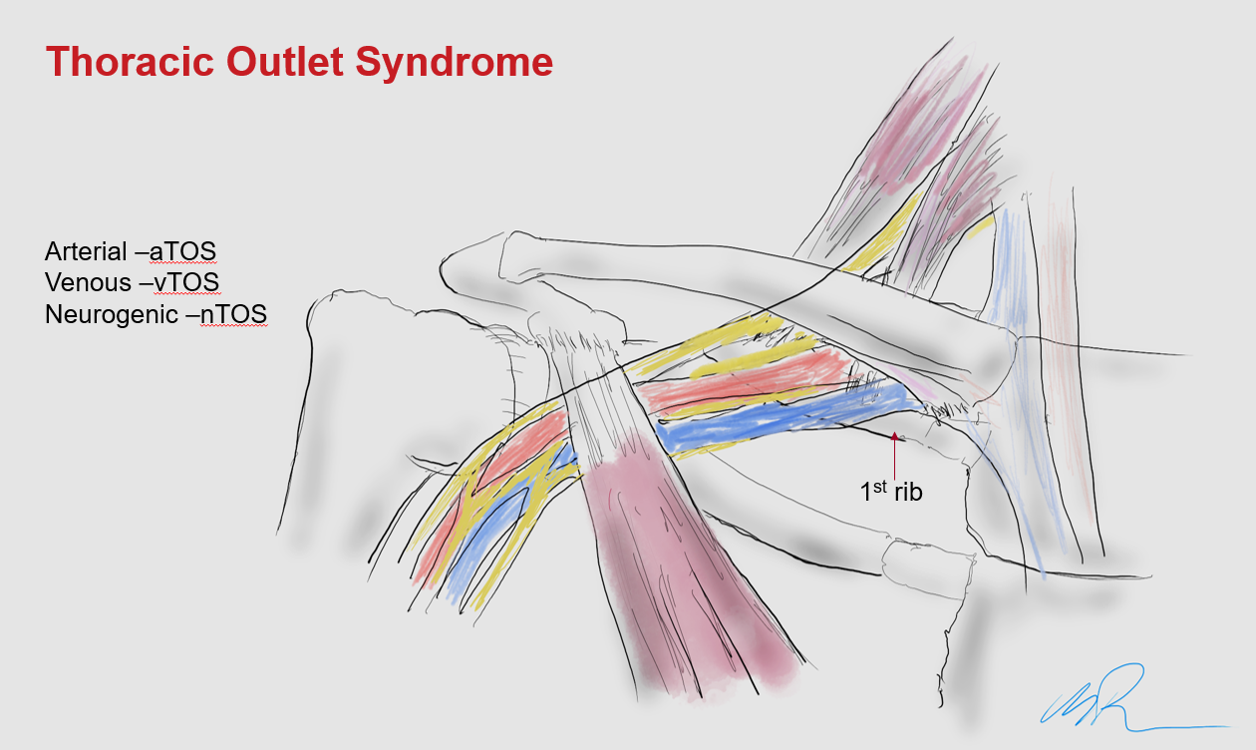
Standing also meant the load bearing was shifted 90 degrees with long term consequences. For our ancestors who only lived about 20-40 years if the chimps are correct, this wasn’t a big deal as arthritis and tendinitis didn’t preclude eating and breeding and didn’t affect them until they were old. But with modern sanitation and social structures,  we are reaching 100 years and the majority of the problems of the integument -the bones and ligament, the low back pain, the sore knees, the ratchety hips, can all be explained by our bipedal lifestyle. Your arm is 30-50 pounds of meat and bone and supported only by muscles off your spine, and your blood vessels and nerves traverse a narrow passage through these muscles and your first rib. Your diaphragm with 5-10  pounds of heart, lungs, and blood sits on first branch artery off of your aorta. Your veins, designed to drain blood from your organs, have to do so with over a meter of static water pressure and your sump pumps only work when you are walking. Muscles and their tendons are stretched tight in the odd way that upright walking and running demands, compressing blood vessels and nerves. All of this weight is put on your feet which have to deal with up to a ton of pressure with running…

I’ve talked about this concept many times before but never had a chance to put it together like this talk. I may write an article. Looking back, I did this blog post (Link).

I am grateful to Ms. Mei Nortley and Mr. John Raphael for the invitation to give this talk.

Categories
Uncategorized

link to “Vascular Compression Syndromes: The Consequences of a Bipedal Lifestyle” live presentation September 13, 2024

I will touch on vascular compression disorders like median arcuate ligament syndrome, thoracic outlet syndrome, nutcracker syndrome, pelvic congestion syndrome, popliteal entrapment syndrome, varicose vein disease. Presentation given to the Oxford University vascular unit. Will be streamed on Oxford Vascular Collaterals.

Topic: “Vascular Compression Syndromes: The Consequences of a Bipedal Lifestyle” – Dr Woosup Michael Park, MD

Time: Sep 13, 2024 12:45 PM London, 0700 Central Daylight Time

Join Zoom Meeting

https://us02web.zoom.us/j/88625730033?pwd=sky6SPZYyaWwkT8YwRT1oWm15rWnxG.1

Meeting ID: 886 2573 0033

Passcode: 147871

Categories
Uncategorized

Thoracic Outlet

Categories
Uncategorized

Branch-first paper up on JVS-CIT

https://www.jvscit.org/article/S2468-4287(23)00014-X/fulltext

Innovation was a needed to avoid the coagulopathy that comes so frequently at the end of thoracoabdominal aortic aneurysm repair in a low volume but fully resourced environment such as we had in Abu Dhabi. In this demanding disease, there are no shortcuts to success but every little bit of advantage helps.

Categories
opinion Uncategorized

Top Ten Things -Tech Gadgets- That Have Grabbed My Attention, 2021

Okay, so I have made this intermittent list of top ten gadgets and gewgaws which I used to to call “Top Ten Things to Get Your Favorite Vascular Surgeon” but even in jest, over the years that I have been publishing this blog, the world has changed. As a watcher of technology, I have always had my eye out for the next great thing, and here is my list. I hope you all have a great Christmas and a wonderful New Year.

  1. Giant Laptops with Complications -old automatic watches with complications are still coveted, and the tech space is no different. Whereas, Apple has always veered to minimalism, there is an exuberance to adding “stuff” in among the Chinese manufacturers and ASUS is no different.

This laptop, the ASUS ZenBook Pro UX581 is a perfect example of innovation by jamming as much possible onto your ADHD-addled field of view. What would I use it for? Who knows, but I want!

2. Timex watches retroversions. Like automakers making updated versions of classic muscle cars, the old standby Timex, has launched watches that that make you want to party like it’s 1979.

The Navi XL Automatic 41mm by Timex is beautiful to look at and of all the knockoff Omega Seamasters out there, it is nice to see a classic American branded offering. Cheaper watches are a smart thing for surgeons in that it’s easy to lose them when you take them off to scrub for a case. While Apple watches are popular, the only square watches I like are Cartier Tanks, and for health data, I wear a Fitbit on my right wrist.

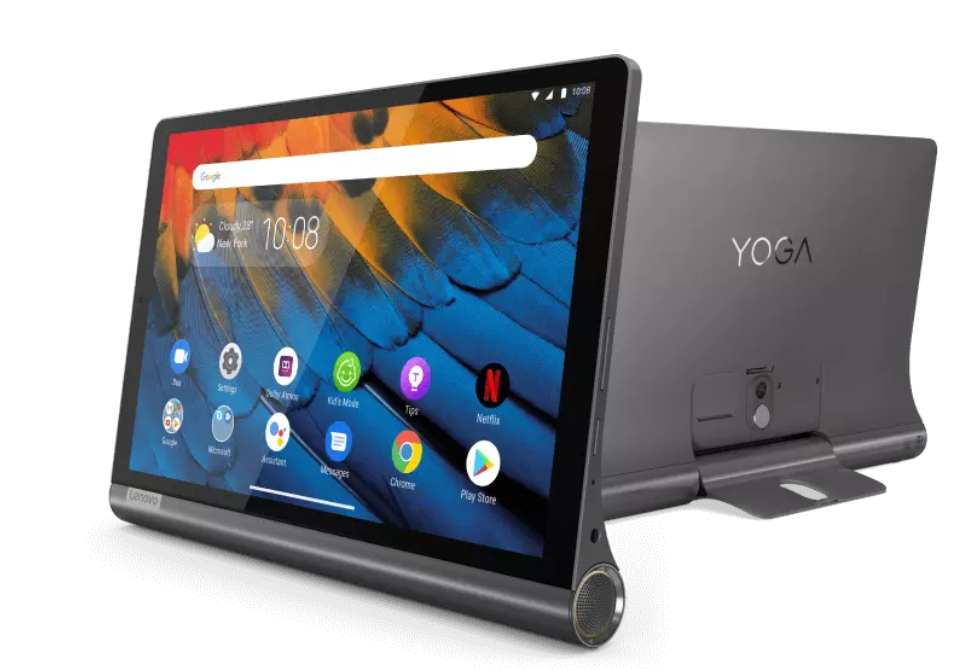
3. Entertainment tablets have made the large family TV obsolete. Add in good audio, and you have that weird future that they promised back in the 1980’s when they swindled your parents to buy a $3000 computer that really couldn’t do anything.

The Lenovo Yoga Tab is an incredible value for what you get which is a bright screen, fast enough processor, long battery life and great sound (JBL speakers with Dolby Atmos processing). It comes in 8, 10, and 13 inch sizes. Coupled with a keyboard and mouse, and an Office or Drive account, and you have a very portable workstation. The only thing missing is the ability to draw as it does not pair with a stylus.

4. E-ink based tablets. If you have ever had a Kindle, you know what an E-Ink based tablet is like. Viewable in direct light, these displays have the advantage of minimizing fatigue in the same way paper does compared to staring at a monitor. These 3rd generation tablets run full Android and can run the Kindle app, as well as advanced note taking and PDF markup software, and have that warm backlighting that comes with the modern Kindles.

The Boox Max Lumi does all of that. Paired with a keyboard, it recreates a basic typewriter well. It also functions as a second screen, allowing you to stare at and markup documents driven by a laptop computer. I want.

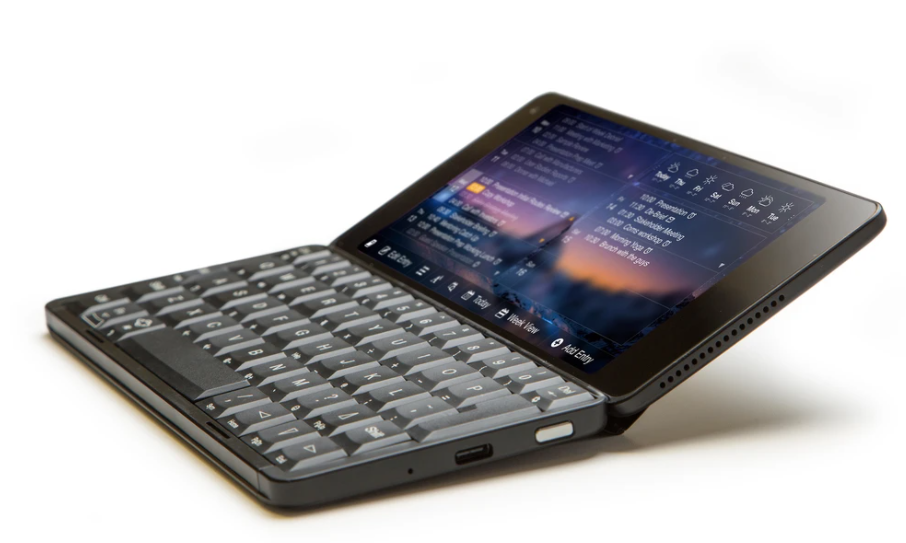
5. The modern update to the Psion Series 5mx. The Psion Series 5mx was a pocketable computer that ran a very efficient operating system, powered by two AA cells which lasted up to 40 hours, and had a tiny keyboard that with practice was fine for authoring chart notes that I would then print out to HP printers that that infrared ports (IrDA). This allowed me over a three year period of residency, to collect my personal EMR that I kept on a huge for that time 32mB flash drive. I sold my 5mx, along with a considerable box of hard to find accessories, to a journalist in Mexico who needed to author articles and fax them to his paper in 2007.

The Gemini PDA was made by a group of engineers and programmers who remember that time and updated the Psion Series 5mx form factor, down to the legendary keyboard. Available in Android and a Linux, it is a pocketable microlaptop.

6. Asian stationary, notebooks and pens, are next level. In certain malls in coastal cities in the US, you can find the odd Japanese store that has a section for stationary. The bindings are fantastic and the pens work forever. My favorites are mechanical pencils and fountain pens, which despite the incredible builds, are really affordable.

For example, the Planting Tree Paper Bind Ruled Notebook 5 Piece Set, available from Muji, is available for 2.99 on line and are great looking and durable.

7. Instant Coffee is anathema to serious coffee snobs. I have a friend who keeps a water heater, lab style glassware, digital food scale, and grinder to make a perfect cup of drip brewed coffee for himself -a fifteen minute process. The disposable pod coffees -blurgh. In Abu Dhabi, I got introduced to high end instant coffees at the grocery -the packaging and brands oozed luxury, and the coffee was much better than the instant coffee I grew up with.

Mount Hagen Fairtrade Organic Freeze Dried Coffee is what I found as an alternative to the old instant brands that represented bad instant coffee. This stuff mixes well with cold water as well, and delivers a bright kick of caffeine. It lets me make a to-go cup of coffee, well, instantly.

8. Headlights are always fun, but running in them is challenging because they sit off the center axis and tend to drop down. I have tried many times to incorporate them as cheap operating room headlamps, but failed largely as they are not bright enough. These light band headlamps which popped up in my Facebook were intriguing.

These lights (link) have both the light band which is amazingly bright and a regular flash light on the side, both of which can be turned on by waving your hand by a sensor next to your head. I thought this was the answer to my search for a cheap OR headlamp (the regular ones cost way over 1500USD), but the problem is that anyone looking at you is immediately blinded and their retinas seared. But for running, these forehead based high beams are amazing.

9. If you are surprised at the lack of Apple products, it’s because I typically aren’t in the market for them. They last forever. My 2007 Macbook Pro still runs, survived a major upgrade which included maxing out RAM and swapping the spinning platter hard drive for an SSD, resulting in lightning speed. Unfortunately, they are exhorbitantly expensive and so I find myself hesitating at purchasing a 2500USD laptop, especially one that I can no longer upgrade and maintain as I could the older Apple laptops. The problem is the battery and the SSD. They have finite lives. You can still buy batteries for the 2007 Macbook Pro, and get all day work from several batteries. Apple solves the problem of owners keeping their Apple gear for decades by imposing obsolescence, and recently even slowing down the performance of older machines to get owners to buy new iPhones.

So this makes the purchase of iPad, Macbook Pro, and even the iMac problematic in that they are all closed box systems with limited lifespans. Of the recent Apple products, the best bang for the buck comes from the Mac Mini. The older ones from 2012 can be found in droves, refurbished, and can still be upgraded, but the new ones with the blisteringly fast M1 chip that can run iOS apps is worthy of my consideration. It may be the last Mac that I ever purchase. My 2007 MacBook no longer runs the latest OS version, and I will be turning it into a Chromebook.

10. Typewriters are a fantastic way to write. They don’t let you check social media or email, and encourage that focused state where words just flow. That is the concept behind the Freewrite and its special edition Hemigwrite.

Whatever you type gets stored in you choice of cloud account, including Google, Dropbox, and Evernote. You can work on 3 different files, and as you type, the Wifi connection updates your file in the cloud. The keys are that clickety clack mechanism reminiscent of original keyboards from the 80’s, and the E-Ink screen, now backlit on this beautiful aluminum clad Hemingway edition of the Freewrite, makes it easy on the eyes. The great American novel awaits to come erupting out of your head.

Categories
Uncategorized

Describe vascular surgery without saying it in one sentence…

Too much blood, not enough blood.

Categories
Uncategorized

Editorial Board

So honored to be on the editorial board of JVSVL

Categories
AAA complications Endoleak EVAR imaging open aneurysm surgery opinion ruptured AAA Uncategorized

Off the guidelines: type II endoleak can derail the perfect EVAR

Every once in a while, I will make an exception to the SVS guidelines on AAA repair with regard to size at time of repair (link). I have a bunch of excuses. When I trained in 2000-2002 with several giants of vascular surgery, there was some controversy when the first guidelines came out in 2003 (link). The board answer became 5.5cm that year, but where I trained, it was a minority opinion held by Dr. Jeb Hallett. The majority was in the belief that as long as operative mortality was low, even high risk AAA repair could be undertaken (link). The published risk for Mayo was low, and that came from both technical excellence and high volume (more on that later). The criteria during my fellowship was 4.5cm in good risk patients for open repair based on data generated in the 1980’s and 90’s during Dr. Hollier’s tenure.

Then as now, the debate centered around the balance of risk. At specialty centers that achieved less than 1% mortality rate for elective open AAA repair, 4.5cm in good risk patients would seem perfectly reasonable. But given the 5-10% mortality seen in the Medicare database at that time for community practice, the 5.5 cm criteria was not only good science, it was prudent. The first set of guidelines held off the contentious volume recommendations that was the nidus of conflict within other surgical societies.

The advent of endovascular was a game changer -the mortality rate in the Medicare databases was 1-2% for EVAR in the community setting, meaning more surgeons in most hospitals could achieve tertiary center levels of mortality with this new technology. The issue was never really settled in my mind through the 2000’s, even with the PIVOTAL Study. I enrolled patients into the PIVOTAL Study (link) at that 4.5cm threshold during my time in Iowa. Eventually I lost equipoise and I stopped enrolling after a handful of patients. It had to do with graft durability.

Around that time, I took two patients in a row to the operating room for sac expansion without identifiable endoleak. They were Dacron and stent-based endografts placed about 5-7 years before by another surgeon and aortography failed to show type I or III endoleak. Sac growth was over a centimeter in 6 months and the aneurysm size was over 6cm in both. I chose to marsupialize the sac and oversew any leaks, with the plan to replace the graft if there was a significant leak. On opening the sac, no significant lumbar or IMA leaks were encountered but in these patients a stream of blood could be seen coming from the sutures securing the stents. It was the same graft that was in the trial, the AneuRx, and that was when I realized that these grafts have the potential to fail in the same way that patio umbrellas leak after years of use -cloth sewn to rigid metal with movement wears open the cloth wherever there is stitching. This did not happen with open repair. I lost enthusiasm for the trial as I lost faith in this graft which was retired from the market. I placed pledgetted sutures to close the leaks on both patients, and closed the aneurysm sac tightly around the graft in one patient who was higher risk, and replaced the stent graft in the other.

There are some exceptions to justify repair of 4.5-5.5cm AAA. During my time in practice, there were patients who lived far away from major medical centers who would not survive a ruptured AAA even if the rupture rate was low and who confessed they only came into town every five years or so. There were patients who suffered from clinical anxiety whose AAA was documented by a psychiatrist to amplify their anxiety. There were patients with vague abdominal pain for whom thorough workup have ruled out gastrointestinal causes and every visit to the ER triggered a CT scan to rule out AAA rupture. And there seemed to be some patients who seemed to have such perfect anatomy for EVAR, whose risks were low, and whose growth rates were so consistent that their repairs could be timed on the calendar. Some combination of these factors and lobbying on the part of the patient got them their repair in the 5cm range. And they still do.

The patient is a man in his sixties with hypertension who presented with a 4.7cm AAA which in various reports he came with described 5.2×4.7cm. After review of his images, it was clear it was 4.7cm. If measured on a typical axial cut CT scan or a horizontally oriented ultrasound probe, a cylindrical aortic aneurysm will be seen as an ellipse in cross section. A radiology report will typically report an aneurysms length and the anteroposterior and lateral dimensions. If you cut a sausage at an angle, the ovals you cut can be quite wide but the smaller length of the oval reflects the diameter of the sausage.

Looking back at his records, for three years he had multiple CT scans for abdominal  pain showing the AAA and a well documented record of growth of about 2-3mm annually -the normal growth rate. He asked me to prognosticate and so I relayed that 4.7cm in 2017 with a 3mm growth rate, we would be operating in 2020. The anatomy was favorable with a long infrarenal neck and good iliac arteries for distal seal and access. He was quite anxious as whenever he had abdominal pain, his local doctors would discuss the AAA and its risks or order a CT. After a long discussion and considerable lobbying by the patient and family, I agreed to repair his 4.7cm AAA.

The EVAR was performed percutaneously. No endoleak was detected by completion arteriography (figure). He was soon discharged and was grateful. In followup, CT scan showed excellent coverage of the proximal and distal zones and absence of type III endoleaks. There was increased density to suggest a type II leak, but his inferior mesenteric artery was not the source of it. over a three year period, his aneurysm sac continued its 2-3mm of annual growth despite the presence of the the stent graft.

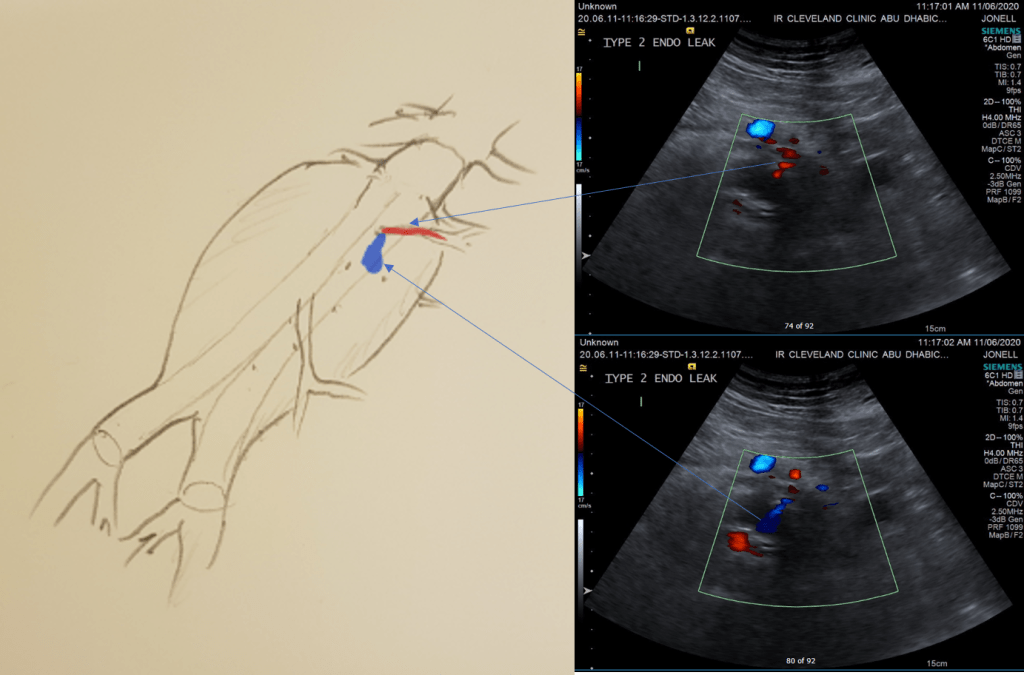
While CT failed to locate this endoleak, abdominal duplex ultrasound did showing flow from a small surface vessel (duplex below, figure at beginning of post). It was not the inferior mesenteric artery which can be treated endovascularly (link) or laparoscopically (link). CT scan suggested that it was one of those anterior branch vessels that one would encounter in exposing the aorta. Usually these were higher up as accessory phrenic arteries, but these fragile vessels, larger than vasovasorum, but smaller than named aortic branches, are seen feeding the tissues of the retroperitoneum.

Ultrasound revealed the type II endoleak from an anterior retroperitoneal branch artery.

Type II endoleaks are not benign. The flow of blood into the aneurysm sac after stent graft repair is almost never benign. It is a contained hemorrhage. There are three components to the pressure signal  seen by the aortic aneurysmal wall that could trigger breakdown, remodeling, and aneurysm growth. They include pressure, heart rate, and the rate of change of pressure. The presence of fresh thrombus may play an inflammatory role. Some endoleaks clearly have a circuit and others are sacs at the terminus of their feeding vessels, never shutting down because the AAA sac can both accept and eject the blood flow. Changes in AAA sac morphology due to sac growth can cause problems with marginal seals, component separation, and component wear. Sac growth can cause pain. Ruptures, while rare, can cause death. Mostly, type II endoleaks generate more procedures because it is hard to ignore continued growth.

Review of aortogram from device implantation showed a small anterior artery arising from the proximal aortic sac (arrow)

Three years of followup showed growth of the AAA sac to 5.5cm, which ironically threshold for repair. Again, no type I or III endoleak could be seen. He reached his calculated repair date, and I discussed our options in detail.

1. Do nothing, keep following

2. Endovascular attempt

3. Open surgery, marsupialization

4. Laparoscopic ligation of target vessel

Doing nothing hasn’t worked for 3 years. What would more time buy? Endovascular -to where. The IMA is the usual target for an endovascular attempt, although iliolumbar access is possible (link), we really needed to fix this with one attempt. Open surgery is a great option -a short supraumbilical incision is all that would be needed to open the AAA sac and oversew the collaterals. The patient did not want a laparotomy. There are reports of laparoscopic guided endovascular access with endovascular coiling of the remnant sac with fluoroscopy. This adheres to the letter of the claim of minimal access, but really?

I compromised with the patient and offered laparoscopy. I have ligated the IMA a handful of times laparoscopically -these are relatively fast and straightforward cases. As I had the location of the endoleak, I felt it should be straighforward to dissect out the anterior sac much as in open repair and clip this vessel.

Use of ultrasound allowed localization of the leak and identification of the artery for clipping.

Of course, what should have been a 30 minute procedure through a minilaparotomy became a two hour enterprise getting through scar tissue (not the first time encountering this after EVAR) while pushing away retroperitoneum. I recruited the help of general surgery to get extra hands, but the patient was well aware that there was a good chance of conversion. Patience won out as the artery was ultimately clipped and endoleak no longer seen on ultrasound.

I waited a year before putting this together as I wanted CT followup. The sac stopped growing and has shrunk a bit back to 5cm or so. There will be those who argue that nothing needed to have been done about this leak as it would have stopped growing eventually, but I would counter that an aneurysm sac that kept growing like the stent graft never went in is one demanding attention. The key role of duplex ultrasound cannot be minimized. We have an excellent team of vascular scientists (their title in Europe), and postop duplex confirmed closure of the leak.

Not seeing the leak anymore is a positive, but the stent graft remains.

The patient is quite satisfied having avoided laparotomy. His hospital stay was but a few days. During my conversations with our general surgeons who are amazing laparoscopists, that this would have been a nice case with the robot. That’s a post for another day.

The definition of success in this case and many EVAR’s plagued by type II leaks leaves me wondering. Excellent marketing of the word “minimally invasive” has subtly defined laparotomy as failure, and not just in vascular surgery. When costs and efficacy are reviewed as we come out of this pandemic, I suspect that open surgery will selectively have its day in the sun. A ten blade, a retractor, a 3-0 silk is so much more cost effective than five ports and disposable instruments. And a stent graft system?

Maybe I am just a dinosaur.

Categories
Uncategorized

Golf Lessons from the Operating Room – Golfism -life is a metaphor for golf

Golf Lessons from the Operating Room – Golfism -life is a metaphor for golf
— Read on www.google.com/amp/s/golfism.org/2008/09/06/golf-lessons-from-the-operating-room/amp/