Categories
Uncategorized venous aneurysm

The Clot Gun: Popliteal Venous Aneurysms Are Not Varicose Veins

IMG_9819

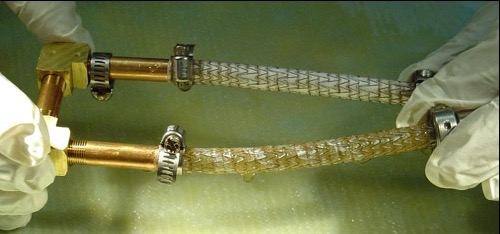
The basics of this air rocket pictured above is the projectile, attached by tube to a large bladder which when compressed by external force, ejects the projectile upwards. These are the same features of a popliteal venous aneurysm. First, the large chamber predisposes to stasis and thrombus formation. This thrombus will form on the flaccid walls which are areas where stasis occurs. During activity, it likely dislodge but catch at the outflow, obstructing it. Pressure builds up in the calf veins below, and flexing the knee and pressing the venous aneurysm ejects the thrombus towards the heart and lungs. Clot Gun.

CTV_1

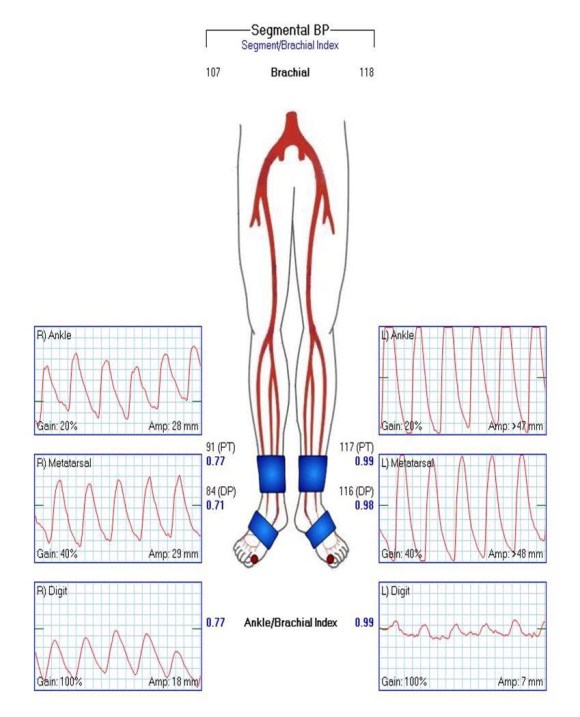
The patient is a young woman who was an active college athlete. She had her first pulmonary embolism occur during practice several years prior to presentation. A duplex noted residual thrombus in her right popliteal vein. Over the next several years, she had two more episodes of pulmonary embolism whenever her anticoagulation was stopped. No thrombophilia was detected on workup. She was referred to the Clinic and Dr. Jerry Bartholomew in the Department of Cardiovascular Medicine noted in her records a mention of a dilated popliteal vein. On examination, she had no historical or physical examination findings to suggest a predisposition to pulmonary embolism. A duplex was ordered.

preop duplex popliteal venous aneurysm.png

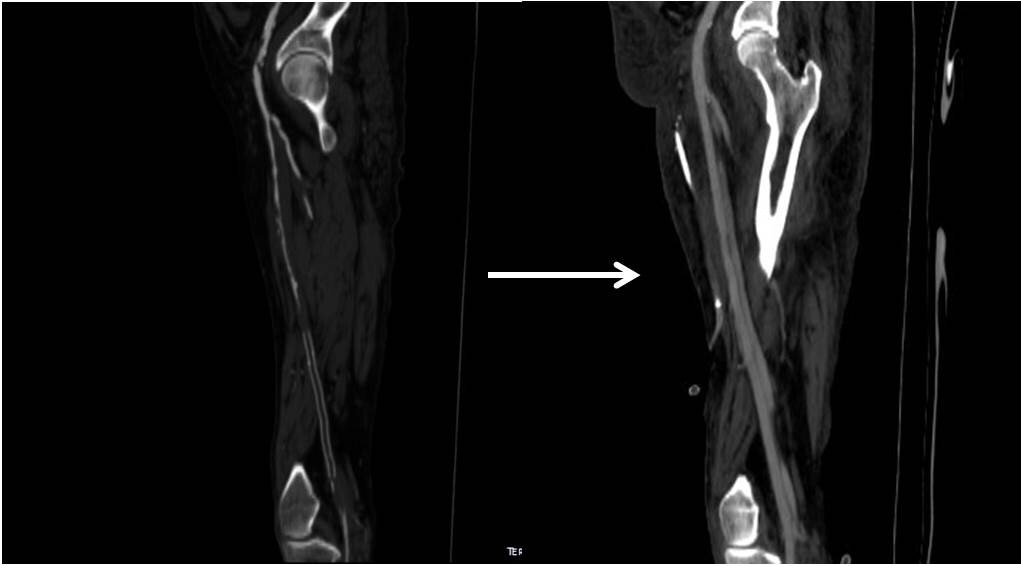
The duplex showed a 2.8cm popliteal venous aneurysm of the right leg. No acute DVT was seen but swirling rouleaux could be seen on the B-mode video. A CT venogram was ordered.

CTA summative

No other defect was detected. Operation was planned. Mapping showed no suitable superficial venous conduit, and venorrhaphy was planned. The patient was kept anticoagulated to the day of operation.
IMG_9702.jpg

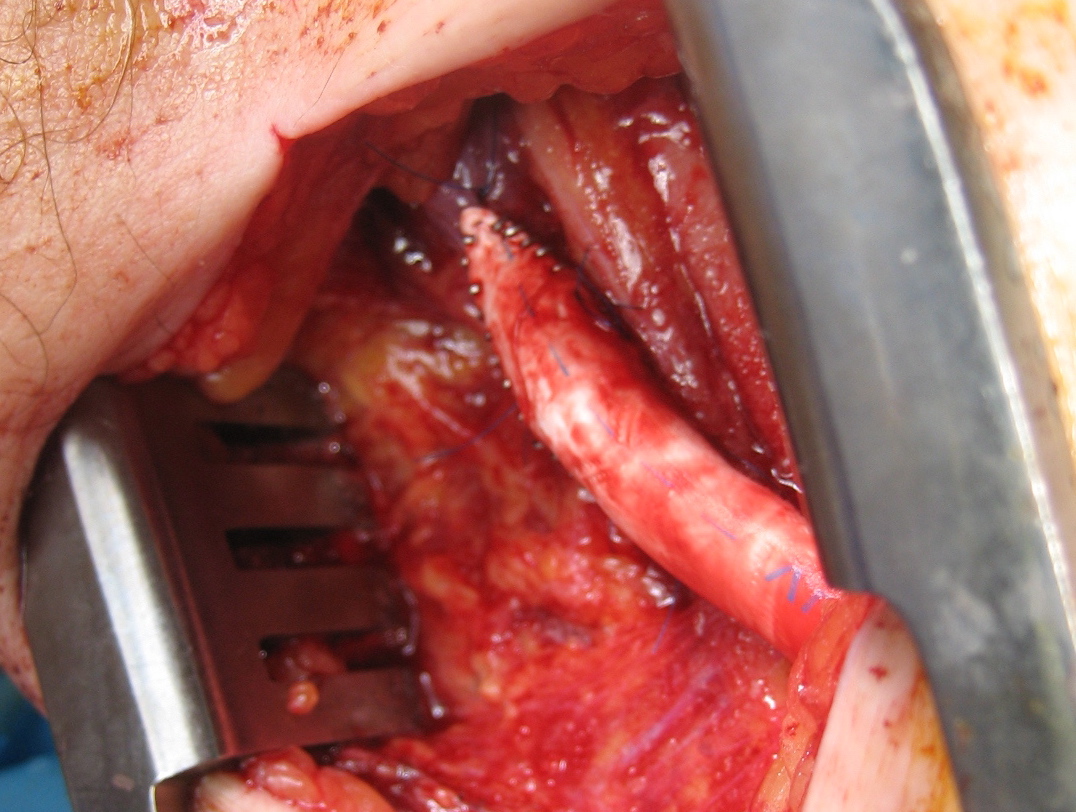
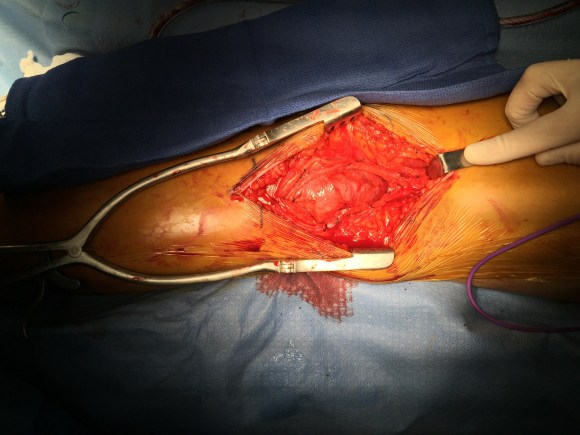
A curvilinear incision (lazy S) was made across the popliteal fossa and careful dissection revealed the aneurysm. It was soft and the vein was normal below in the calf. Above it, there was a tight fibrous band that was contricting it -a popliteal venous entrapment. I released this band. Using a 24 French Foley catheter inserted through a transverse venotomy on the popliteal vein below, the aneurysm was plicated to approximately 1cm diameter, and the catheter removed and the venotomy repaired.

IMG_9703

The nerves were restored to their original position and the wound closed in layers. She recovered well and returned to followup about a month later. Duplex showed a patent vein and she had no symptoms of dyspnea.

pop venous aneurysm post18

The plan is to have her come off of her anticoagulation after a visit with Dr.Bartholomew. Reviewing the literature, my confreres at Mayo published their 15 year experience with popliteal venous aneurysms and found that 5 of their 8 patients presented with pulmonary embolism, and that most of their complications occurred with bypass repair while aneurysmorrhaphy fared well (reference). Because of their rarity, about 200 cases in the literature, it may be assumed that many are not found until complications occur or never found because pulmonary embolism, the most common complication, results in death. Also, it would be easy for unknowing physicians to assume that popliteal venous aneurysm falls under the umbrella of varicose vein which this is not. They should be treated when found, and in most cases, such as this, venorrhaphy is preferred.


Reference

Johnstone JK et al. Surgical treatment of popliteal venous aneurysms. Ann Vasc Surg 2015;29:1084-1089.
Categories
Uncategorized

My Innovations Coach Featured in Inc.com article

“Why Cleveland Clinic Believes It Can (at Least) Triple a $1.5 Million Investment in This Startup”

http://www.inc.com/ilan-mochari/cleveland-clinic-startup-tatara-vascular.html

Categories
Journal Club Uncategorized

February Journal Club -Venous Disease

February 16, 2016 630pm at Foundation House.

Presenters:

Dr. Mohammed Abbasi – joi150040 -Effect of a Retrievable Inferior Vena Cava Filter Plus Anticoagulation vs Anticoagulation Alone on Risk of Recurrent Pulmonary Embolism A Randomized Clinical Trial. JAMA 2015;313:1627-1635.

Dr. Keith Glover –PIIS1078588413005947 -Percutaneous Manual Aspiration Thrombectomy Followed by Stenting for Iliac Vein Compression Syndrome with Secondary Acute Isolated Iliofemoral Deep Vein Thrombosis: A Prospective Study of Single-session Endovascular Protocol. Eur J Vasc Endovasc Surg 2014;47:68-74.


Categories
Uncategorized

Off the shelf f-EVAR

image

Thoracoabdominal stent grafts off the shelf: link

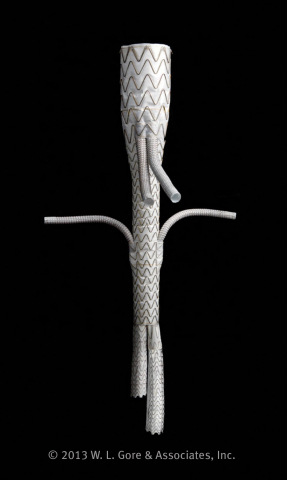
Congratulations to Dr. Gustavo Oderich who has implanted the Gore off the shelf TAAA device at Mayo.

Categories
Journal Club Uncategorized

January Journal Club January 19, 2016

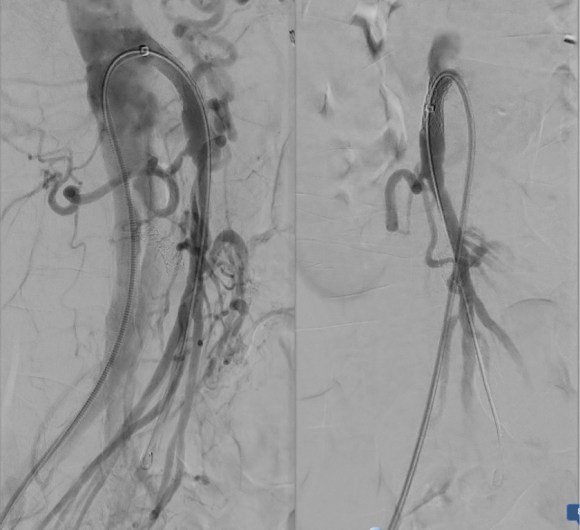
post angio

At usual location. Topic renal and mesenteric vascular disease. Presenting are:

Dr. Michael O’Neil – Symplicity HTN3

Dr. Daniel Scott –Reop OR Mesenteric Ischemia CCF-Mayo

Dr. Lynsey Rangel –Open v Endo Mesenteric Ischemia

Categories
Journal Club Uncategorized

December Journal Club Articles

December 15, 2015, usual place.  Topic, femoropopliteal occlusive disease.

Dr. H. El-Arousy: 1-s2.0-S0741521415000646-main (Viabahn antiplatelet v anticoagulation)

Dr. J. Rowse: Circulation-2015-Krankenberg-CIRCULATIONAHA.115.017364 (Drug coated balloon v standard balloon in stent restenosis)

Dr. F. Vargas: 1-s2.0-S0735109713014149-main (1) (Drug eluting stents)


Categories
AAA CTA EVAR open aneurysm surgery techniques training Uncategorized

Never Stop Following Stent Grafts -Type IV endoleak causing slow growth in 12 year old stent graft

Centerline


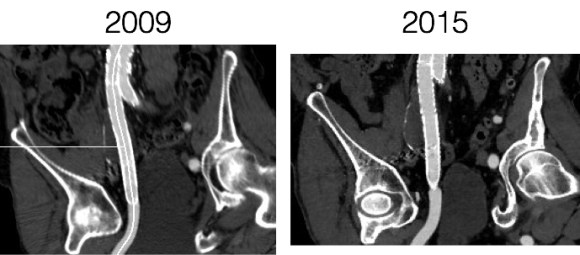
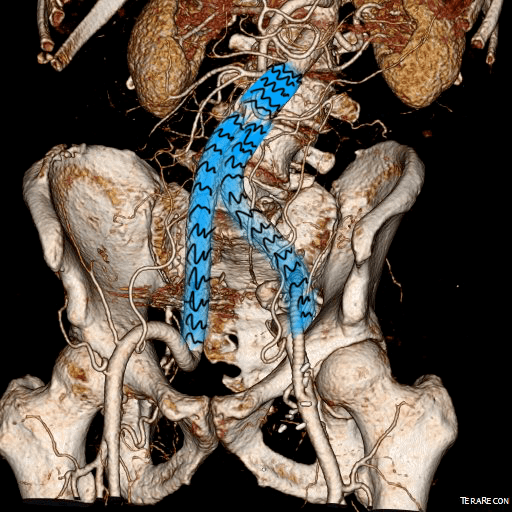
The patient had undergone EVAR for bilateral common iliac artery aneurysm with the original Gore Excluder stent graft a dozen years before with coil embolization and extension to the external iliac on the larger side and femoral to internal iliac artery bypass on the other side. A coagulopathy, one of the clotting factor deficiencies, had made him high risk for bleeding with major open surgery. His aneurysms never shrank but remained stable and without visible endoleak by CT for a long time resulting in ever longer intervals between followup.

2013_1
2013

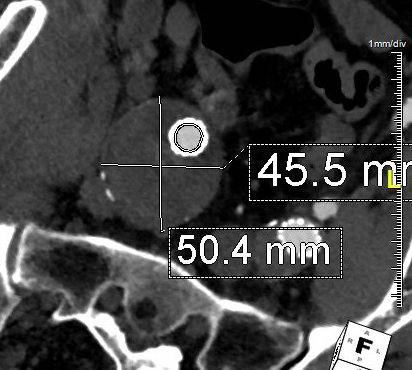
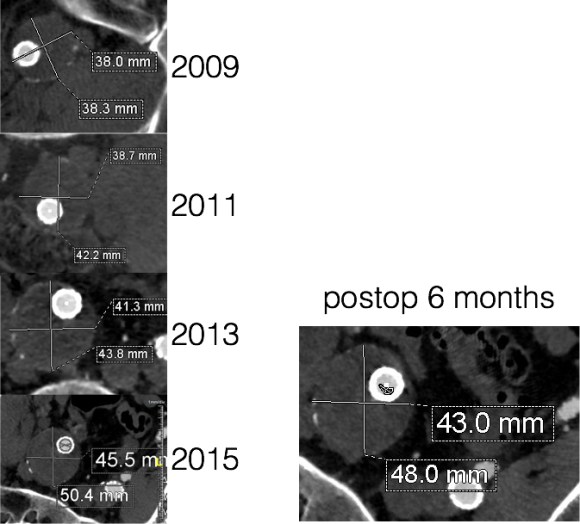
Between 2009 and 2013, there was subtle enlargement on the embolized side without a type I or type III leak, and the patient was brought back a year and a half later, with further growth of the sac.

1-2015_3
2015

This was a relatively rare type IV endoleak that was causing sac enlargement due to excessive graft porosity of the original Excluder’s graft material. Its treatment is either explantation or relining. We chose to reline the graft with an Excluder aortic cuff at the top and two Excluder iliac limbs.

2015-11-26 13_25_23

This was done percutaneously and in short followup, there has been stabilization and even some reduction in the aneurysm circumference.

CT Scans


It was long known that a certain percentage of PTFE grafts “back in the day” would sweat ultrafiltrated plasma. The relative porosity of the grafts allowed for transudation of a protein rich fluid.

Slide2
Tanski W, Fillinger M. J Vasc Surg 2007;45(2):243-249.


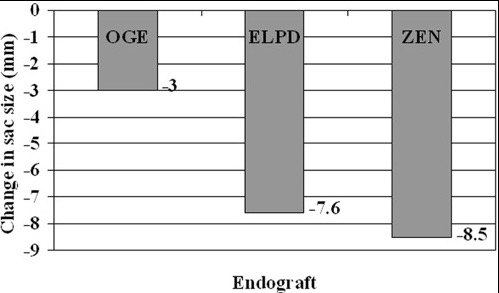
This results in a hygroma formation. I remember seeing this in AV graft fistulae back in the 90’s -after flow was introduced, the grafts would start sweating! The newer grafts are lower porosity and this is seen very infrequently. Drs. Morasch and Makaroun published a paper in 2006 comparing parallel series of patients who received the original Gore Excluder (OGE), the currently available Excluder Low-Permeability Device (ELPD), and the Zenith device (ZEN). Sac enlargement occurred in equal measure between OGE and ZEN but zero was reported for the ELPD.

Slide3
Haider S et al. J Vasc Surg 2006;44(4):694-700.

The ELPD had higher rates of sac shrinkage than the OGE, and equal rates of sac shrinkage compared to ZEN.

Slide4
Haider S et al. J Vasc Surg 2006;44(4):694-700.

The diagnosis in my patient’s case came about through serial followup through a decade. While I doubt that the aneurysm would have ruptured in the same way as in a Type I, II, or III endoleak, I am sure it would have progressed to developing symptoms from aneurysmal distension or local pelvic compression.

Is it possible to visualize this kind of endoleak at the time it is suspected? I came across a case series from the Netherlands using Gadofosveset trisodium which takes longer to clear than the usual Gd-based MR contrasts and they successfully visualized transudative leaks in 3 serial patients with the original Excluder graft.

Slide2
Cornelissen SA et al. J Vasc Surg 2008;47(4):861-864.

The problem is that Gd-based contrasts have toxicity, especially for patients with poor renal function. The protocol is time consuming. And I suspect that ten years out, a lot of grafts will have positive findings, especially cloth based grafts that are sutured to their supporting stents, without clinical basis for treatment as their sacs size are likely stable on a year to year basis.

That said, as we are well into the second decade of commercially available stent grafts, it is even more important than ever to continue lifelong followup even for what is assumed stable, patent grafts and anatomy.

Categories
Uncategorized

VEITH 2015

Version 2
Sketch of Dr. Gilbert Upchurch’s hybrid treatment of TAAA, at least as I understood it. 

The VEITH Symposium has been my favorite meeting since I was a junior resident back in the 90’s. This year is no different. I finally figured out why I like it so. VEITH is organized like the Iowa State Fair with all the charms and chaos that makes that fair one of the top 10 things to do in the US. There is the location at the Hilton Midtown which puts it in the center of all the commercial and tourist chaos that makes NY amazing. It is a high end version of the midway at the Iowa State Fair on East Side night, but instead of fried Snickers and bad teeth, you have perfectly crafted international foods and people from everywhere. Like the Iowa State Fair, everything is happening at the same time and you have to plan out your day in great detail. And there are the must sees like the debates between the giants of the field and the 20 surgeon panels sitting on stage no different from the 1000 pound pig and the handsomest cow. Then there is industry, but rather than tractors in green or blue flavors, we get seven different kinds of stent grafts at my last count. You learn how to pick out the signal from the noise, not always by counting the N of individual papers, but in the trends of the numbers of presentations that generally agree, like the hot new Fair food that catches and gets easier to buy every subsequent year. A true free market of ideas. And finally, like you can run into friends who moved to Dubuque, you run into people who were important on your life path, Jedi and Sith masters and padawans, and you have large unhealthy dinners together. What’s not to like? Next year, at VEITH!

Categories
Uncategorized

Gadgets and the Next Healthcare Revolution

IMG_3998

The picture above shows a vascular anastomosis created by an ingenious gadget that has struggled to find a place in my personal kit despite performing well. It really works well when you don’t have an assistant to follow your running suture to apply tension and keep the suture out of the way. I have have come up with four reasons why I don’t use it every day even though I like the device, find it performs well, and have used it in the past.
1. Training Vascular Surgeons- The vascular anastomosis is over a century old, and the various forms it takes, interrupted suture, continuous, end to side, end to end, side to side, native to prosthetic and so on, all have to be taught so that the trainee can function even in the absence of such gadgets.
2. Cost- The cost of the device is subsumed by the hospital and ultimately the healthcare system. Using the device is the equivalent of turning the air-conditioning on when opening the window will do.
3. Time savings- If operating room time were metered like taxi time, then there might be an argument for this device, but the difference in the end is still trivial. A hand sewn anastomosis, even done slowly, takes usually no more than 20 minutes. Using this device, the times are reduced to about 1-5 minutes. This almost never is enough to make a difference, unless ischemia sensitive tissues are being repaired, but no one would use this device to sew a graft to a renal artery.
4. Results- The argument that an interrupted anastomosis is superior to a running one only works when native tissues are sewn to native tissues. A prosthetic to artery anastomosis will not adapt and frankly is the easiest to create a technically acceptable anastomosis with. An interrupted anastomosis done by hand can be done in as much time as a running one (figure below).

IMG_6444

There are many wonderful and ingenious inventions like this. Whole specialties and institutes are built around implantation of ingenious and life saving devices. Yet the costs are increasingly astronomical and unsustainable.

Can there be innovation without sticker shock? The answer is a qualified yes. To make this a reality, there has to be several changes in the way that devices and procedures are vetted and approved. It will not be easy.

To bring a new drug to the market, the Tufts Center for the Study of Drug Development estimates in 2014 that it costs $2.5 Billion. This barrier which we have erected against ourselves insures that pharmaceutical development is channeled through a narrow group of players. On the device side, there are similar barriers and price tags to bringing a discovery to market. There is a six letter C-word to describe this situation, but it isn’t polite to use.

It used to be that breakthroughs in surgery were not directly monetizable. The carotid endarterectomy didn’t make DeBakey or Eastcott anything but fame among a small group of surgeons, but there was great good from that. A lot of time and effort and money has been used in an effort to supplant the carotid endarterectomy with carotid stenting, but the devices come at a greater cost for dubious benefit except in very particular situations. I recently performed an eversion carotid endarterectomy in about an hour’s time closing with no patch or shunt. The procedure cost the price of 6-0 suture to repair the artery, and several packs of an absorbable suture to close the skin. Add to this some disposable drapes, suction tubing, a cautery and an energy device. Compare this to a carotid stent procedure that uses a stent (4 figures), wires (up to 4 figures), protection device (4 figures), sheaths, balloons and catheters (3-4 figures), resulting in upwards of 5 figures of cost. This is for a procedure that in head to head comparisons results in a higher stroke rate, the very complication it is meant to prevent.

Health care innovation will have to have cost disruption as a necessary condition for its adoption. Whatever is used, has to drop the cost by removing a zero from the end of the price tag while yielding at least as good or better results.

Categories
bypass PAD techniques Uncategorized

The best last conduit is your own artery


The patient is a 60 year old with severe peripheral vascular disease. Risk factors included smoking, hypertension, and type I diabetes. The patient had developed gangrenous eschar over toes 1, 2, and 3. He had had prior bilateral femoropopliteal bypasses with saphenous vein, which was occluded on his symptomatic side, and stent grafts had been placed on his distal femoral to popliteal artery, but these were occluded. He also had chronic edema with some early lipodermatosclerosis and pitting edema. He was emaciated and had a low prealbumin. 

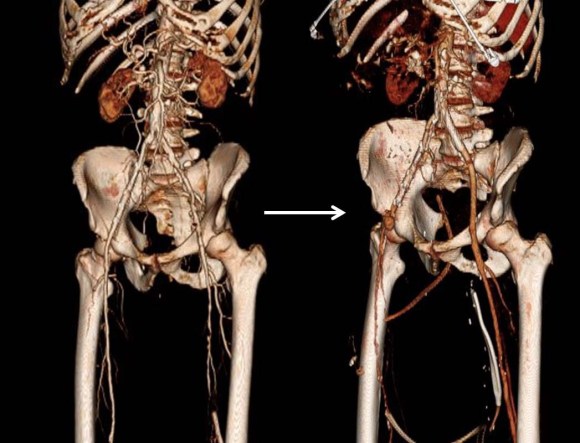
CTA showed diffuse aortoiliac atherosclerosis with a severe stenosis in the proximal common femoral artery.


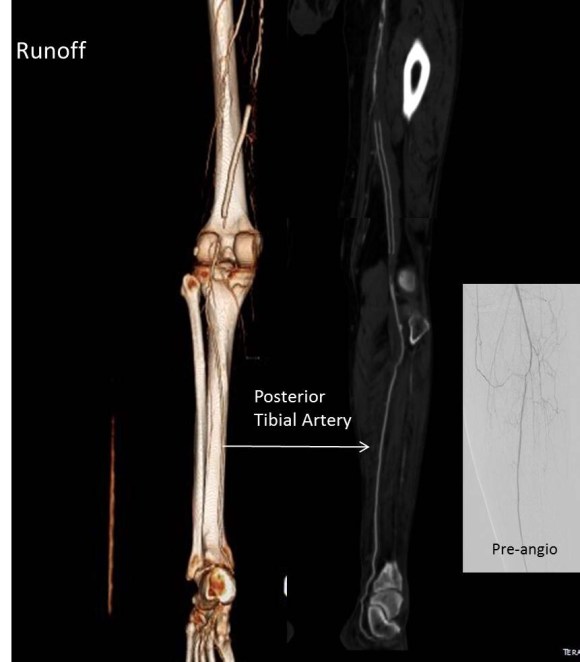
The femoropopliteal stent grafts were occluded but the popliteal artery reconstituted into a diseased set of tibial vessels -only the posterior tibial artery remained patent into the foot and remained as a target.


Preoperative angiography corroborated the CT findings.


The preoperative vein mapping suggested there was an acceptable anterior thigh tributary vein and marginal segments of vein below the knee. Arm vein was available as well. 

My plan was to explore the veins on his legs and expose his CFA and BKPOP along with the posterior tibial artery. If the veins were inadequate, I would proceed with open endarterectomy of the common femoral artery and remote endarterectomy of the external iliac artery and stenting of the diffusely diseased common iliac artery and remote endarterectomy of the femoropopliteal segment above the stent to use as inflow for a shorter bypass with the vein we had. 

Exploration showed that the anterior thigh vein was thin walled and became diminutive in the mid thigh. The infrageniculate veins were numerous and too small. I thought I might have enough for a short bypass from a recanalized mid SFA. 

The remote endarterectomy of the external iliac and stenting of the common iliac went without complications. I do this over a wire to ensure access in case of rupture. A postop CTA shows the results in the aortoiliac segment.


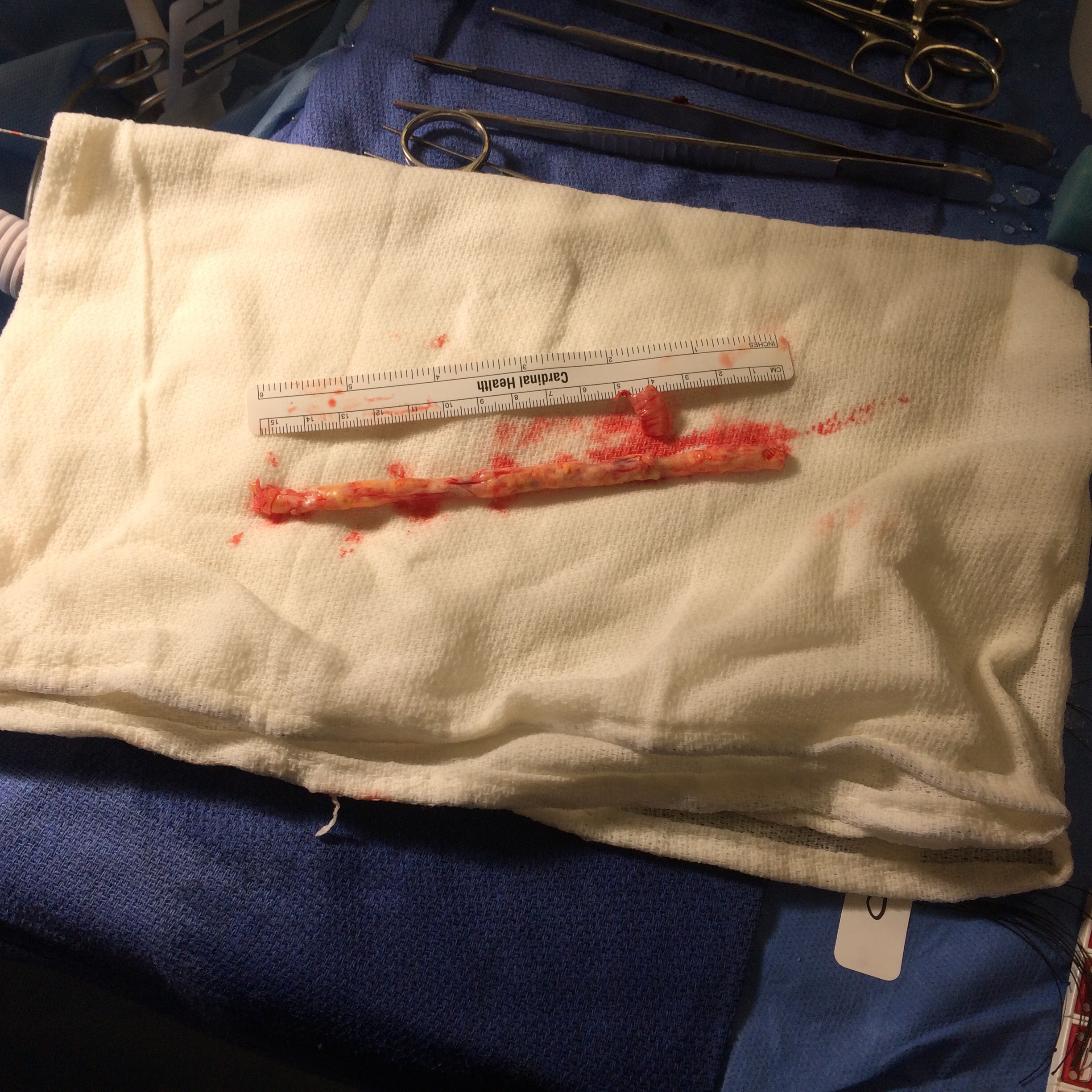
Remote endarterectomy of the SFA went smoothly but was held up by calcified plaque above the occluded stents. 

SFA plaque

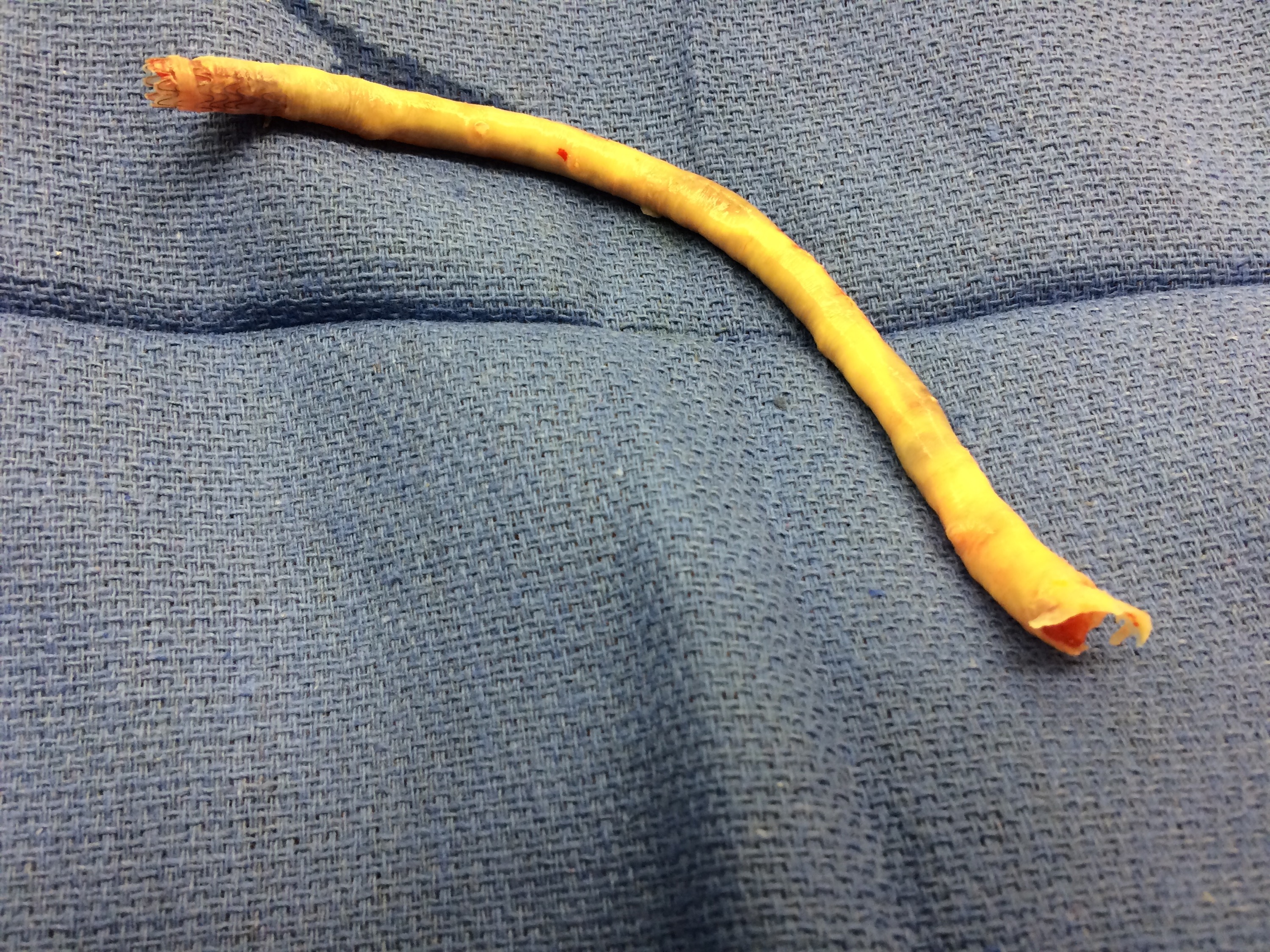
I cut down on the SFA and found that the vein from the thigh would be short. I mobilized the plaque and re engaged the Vollmer ring and was able to dissect the stents. By starting another dissection from the below knee popliteal artery, the stent was mobilized and removed.

Viabahn stent grafts, occluded, removed

The figure below shows the procedure angiographically. I used a tonsil clamp to remove the mobilized stents.

Left, prior to remote endarterectomy, Mid -stent removal, Right -completion

The common femoral and mid SFA arteriotomies were repaired with patch angioplasties. The infrageniculate popliteal arteriotomy was used as inflow to a very short reversed vein bypass with the best segment of thigh vein to a soft posterior tibial artery.

Before and after of thigh segment


Before and after, the CTA on right is late in phase and has venous contrast.

Before and after, centerline.

The patient had a palpable posterior tibial artery pulse at the ankle. CTA predicted the plaque found in the tibioperoneal trunk which compelled me to do the short bypass. In my experience, remote endarterectomy, sometimes with short single segment bypass, successfully restores native vessel circulation without need for lengthy multisegment arm vein bypass. Remote endarterectomy of the external iliac artery avoids the difficult CFA plaque proximal end point that often requires stenting across the ligament down to the patch. Only a single common iliac stent is required. I generally anticoagulate these patients with warfarin, especially if they are likely to resume smoking or have poor runoff. I hope to show this is the equal of multisegment vein bypass, and superior to it by virtue of avoiding long harvest incisions which are the source of much morbidity and now readmissions which are penalized.