
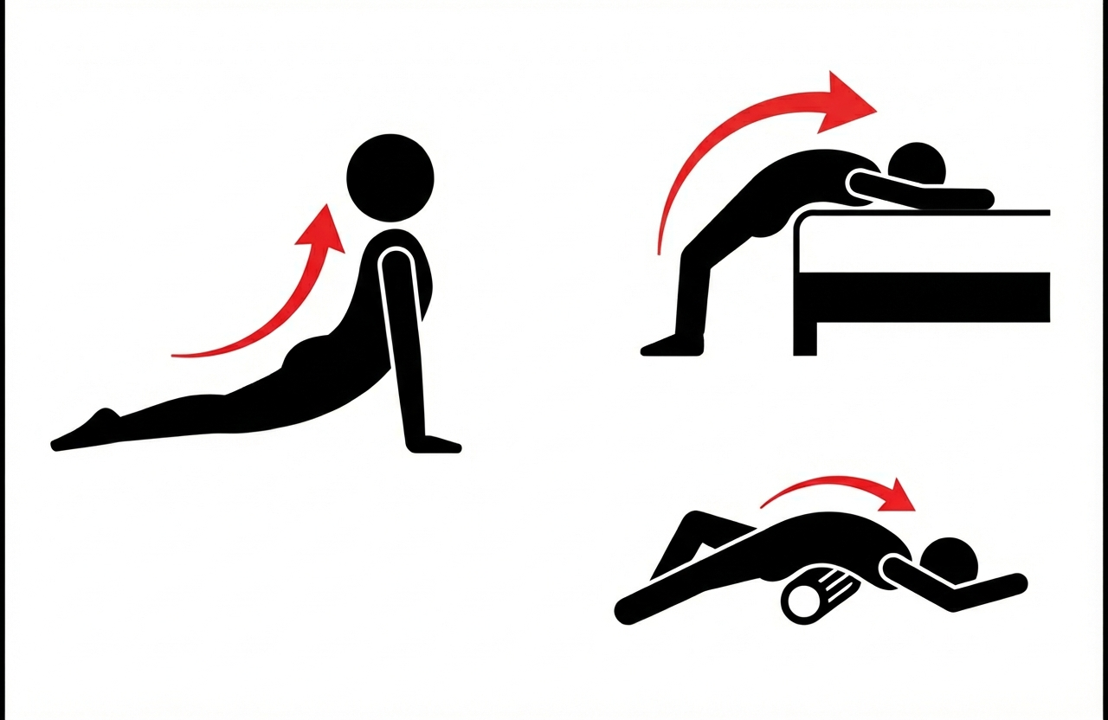
When you sprain your ankle and its on the mend, you instinctively start stretching to retain and regain range of motion, or you end up limping. The fibrosis seen in many pathology specimen of median arcuate ligaments resected surgically suggest the need to do the same -range of motion needs to be entrained with these stretches and with deep inspiration and breath holds. It should feel a bit uncomfortable.
The anecdotal evidence goes back over a decade where a patient I had performed laparoscopic MALS surgery on developed recurrent pain. He had a blockage of his celiac axis and was told to get a stent. I spoke with him in detail and given his pain with breathing and moving, I suggested starting stretches while I made inquiries about stenting where he lived (far away). He reported back after a month that these stretches relieved his pain and he no longer needed angioplasty. He is a physician and I still followup.
The other anecdote has to do with a patient I saw in Abu Dhabi who was an expat. She had classic MALS pain but her insurance would not cover surgery at CCAD and she was scheduled to return to her home country which did not have surgeons knowledgeable in MALS. I recommended stretching and eating standing up. Eating standing up relieves the pressure under the ligament and relieves any kinking of the celiac axis. She found substantial relief with these alone and left for home having regained some of her lost weight and managing her symptoms.
I recommend these stretches postoperatively to start the process of establishing a broad range of motion of the diagphragm as scarring starts on day one. The scarring is a healing process that rebuilds a median arcuate ligament much in the way that a severed Achilles tendon with regrow in a boot.

 A Surgeon's Notes